
Content Updated: August 20, 2026
How to Identify Cockroach Poop
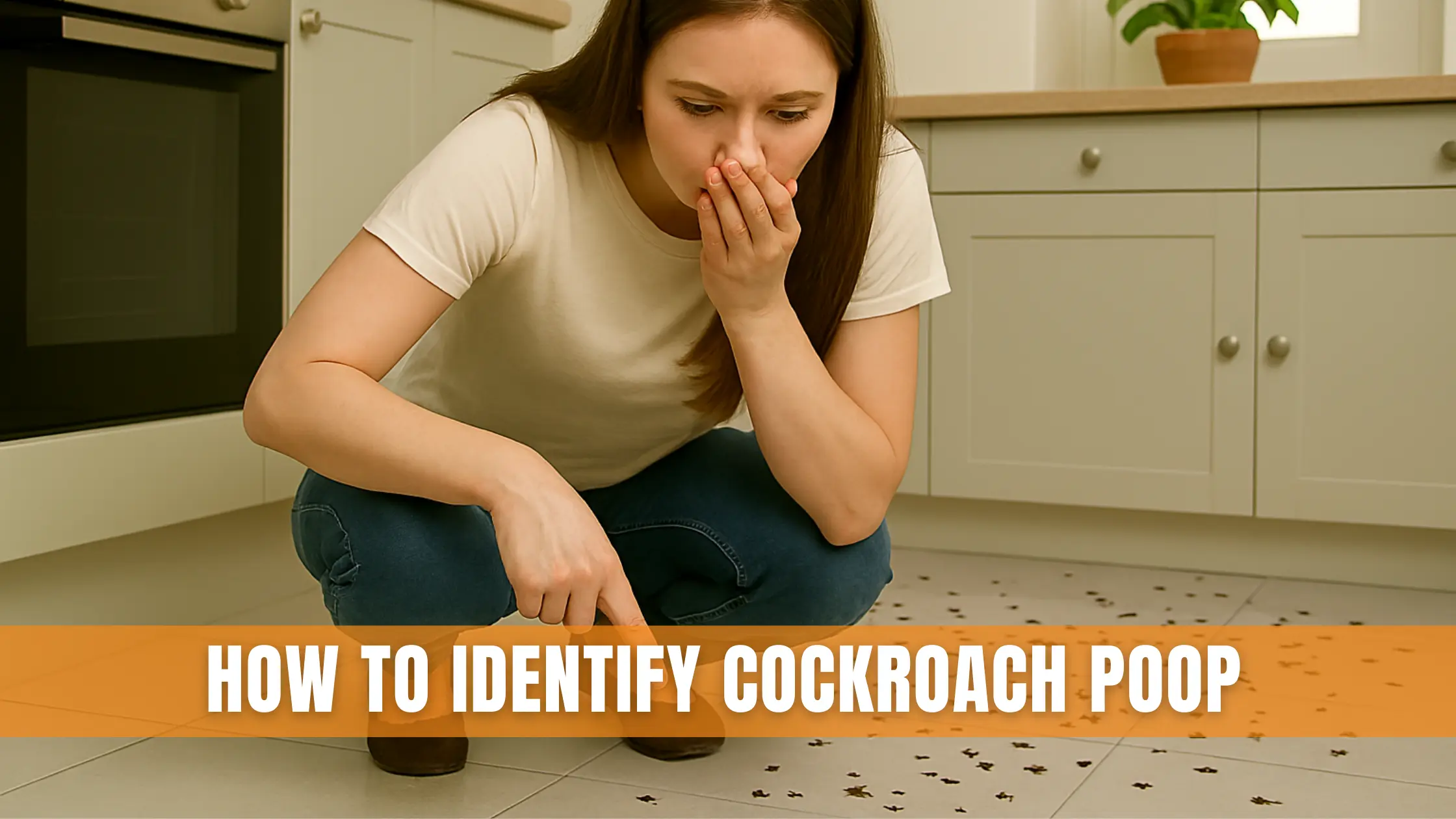
Cockroach poop is usually easy to notice, which is why it’s one of the most common signs of a roach problem. The appearance of the droppings depends largely on the size of the cockroach.
Smaller cockroaches leave behind tiny brown or black specks. These often look like coarse coffee grounds or finely crushed black pepper. To tell if it’s cockroach droppings and not dirt, pay attention to a few details. The droppings are usually consistent in size, slightly shiny or sticky, and found in places where cockroaches are active, such as kitchens, cabinets, and behind appliances.
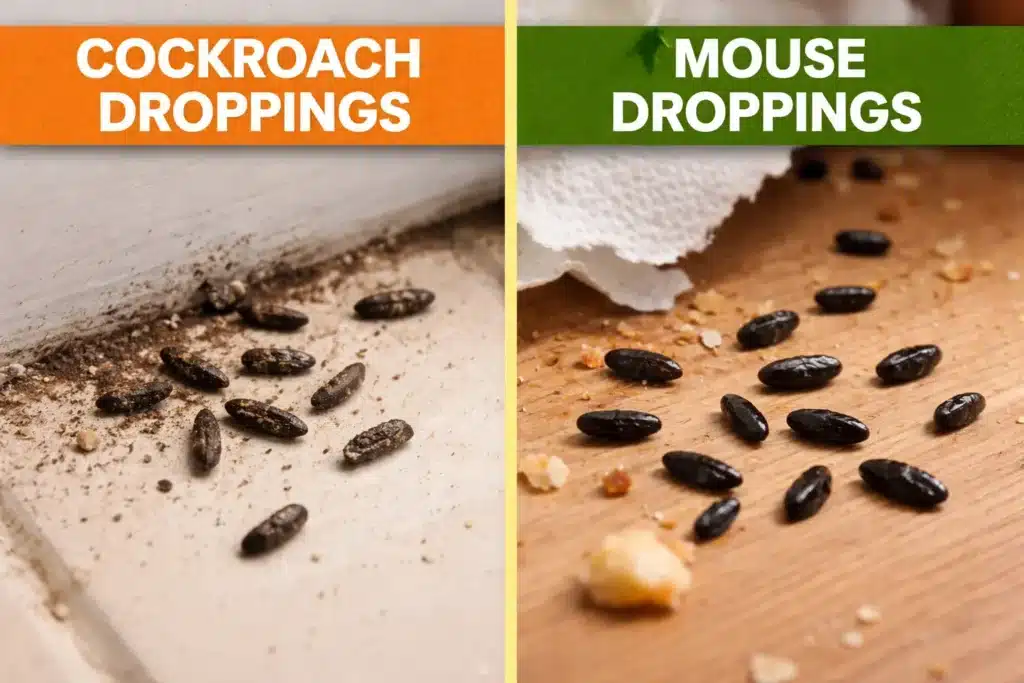
Larger cockroaches produce more solid droppings that are cylindrical in shape. Their feces can be dark brown or black, depending on the species. A key feature of cockroach poop from larger roaches is the presence of fine ridges running along the length of the droppings. These ridges make it easier to tell the difference between cockroach droppings and mouse droppings.
Mouse droppings are typically a bit larger, have pointed ends, and may contain tiny hairs something you won’t find in cockroach droppings. Knowing these differences can help you identify the problem early and take action before the infestation gets worse.
Recognizing Cockroach Droppings
No one likes the idea of checking their home for cockroach droppings, but doing so can save you from a much bigger problem later. Spotting roach feces early often means spotting the roaches themselves. These droppings act like clues, showing you where cockroaches are hiding and where they’re finding food and water.
When you notice a heavy concentration of cockroach poop in one spot, that area is usually the starting point of the infestation. Think of it as the main activity zone the best place to focus your cleaning and control efforts. Identifying these areas gives you a real advantage, helping you stop the problem before it spreads further.
Understanding what cockroach droppings look like and where they appear is one of the simplest ways to stay ahead of an infestation and reduce the health risks that come with it.
Where Can You Find Roach Droppings?
Roach droppings show up wherever cockroaches spend their time. If you’ve ever seen a roach disappear behind a wall frame, under a bed, or into a dark corner, there’s a good chance droppings are nearby. Cockroaches leave feces along their travel paths, hiding spots, and feeding areas.
Some of the most common places to find cockroach poop include:
- Along baseboards and in the corners of rooms
- On top of cabinets, shelves, door frames, and other high surfaces that allow hidden movement
- Inside drawers, pantries, cupboards, closets, and food storage spaces
- In children’s areas such as toy boxes, playpens, and storage bins—places that are often overlooked
- Behind and underneath appliances like refrigerators, ovens, washing machines, dryers, and sinks
- Inside cracks, crevices, and small openings in walls, floors, or structural gaps
- In storage areas, especially where cardboard boxes, paper, or other organic materials are kept
Finding cockroach poop in any of these areas usually means cockroaches are active nearby. The more droppings you see in one location, the closer you are to their main hiding or nesting area.
How to Get Rid of Roach Feces
Roach feces may look harmless at first, but it can cause serious problems if ignored. These droppings contain allergens that can trigger asthma and allergies, spread bacteria such as salmonella, and even attract more cockroaches to the area. Cleaning up cockroach poop is not optional. It’s a key step in taking control of an infestation.
Here’s how to handle it safely and effectively:
Protect yourself first
Before you start cleaning, put on gloves and a mask. Cockroach poop can release allergens into the air, especially when disturbed, so basic protection is important.
Vacuum visible droppings
Use a vacuum cleaner with a HEPA filter to remove dry droppings. Carefully vacuum floors, cabinet edges, wall corners, shelves, and any furniture where cockroach poop is visible. A HEPA filter helps prevent allergens from spreading back into the air.
Disinfect all affected areas
Once the droppings are removed, thoroughly disinfect the surfaces. Use a disinfectant spray or solution to kill any bacteria or germs left behind. Pay extra attention to kitchens, food storage areas, and places children may touch.
Seal entry points and hiding spots
To stop cockroaches from coming back, seal cracks and gaps around doors, windows, pipes, and baseboards. Cockroaches use even the smallest openings to enter and hide, so sealing these areas is critical.
Keep your home clean and dry
Cockroaches are drawn to food scraps and moisture. Wipe spills immediately, don’t leave dirty dishes overnight, take out trash regularly, and store food in airtight containers. Reducing access to food and water makes your home less inviting to roaches.
Call professionals if the problem persists
If you’re seeing cockroach poop repeatedly or dealing with a heavy infestation, DIY cleaning may not be enough. In such cases, contacting EMK Termite & Pest Control is the smartest move. Professional pest control targets hidden nests and breeding areas, ensuring cockroaches are removed properly so your home stays safe and healthy.
What Our Customers Had To Say
 Posted on Google
 Rami Anwer
Trustindex verifies that the original source of the review is Google.
We had such a great experience with the pest control service. From start to finish, everything was quick, easy and completely hassle-free. The team were professional, friendly and made the whole process so simple. We’re really happy with the results and the quality of the service we received from Eevil. I would definitely recommend EMK to anyone looking for a reliable pest control company!Posted on Google Rena NajimReally happy with the service today. Professional, friendly and did a great job. Would definitely recommend!Posted on Google
 David DavidEMK provided excellent pest control service. He was professional, punctual, and knowledgeable, explained the process clearly, and ensured it was safe for our family and pets. We saw great results straight away. Friendly, reliable, and highly recommended.Posted on Google
 Ann TranWe highly recommend EMK Termite and Pest Control Sydney. Great service, great prices, friendly and very accommodating. They are very thorough and take pride in their work. Cannot rate them high enough. 5 stars 🌟Posted on Google
 Charlton DurieI had these guys come and sort a termite issue. They got the job done. Thanks again!Posted on Google
 David MarshSuper happy with EMK for getting rid of such a horrible termite infestation! Professional and very friendly.Posted on Google
 Michael ZammitJust had EMK come out to do a rodent control treatment. The service and professionalism was superb!Verified by TrustindexTrustindex verified badge is the Universal Symbol of Trust. Only the greatest companies can get the verified badge who has a review score above 4.5, based on customer reviews over the past 12 months. Read more
Frequently Asked Questions About Cockroach Poop
What to do when you see cockroach poop?
What do cockroach droppings look like?
Does cockroach poop mean infestation?
Can you get sick from cockroach poop?
What is the best way to clean up cockroach poop?
What does cockroach poop smell like?
About The Author

EMK Termite & Pest Control Team
EMK Termite & Pest Control Team is a licensed and experienced pest control service provider based in Sydney, Australia. Our team specialises in termite treatment, cockroach control, spider control, and general pest management for residential and commercial properties.
With years of hands-on experience, we follow Australian safety standards and use proven, eco-friendly pest control methods to deliver long-lasting results. All content published on this website is written and reviewed by trained pest control professionals to ensure accuracy, safety, and real-world expertise.