
Content Published : November 4, 2026
What Do Blow Flies Look Like? A Guide for Sydney Homes
Blow flies are commonly found around rubbish bins, gardens, pet waste, and decaying organic matter. Their sudden appearance can be frustrating, particularly when several large flies gather near kitchen windows, patios, or outdoor dining areas. In Sydney, warmer weather and readily available food sources can encourage increased fly activity around residential and commercial properties.
Understanding what blow flies look like can help you identify them and distinguish them from ordinary house flies and other flying insects. Their metallic blue or green bodies, sturdy shape, prominent eyes, and buzzing flight can provide useful clues. Recognising these features early allows you to investigate potential breeding sources before the problem becomes more noticeable.
These flies are often attracted to exposed food waste, spoiled meat, and other organic materials. Finding them repeatedly in the same area may indicate an accessible food source or a nearby breeding site that needs attention.
In this guide, we explain how to identify blow flies, where they commonly appear around Sydney, and why they may enter your home. You will also learn about their life cycle, potential hygiene concerns, and practical prevention methods. Whether you are dealing with occasional sightings or persistent fly activity, understanding their behaviour can help you choose suitable control measures and determine when professional fly pest control may be necessary.
What Exactly Are Blow Flies And How To Identify Them?
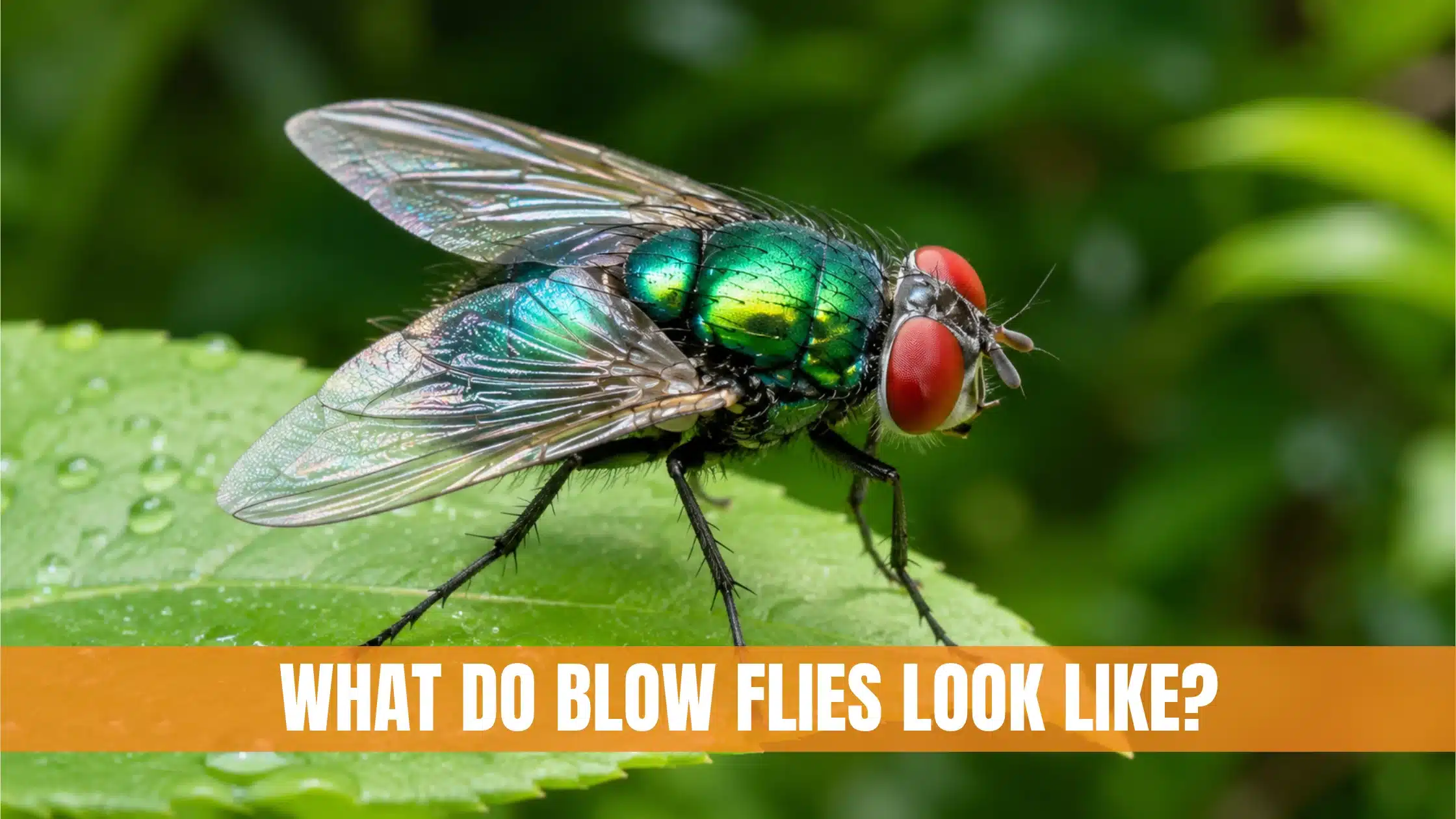
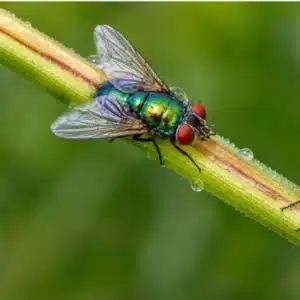
Blow flies are medium-sized, robust insects known for their distinctive metallic appearance. Depending on the species, their bodies may look shiny blue, green, bronze, or dark grey. In Australia, bluebottle flies are among the most recognisable examples, often appearing around rubbish bins, outdoor dining areas, and decaying organic matter.
Their bright colour can make them easier to distinguish from ordinary house flies, although colour alone is not enough to identify every species accurately.
Here are the main physical features to look for:
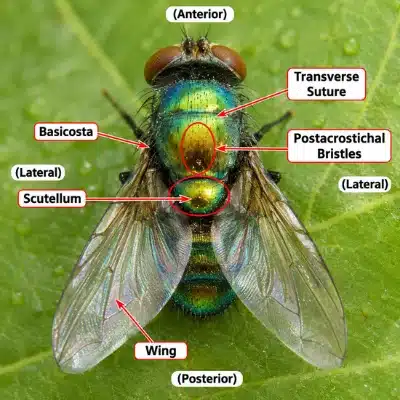
- Metallic body colour: Many species have a noticeable blue-green or bronze shine, particularly across the thorax and abdomen.
- Stocky body shape: They generally have a broad, sturdy appearance rather than the slimmer shape of some smaller flies.
- Large compound eyes: Their prominent eyes occupy much of the head and help them detect movement.
- Transparent wings: Adults have one pair of functional wings, as is typical of true flies.
- Short antennae: Their antennae are relatively short and may be difficult to notice without a close look.
- Buzzing flight: Many produce a noticeable buzzing sound as they fly around food waste or windows.
The exact size and colour vary between species. Some Australian blow flies are brightly coloured, while others have a duller or darker appearance. If you see a large metallic fly around your property, observing its body shape, colour, and behaviour can help narrow down its identity.
How to Distinguish Blow Flies from House Flies
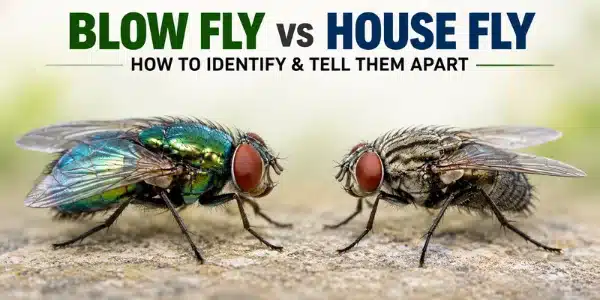
It is easy to mistake different fly species for one another, especially when they move quickly or land only briefly. However, a few physical characteristics can help you distinguish a blow fly from a common house fly.
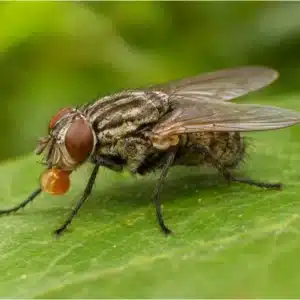
A typical house fly has a grey body, four dark stripes across the upper thorax, and a less reflective appearance. Blow flies are often larger and more robust, with a metallic blue, green, or bronze sheen.
| Feature | Blow Flies | House Flies |
|---|---|---|
| Body Colour | Often metallic blue, green, or bronze | Usually grey |
| Body Shape | Generally broad and sturdy | Usually smaller and less robust |
| Appearance | Noticeably shiny in many species | Duller, with dark thoracic stripes |
| Common Attractions | Decaying animal material, meat, and organic waste | Food scraps, rubbish, and other organic matter |
| Typical Concern | May contaminate food and indicate a breeding source | Can contaminate food and surfaces |
Although these differences are useful, some species overlap in size and appearance. Not every metallic fly is a blow fly, and not every blow fly has a vivid blue or green body.
For Sydney homeowners, identifying the insect correctly is important because effective fly control depends on finding what attracts it. Simply spraying visible adults may not solve the problem if a breeding source remains nearby.
What Are the Different Types of Blow Flies Found in Sydney?
Several blow fly species and related flies occur in Australia. The species you encounter will depend on the surrounding environment, available food sources, and local conditions.
Bluebottle Flies
Bluebottle flies are among the most familiar large flies seen around Sydney. They are recognised by their shiny blue or blue-green bodies and loud buzzing flight. They may gather around outdoor rubbish bins, exposed food, barbecues, and decaying animal material.
Their presence around a property can be particularly noticeable during warmer periods when suitable breeding material is readily available.
Green Bottle Flies
Green bottle flies typically have a bright, metallic green appearance. Some species are attracted to decaying organic material, while others have different feeding and breeding habits.
A green metallic fly around your garden is not necessarily breeding on your property. It may have travelled from a nearby source before landing on flowers, outdoor surfaces, or waste containers.
Brown and Dark Blow Flies
Not all blow flies have bright metallic colours. Some Australian species appear darker, brownish, or less reflective. These flies can be harder to identify without a close photograph or expert assessment.
Because appearance varies considerably, avoid relying on colour alone when deciding which species you have found. The location where the insect appears and the presence of larvae can provide additional clues.
Where Are Blow Flies Commonly Found Around Sydney Homes?
Sydney’s mix of residential gardens, parks, outdoor dining areas, and busy commercial premises creates many places where flies can find food and suitable breeding material.
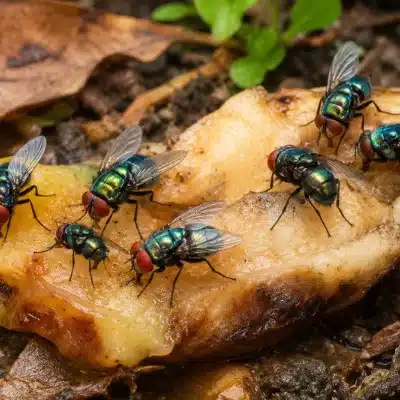
These insects are often attracted to substances rich in protein and moisture. Depending on the species, this may include decomposing animal matter, exposed meat, pet waste, and organic rubbish.
Common places to check around your property include:
Outdoor rubbish bins: Food scraps, leaking rubbish bags, and residue inside bins can attract adult flies and provide suitable breeding material.
Kitchens and food preparation areas: Uncovered meat, food waste, and poorly managed rubbish can draw flies indoors, especially during meal preparation.
Gardens and compost areas: Compost containing unsuitable food waste, animal remains, or other decomposing material may attract certain species.
Pet areas: Pet faeces and uneaten animal food can provide attractive feeding or breeding sites if not cleaned regularly.
Dead animals: A dead rodent, bird, or other small animal hidden beneath a deck, in a roof void, or inside a wall cavity can attract flies. A sudden increase in indoor activity may justify checking for an inaccessible source.
Commercial waste areas: Restaurants, cafes, takeaway shops, warehouses, and other businesses that handle food may experience increased fly activity if waste management or cleaning practices are inadequate.
Finding flies in one of these locations does not automatically mean they are breeding there. However, repeatedly seeing them around the same area is a good reason to investigate.
Why Do Blow Flies Enter Houses?
Finding several large flies inside your home can be frustrating, especially when doors and windows appear to be closed. Blow flies often enter houses while searching for food, suitable breeding materials, or sheltered places to rest. In Sydney, warmer weather and accessible organic waste can contribute to increased fly activity around homes and businesses.
Here are some common reasons blow flies enter indoor spaces:
- Open doors and windows: Flies can enter easily through open windows, doors, and garage entrances, particularly when fly screens are missing or damaged.
- Food smells: Exposed meat, uncovered food, food scraps, and unsealed rubbish bins can attract flies towards kitchens and dining areas.
- Gaps and openings: Poorly sealed windows, damaged screens, and small gaps around doors may provide easy entry points.
- Decaying organic matter: Spoiled food, pet waste, and other decomposing materials around the property can attract adult flies.
- Hidden dead animals: A dead rodent or bird inside a roof void, wall cavity, or another inaccessible space may attract flies and provide a breeding source.
What Should You Do If Blow Flies Suddenly Appear?
If you notice a sudden increase in blow flies, inspect accessible rubbish bins, clean food preparation areas, and check for unusual odours. Avoid opening walls or disturbing hidden spaces yourself. If the problem continues without an obvious cause, professional pest control can help locate the source and recommend suitable treatment to prevent recurring fly activity.
What Is the Life Cycle of a Blow Fly?
Understanding the fly life cycle helps explain why a small number of insects can sometimes become a noticeable problem within a short period.
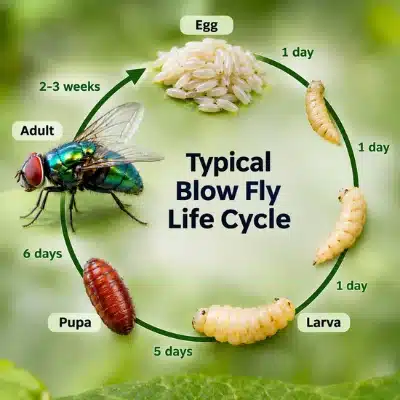
Depending on the species and environmental conditions, development generally progresses through four stages.
1. Eggs
Many species lay eggs on suitable organic material, including decaying animal matter, food waste, and other breeding substrates. Some related flies deposit live larvae rather than eggs, so reproduction varies across species.
2. Larvae
After hatching, the larvae, commonly called maggots, feed on the material where they develop. They are generally pale, soft-bodied, and legless, with a segmented appearance.
Finding maggots in a rubbish bin or around decomposing material may indicate that flies have had access to a suitable breeding source.
3. Pupae
Once the larvae have developed sufficiently, they move to a more suitable place to pupate. Depending on the circumstances, this may be in drier material, soil, or a protected area near the original food source.
4. Adult Flies
Adult flies emerge from the pupal stage and begin searching for food and suitable places to reproduce. When conditions are favourable, development can be rapid. Some blow fly species can complete their life cycle in approximately a week under ideal conditions, although the actual timing varies with temperature and species.
This is why removing the source of an infestation is so important. Killing adult flies without addressing developing larvae may only provide temporary relief.
Are Blow Flies Harmful to Humans?
Blow flies are not generally known for biting people, but their feeding and breeding habits can create hygiene concerns. They may visit rubbish, faeces, decaying animal matter, and other contaminated materials before landing on food preparation surfaces or uncovered food.
This movement creates opportunities for mechanical contamination. The risk depends on the circumstances, but it is sensible to prevent flies from contacting food and food-contact surfaces.
For households, practical precautions include keeping food covered, cleaning preparation surfaces, washing hands after handling waste, and disposing of spoiled food promptly.
Businesses that prepare or serve food should take particular care. Regular cleaning, secure waste storage, and effective fly exclusion help maintain hygienic conditions and reduce the likelihood of contamination.
It is also important to distinguish ordinary nuisance flies from species that pose specific risks to animals. Certain blow fly species can cause flystrike in livestock, while other species have different biological habits. Correct identification matters when a fly problem involves pets, livestock, or wounds.
If flies repeatedly appear around a particular area, investigate the underlying source rather than assuming that every species presents the same level of risk.
How to Prevent Blow Flies Around Your Sydney Property
Prevention is often more effective than repeatedly treating adult flies. By reducing food sources and limiting access to your property, you can make the surrounding environment less attractive to them.
Keep Rubbish Bins Clean
Use bins with secure-fitting lids and avoid leaving rubbish bags exposed. Clean the inside and outside of bins regularly, especially if food liquids have leaked. Where possible, keep outdoor bins away from doors and windows.
Dispose of Food Waste Promptly
Place meat scraps, spoiled food, and other odorous waste in sealed bags before disposal. Avoid leaving uncovered food outdoors for extended periods, particularly during barbecues and gatherings.
Maintain Kitchen Hygiene
Wipe benches, clean spills, and store food in sealed containers. Empty indoor rubbish bins regularly and clean the surrounding floor and cupboard areas where residue can accumulate.
Manage Pet Waste
Remove pet faeces promptly and clean feeding areas regularly. Store animal food securely and avoid leaving uneaten wet food outdoors for long periods.
Check Compost and Garden Areas
Manage compost according to appropriate guidelines and avoid adding materials that attract unwanted pests. Remove dead animals safely and promptly where possible, while taking care not to handle them directly.
Install and Maintain Fly Screens
Repair torn window screens and check seals around doors. Door sweeps and suitable weather stripping can help reduce entry through small gaps.
Investigate Unusual Fly Activity
If adult flies keep appearing in one room, inspect nearby rubbish, inaccessible corners, and other likely sources. Persistent activity may require professional investigation to locate a hidden breeding site.
How to Get Rid of Blow Flies Indoors
Finding blow flies buzzing around your kitchen or living room can be frustrating. The best way to get rid of blow flies indoors is to remove the adult insects, maintain good hygiene, and identify what is attracting them in the first place. Simply killing visible flies may not solve the problem if a breeding source remains nearby.
Here are some practical ways to manage indoor blow flies:
1. Remove visible flies: Use a fly swatter or suitable indoor fly trap to catch adult flies. Always follow the product instructions and keep traps away from food, children, and pets.
2. Maintain cleanliness: Cover food, wipe up spills, clean kitchen surfaces, and empty rubbish bins regularly. These steps help reduce the smells that attract flies.
3. Secure entry points: Install or repair fly screens on windows and doors to prevent more blow flies from entering your home.
4. Use insecticides carefully: Avoid spraying chemicals near food, utensils, or occupied areas. Only use products labelled for indoor fly control and follow all safety directions.
5. Find the breeding source: If blow flies keep returning, check rubbish containers and accessible areas for decaying organic matter. A dead rodent or bird hidden in a roof void or wall cavity may also attract flies.
If the infestation continues or the source is difficult to locate, professional pest control can help identify the cause and recommend suitable treatment to prevent recurring fly problems.
When Should You Contact a Professional Pest Control Service in Sydney?
Occasional fly activity around outdoor rubbish or during warm weather does not always require professional treatment. However, recurring or unexplained activity can indicate a problem that basic cleaning has not resolved.
Consider seeking professional assistance when:
- Large numbers of flies repeatedly appear indoors.
- Maggots continue to develop in rubbish or other areas despite cleaning.
- Flies seem to emerge from a wall cavity, ceiling space, or another inaccessible location.
- A business experiences persistent fly activity around food storage or preparation areas.
- You cannot identify or safely remove the source attracting the insects.
A professional can inspect the affected areas, assess possible breeding sites, and recommend suitable control measures. The approach should address the underlying cause as well as the adult insects.
Profession Sydney pest control service provides pest management services for residential and commercial properties. If you are dealing with persistent fly activity, contact the team to discuss your concerns and determine whether an inspection or treatment is appropriate.
Conclusion
Understanding what blow flies look like can help Sydney homeowners identify fly problems early and take the right steps to manage them. Their metallic blue, green, or bronze bodies, sturdy shape, and loud buzzing flight can distinguish them from common house flies. However, accurate identification may sometimes require a closer look at their physical features and behaviour.
Effective blow fly control begins with good hygiene and simple preventive measures. Keep rubbish bins tightly sealed, remove food waste promptly, clean kitchen surfaces regularly, and install fly screens on windows and doors. It is equally important to identify and remove potential breeding sources, such as decaying organic matter or contaminated waste. If blow flies continue appearing indoors, there may be a hidden source that needs further investigation.
Ignoring persistent fly activity can allow the problem to continue, making early action worthwhile. Professional assistance can help identify the cause and determine the most suitable treatment for your property.
If you are struggling with recurring fly problems, EMK Termite & Pest Control Sydney can help you explore suitable pest management solutions for your home or business. Contact the team to discuss your concerns and arrange a professional assessment where needed. Take the first step towards a cleaner, more comfortable, and fly-free environment with reliable pest control support.
What Our Customers Had To Say


Frequently Asked Questions About Blow Flies
What colour are blow flies?
Many species have a shiny metallic blue, green, or bronze body. However, some Australian species are darker or less reflective, so colour should not be the only factor used for identification.
Why are large flies suddenly appearing in my house?
A sudden increase may be linked to open doors, uncovered food, exposed rubbish, or a nearby breeding source. If the flies keep appearing in one room, investigate the area for decaying organic material or a hidden dead animal.
Do blow flies lay eggs in rubbish bins?
Yes, suitable rubbish can provide breeding material for some species, particularly when food waste or decaying animal matter is accessible. Keeping bins clean, covered, and emptied regularly helps reduce the risk.
How quickly can blow flies multiply?
Development varies according to species, temperature, and food availability. Under favourable conditions, some species can develop from egg to adult in around a week, while others take longer.
Are blow flies the same as bluebottle flies?
Bluebottle flies are a familiar type of blow fly. However, the blow fly group includes multiple species with different colours, sizes, and habits.
What is the best way to prevent flies from entering my home?
Keep rubbish sealed, clean food preparation areas, remove pet waste, maintain fly screens, and close doors where possible. If flies continue appearing, identify and remove the source attracting them.
About The Author
