
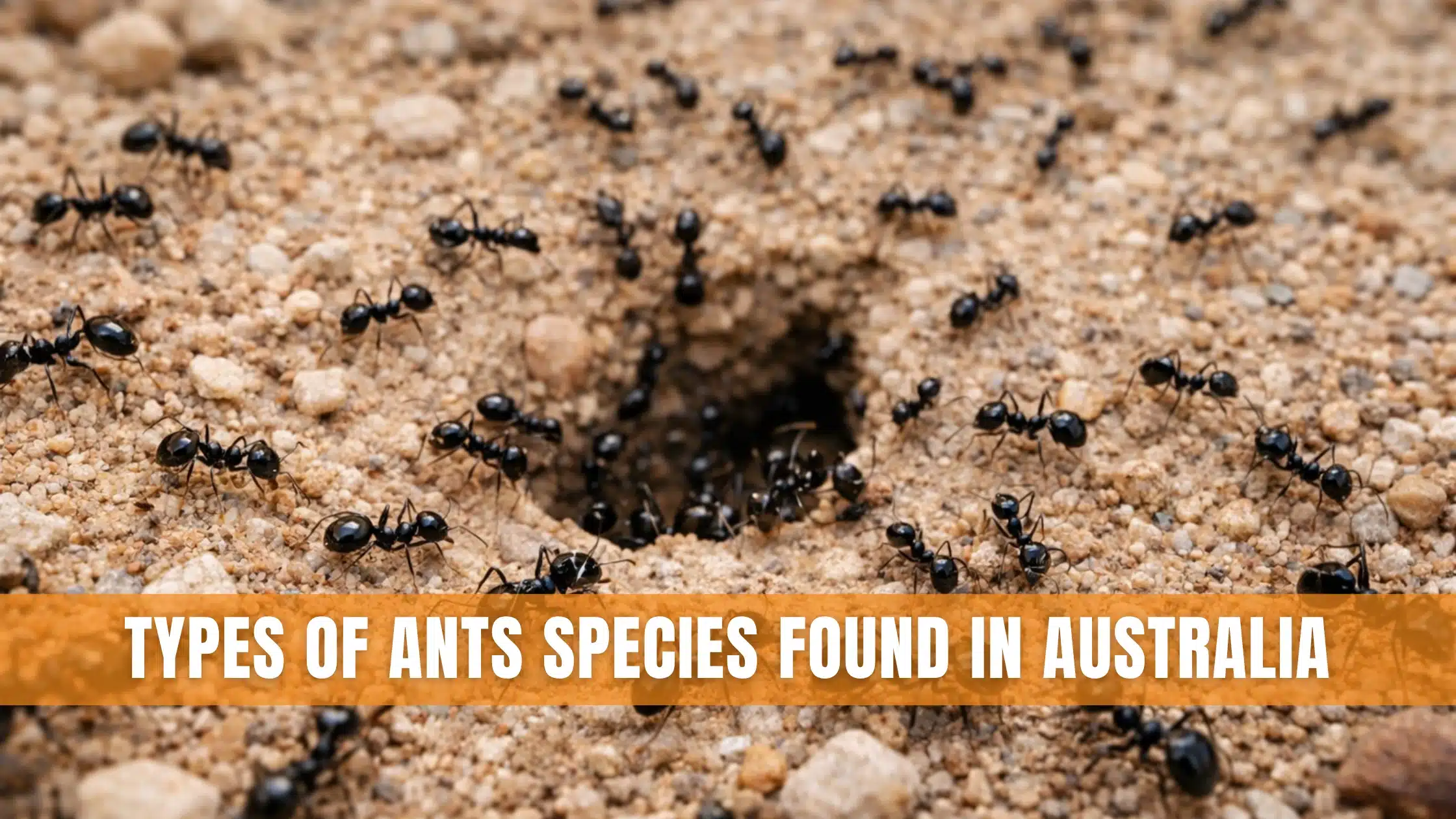
Carpenter ants are a large group of Australian ants known for damaging wooden structures in homes, which is why they’re often called “wood-destroying ants.” Although they don’t eat wood like termites, they tunnel through it to build nests. If left untreated, a Camponotus species infestation can weaken timber over time and lead to costly repairs. Early detection and proper treatment are important to prevent structural damage and keep your property protected from long-term issues.
Appearance
An interesting feature of carpenter ants is their colour variation, which can range from black to dark orange. They typically measure between 3mm and 12mm in length and have a smooth, shiny body.
These wood-damaging ants also differ in size depending on their role within the colony, with worker ants, soldiers, and reproductive ants each varying slightly in appearance and size.
Lifecycle
Carpenter ants are mainly nocturnal, so activity is easier to spot at night when they leave the nest to forage. They usually don’t travel in large groups, making their trails harder to detect.Instead of relying on a single nest, carpenter ants often establish multiple “satellite” nests, which helps the colony survive even if one nest is disturbed or destroyed.
Habits
Carpenter ants feed on both live and dead insects, as well as food commonly consumed by humans. True to their name, they tunnel through wood to create nesting galleries, which can lead to noticeable damage in wooden structures and household items over time.
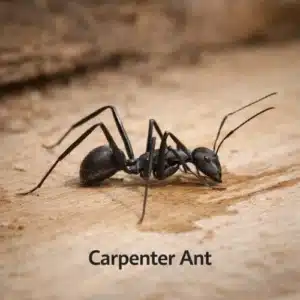
Bull ants, also known as bulldog or jack jumper ants, are among the largest ant species in Australia, growing up to 40mm in length. They are easily recognised by their strong jaws, sharp vision, and aggressive nature. Their bite and sting are extremely painful and can be dangerous in some cases. Fortunately, bull ants are not commonly found in urban or residential areas, as they usually inhabit bushland and natural environments rather than homes or gardens.
Appearance
Bull ants can grow up to 40mm in size, making them one of the largest ant species. In addition to their impressive size, they have strong, elongated mandibles. They are usually black in colour, although some species display red shading on their abdomen.
Lifecycle
When a queen bull ant begins a new colony, she digs a small chamber to lay her eggs. Typically, there is one queen responsible for laying all eggs, along with one or a few males whose sole role is to mate with her. The ant lifecycle progresses through four stages: egg, larva, pupa, and adult. Most ants are born female and develop into specific castes such as workers or soldiers. Interestingly, the queen bull ant may leave the nest at night to forage and provide food for her young. A queen can live for several years, sustaining the colony over time.
Habits
Bull ants are highly aggressive, especially when their nest is disturbed, often launching a rapid and coordinated attack. They usually build nests outdoors in soil, under logs, or beneath rocks, and are most commonly found in bushland rather than residential areas. These ants can deliver a very painful sting, and unlike bees, their stinger does not remain in the skin, allowing them to sting multiple times. They feed on other insects as well as sweet substances like honeydew and plant nectar. Each ant has a defined role within the colony, including workers, soldiers, the queen, and males.
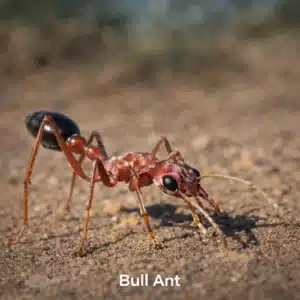
As you’ll realise, size isn’t everything in the ant world. Fire ants (RIFA) are small but highly aggressive insects capable of delivering painful stings to humans. This is what makes them particularly dangerous around homes and properties. If you encounter fire ants, it’s important not to handle them yourself. Instead, contact professional pest control services and notify your local authorities, as fire ants are considered a serious threat and require proper management to prevent their spread.
Appearance
Solenopsis invicta typically measure between two and six millimetres in size. These small but aggressive ants have copper-coloured heads and bodies, along with slightly darker abdomens.
Lifecycle
After swarming and mating, the queen searches for a suitable location to establish a nest and lay her eggs. In late spring, she can lay up to 125 eggs. These hatch into larvae within 8 to 10 days, followed by a pupal stage lasting around 9 to 16 days. Initially, larvae are nourished by secretions from the queen until the first worker ants develop. Once workers emerge, they take over responsibilities such as feeding the young, building the nest, and foraging, while the queen focuses solely on reproduction—laying up to 1,500 eggs per day. Fertile males are produced later in the season for mating.
Habits
Worker ants feed on dead animals, including insects, earthworms, and small vertebrates, as well as sweet substances like honeydew. Swarming usually occurs from mid to late summer, with mating taking place in flight; males die shortly after. Nests are often built as soil mounds up to 40 cm high or near objects like logs. When disturbed, these ants become highly aggressive and can deliver painful stings, often forming pustules within 48 hours. They are considered serious agricultural and urban pests, damaging crops and invading homes.
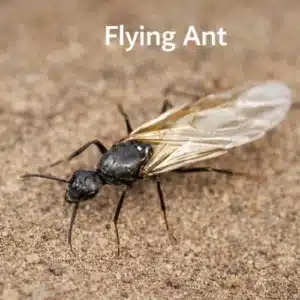
Flying ants are the reproductive members of a colony, including future kings and queens, released during warmer months. If you notice large numbers around your home, it usually indicates a nearby ant nest. These flying ants are often mistaken for flying termites, which can be a serious concern as termite infestations cause significant structural damage. Correct identification is important so you can take the right action and prevent potential pest problems around your property.
Appearance
Winged ants have two pairs of wings, with the lower pair noticeably smaller than the upper pair. Their wings are relatively short, often not extending far beyond their body. Flying ants also have clearly segmented bodies with distinct sections and a narrow, pinched waist, making them easy to identify.
Lifecycle
Flying ants typically swarm during the summer months when temperature, humidity, and wind conditions are ideal. During this period, males and virgin queens leave their colonies to mate in the air. After mating, the male dies, while the fertilised queen searches for a suitable location to establish a new nest, depending on the species. Once she finds a safe spot, the queen sheds her wings and begins building a new colony. She lays her first batch of eggs and cares for them until they develop into worker ants. From that point onward, her primary role is reproduction, while the worker ants take over tasks such as feeding the young, gathering food, and expanding the nest.
Habits
Flying ant swarms are a natural part of the mating process, where ants from different colonies reproduce mid-air. These ants can sometimes enter homes through open doors and windows. Depending on the species, they may pose a risk to property, especially if they establish nests nearby.
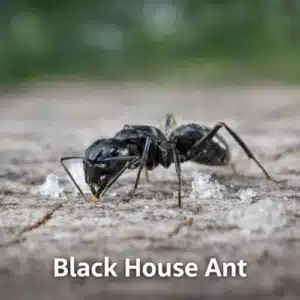
The black house ant is one of the most common household pest ants. While they usually nest outdoors and enter homes in search of food and water, they can also establish nests inside wall voids or roof cavities. These ants are particularly attracted to sugary foods and typically form a single nest with one queen. Although they can become a nuisance when present in large numbers, black house ants do not bite and are generally harmless to humans.
Appearance
Measuring around 2.5mm in size, Ochetellus glaber has a distinctly dark black body. The black house ant features a compact, stocky build along with two antennae on its head.
Lifecycle
The life cycle begins when the egg hatches into a small, white larva that is narrower at the head and is fed by adult ants. The larva then enters the pupal stage, appearing creamy-white and similar to an adult, sometimes enclosed in a protective silk cocoon. Eventually, the adult ant emerges with three distinct body parts: head, thorax, and abdomen. The full development from egg to adult usually takes around six weeks or more, depending on factors such as species, temperature, and food availability. Fertilised eggs develop into females, while unfertilised eggs become males.
Habits
These ants are considered a nuisance as they commonly scavenge in kitchens, garbage areas, and even pet waste, potentially spreading bacteria like salmonella. Black house ants are strongly attracted to sugary foods, while coastal brown ants prefer meat and greasy substances. The most effective way to control them is by locating and treating the main colony.
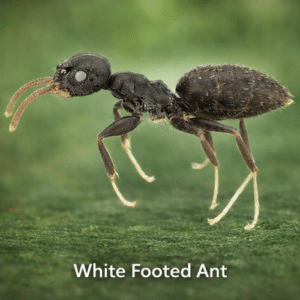
White-footed ants closely resemble black house ants but can be identified by the pale, almost white tips on their legs. They are attracted to sugary foods but are much harder to control due to their ability to form large colonies with multiple nests and numerous queens. These ants can establish nests both indoors and outdoors, making infestations more challenging to manage. Although they can be a persistent nuisance around homes, white-footed ants do not bite humans.
Appearance
Dark brown to black in colour, with pale yellow-white feet, and approximately 3mm in length.
Lifecycle
White-footed ant colonies can grow extremely large, sometimes reaching up to a million ants, making them highly invasive and difficult to control. Nearly half the colony consists of fertile females, giving them strong reproductive potential. These fertile females are winged and larger than worker ants. Winged males mate once before dying, while wingless males can mate multiple times. The worker ants, which are wingless females, are responsible for foraging and are most commonly seen searching for food.
Habits
White-footed ants do not bite or sting, but their large colony sizes make them a persistent nuisance. Instead of relying on a single nest, they form multiple satellite colonies across different locations. Outdoors, they nest in trees, under bark, plant debris, fences, and outdoor furniture, while indoors they are often found in kitchens, near bins, and food storage areas. They are strongly attracted to sweet substances such as nectar, sugary foods, and honeydew produced by aphids and mealybugs. These ants are usually seen foraging in large numbers, particularly at night during warmer temperatures.
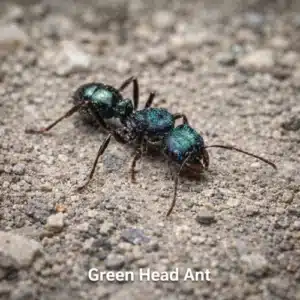
Green-head ants, often mistakenly called green ants, are common biting ants found in lawns. A single colony may have several nests close together, and multiple colonies can exist in one area. They typically nest in grass, under rocks, or logs and are most active during sunny conditions. Their bites are painful and can remain itchy for days. Removing green-head ants is important, especially in homes with children and pets, to prevent discomfort and potential allergic reactions.
Appearance
As the name suggests, green-head ants have a noticeable greenish tint to their exoskeleton. Workers, females, and males are similar in size, typically measuring between five and seven millimetres, and all possess a tough, well-armoured outer body.
Lifecycle
The ant life cycle progresses through four stages: egg, larva, pupa, and adult.
Habits
They usually form small colonies under pathways, in soil, or among rocks. These ants are found in both bushland and urban environments. Their diet mainly consists of plant-based materials. They rarely enter homes but can deliver a painful sting if disturbed.
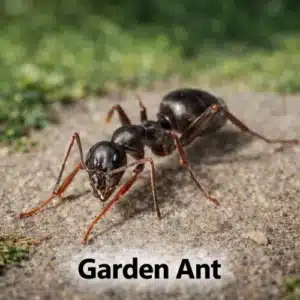
The garden ant is a native Australian species with colonies that can grow up to 40,000 workers, and some individuals are known to live for many years. These ants often farm aphids to collect honeydew, which is a key food source. They are strongly attracted to fruits, especially strawberries, and will feed on any soft fruit that lacks a thick protective skin. Their presence is common in gardens where food sources are readily available.
Appearance
The garden ant typically measures around 4mm in length and is black in colour. It is sometimes mistaken for the Argentine ant due to their similar appearance.
Lifecycle
Queens survive winter in the soil and begin laying eggs in late spring. The eggs hatch into larvae after about 3–4 weeks. These larvae are initially fed by the queen through gland secretions until the first worker ants emerge. Once workers develop, they take over responsibilities such as caring for the young, building the nest, and foraging for food. Fertile males are produced later in the season for reproduction.
Habits
Worker ants follow clear, well-defined trails to and from food sources. They are attracted to sweet foods but will also consume protein-rich items. Swarming usually occurs from mid to late summer, where mating takes place in flight and males die soon after. Nests are commonly found outdoors in soil or beneath paving, especially in sunny areas. Entry points are often marked by small piles of fine, powdery soil.
About The Author
