
Content Updated: June 8, 2026
10 Proven Rodent Control Sydney Strategies That Eliminate Infestations in 2026
Sydney homes are under siege — and most owners don’t discover it until the damage is done.
Rodent control Sydney experts deal with this reality every week: a single pair of Norway rats produces over 2,000 descendants in one year. By the time you hear scratching in your ceiling at 2 am, the colony is already established.
The frustration is real. You buy supermarket bait. You set snap traps under the sink. You hope the problem goes away. It doesn’t , because without closing entry points and eliminating food sources, you are simply rebaiting an active colony. Meanwhile, rats gnaw through electrical cables, contaminate bench surfaces, and breed faster than any hardware-store product can keep up with.
Pest control in Sydney requires a smarter, structured approach and that’s exactly what this guide delivers.
In this guide, you will discover how to identify the species infesting your property, the most effective professional treatment methods, and how to choose the best pest control company in Sydney — without wasting money on solutions that don’t last.
About this guide: EMK Termite Pest is a fully licensed pest management operator — holding a current NSW Fair Trading Pest Management Licence — with extensive field experience across residential, commercial, and strata rodent control in Greater Sydney.
How to Identify the Rodent Threatening Your Sydney Property
Correct species identification is the first step in any successful rodent control programme. The two dominant pest species in Sydney — the Norway rat (Rattus norvegicus) and the roof rat (Rattus rattus) — behave differently, nest differently, and require different treatment strategies. Treating the wrong species wastes time and money.
DIRECT ANSWER
Rodent identification means determining the exact species active in your property. Norway rats burrow underground and leave large, blunt-ended droppings near subfloors and drains. Roof rats climb and nest in ceiling voids, leaving smaller, pointed droppings. Correct identification determines bait placement, trap type, and entry-point strategy — all critical for lasting Sydney pest control results.
Norway Rat vs Roof Rat: Key Differences
Norway rats (Rattus norvegicus) are heavy-bodied, brown-grey rodents weighing up to 500 g. They burrow along fence lines, under concrete slabs, and inside subfloors. They enter homes through broken drain pipes and gaps in the foundation and they are expert swimmers.
Roof rats (Rattus rattus) are sleeker and darker. They climb aggressively, using overhanging trees, power lines, and downpipes to access roof cavities. Inner-city Sydney suburbs with dense tree canopy including Newtown, Glebe, and Leichhardt report consistently high roof rat activity.
House mice (Mus musculus) are the third common species. Smaller and faster to reproduce, they establish inside kitchen walls and storage areas and are often overlooked until populations explode.
5 Signs of Active Rodent Activity Right Now
- Dark, capsule-shaped rat droppings (5–20 mm) near food sources or shelter
- Greasy rub marks along walls from rodent fur oils
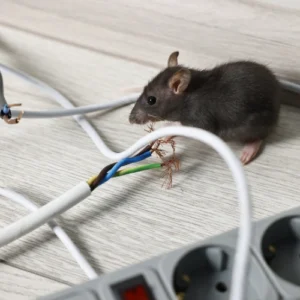
- Gnaw marks on timber, PVC pipes, and electrical cables
- Scratching or scurrying sounds at night in ceilings or wall cavities
- Shredded paper, insulation, or fabric in hidden corners — nesting material
What Sydney Pest Control Methods Actually Work for Rodents?
Effective Sydney pest control for rodents is built on Integrated Pest Management (IPM) ,the evidence-based framework endorsed by the Australian Environmental Pest Managers Association (AEPMA). IPM combines three actions: exclusion, sanitation, and targeted treatment. No single tactic works in isolation.
DIRECT ANSWER
Sydney pest control for rodents uses Integrated Pest Management (IPM). IPM works by combining exclusion , sealing every entry point with sanitation , removing food and shelter and targeted baiting or trapping. It is the most effective approach because it addresses root causes. Licensed technicians use IPM to deliver lasting results where DIY methods consistently fail.
Step 1 — Exclusion: Seal Every Entry Point
A rat squeezes through a gap of just 12 mm , the diameter of a 20-cent coin. Common entry points include gaps around pipe penetrations, broken air-brick vents, worn door seals, and unsealed roof junctions. Professional exclusion uses galvanised steel wool, concrete mortar, and metal flashing materials rodents cannot gnaw through.
Step 2 — Sanitation: Remove Every Attractant
Rodents are opportunistic feeders. Open compost bins, unsecured pet food, fruit on the ground, and accessible garbage create the conditions for infestation. Eliminating attractants breaks the harbourage cycle. According to the AEPMA, sanitation alone can reduce rodent activity by up to 60% when combined with exclusion measures [AEPMA, 2023].
Step 3 — Targeted Baiting and Trapping
Second-generation anticoagulant rodenticides (SGARs) — registered under the Australian Pesticides and Veterinary Medicines Authority (APVMA) remain the most effective treatment for established infestations. They must be deployed in tamper-resistant bait stations by a licensed operator. Electronic kill traps and snap traps provide chemical-free alternatives particularly suited to food-handling environments and households with pets or children.
How to Choose the Best Pest Control Company in Sydney
Selecting the best pest control company in Sydney is not simply about the lowest quote. Licensing, methodology, documentation, and after-service guarantees determine whether your infestation is resolved or merely suppressed until the next season. The wrong choice costs more in the long run.
DIRECT ANSWER
The best pest control company in Sydney holds a current NSW Fair Trading pest management licence, uses only APVMA-registered products, provides a written treatment report, and offers a service guarantee. Verify licence numbers before booking. Licensed operators must carry public liability insurance and comply with Australian Standard AS 3660 for pest management.
4 Credentials to Verify Before You Book
- NSW Fair Trading Pest Management Licence — verify at onlineregistry.fairtrading.nsw.gov.au
- Public liability insurance — minimum $5 million cover is industry standard
- APVMA product registration compliance — all products must be registered for the target pest
- Written service report — including products used, concentrations, and placement locations
Red Flags That Signal an Unlicensed Operator
Be cautious of operators who quote a flat fee over the phone without inspection, cannot provide a licence number immediately, offer prices dramatically below the market rate, or apply pressure to book on the spot. Genuine professionals inspect each property individually — because no two infestations are identical.
How to Prevent Rodent Infestations: A Sydney Homeowner's Checklist
Prevention is significantly more cost-effective than reactive treatment. Pest control in Sydney increasingly emphasises proactive property hardening , making your home structurally inhospitable to rodents before an infestation takes hold. This six-step checklist is practical and immediately actionable.
Secure all food in rodent-proof containers – Use hard-sided glass or metal storage for dry goods. Never leave pet food in open bowls overnight , this is one of the most common infestation triggers in Sydney homes.
Seal all external gaps above 12 mm – Inspect pipe penetrations, weep holes, and roof junctions thoroughly. A single unsealed 15 mm gap is enough for an adult rat to enter.
Trim all vegetation away from your roofline – Maintain at least 600 mm clearance between overhanging branches and your roof edge. Roof rats use tree canopy as access bridges ,common across Sydney’s Inner West and North Shore.
Secure compost bins and garbage storage – Use bins with tight-fitting lids. Avoid composting meat, fish, or dairy these are high-attraction food sources that draw rodents from neighbouring properties.
Repair all leaking taps and drain issues promptly – Moisture is a critical attractant, especially for Norway rats that frequently enter via cracked drain pipes beneath older Sydney properties.
Schedule an annual professional pest inspection – A licensed technician identifies structural vulnerabilities before they become active infestations. This is especially important for Sydney properties built before 1980.

DIRECT ANSWER
Preventing rodent infestations in Sydney requires securing all food, sealing exterior gaps below 12 mm, trimming vegetation away from rooflines, and booking annual pest inspections. These actions eliminate what rodents need: food, shelter, and access. Prevention costs significantly less than treating an established infestation with a licensed pest control technician.
What Health Risks Do Rodents Pose to Sydney Families?
Beyond structural damage, rodents represent a direct public health risk in Sydney. Understanding the diseases carried by common Sydney rat species and their transmission pathways helps homeowners respond with appropriate urgency. This is not alarmism. It is documented fact.
Leptospirosis — The Primary Biological Risk
Leptospirosis is caused by Leptospira bacteria carried in rodent urine. It enters the human body through skin abrasions, mucous membranes, or contaminated water. NSW Health recorded a 22% increase in leptospirosis notifications across Greater Sydney between 2022 and 2024, linked in part to post-flood rodent displacement into residential areas [NSW Health, 2024].
Secondary Health Risks in Sydney Homes
Salmonellosis spreads through rodent faeces contaminating food preparation surfaces — an acute risk in kitchens where rodents have access overnight. Respiratory allergies and asthma are triggered by rodent dander and urine proteins, particularly dangerous for children and elderly residents. Paralysis tick infestations can follow rodent activity rodents are primary hosts for Ixodes holocyclus, endemic across Sydney’s northern and north-western suburbs.
DIRECT ANSWER
Rodents in Sydney carry pathogens including leptospirosis, salmonella, and hantavirus. These diseases transmit via rodent urine, faeces, and direct contact. Leptospirosis is a bacterial infection causing severe liver and kidney damage. NSW Health advises immediate professional rodent control action whenever infestations are confirmed near food preparation or storage areas.
Why Sydney Commercial Properties Need Specialist Rodent Control
Rodent control in Sydney’s commercial sector restaurants, cafés, food manufacturing facilities, warehouses, and strata complexes operates under a stricter regulatory framework than residential treatment. Non-compliance with the Food Act 2003 (NSW) or the Work Health and Safety Act 2011 can result in immediate licence suspension, public shaming through food safety ratings, and significant financial penalties.
Strata and Multi-Dwelling Properties
Multi-dwelling properties present unique challenges. Shared walls, common-area garbage collection points, and underground car parks create continuous rodent pressure across the building. Individual unit treatments are largely ineffective without a whole-of-building approach coordinated by the Owners Corporation.
EMK Termite & Pest Control Sydney provides strata-specific rodent management programmes , including quarterly inspections, tamper-resistant station mapping, and documented Owners Corporation reporting to satisfy by-law obligations under the Strata Schemes Management Act 2015 (NSW).
DIRECT ANSWER
Commercial rodent control in Sydney must comply with the NSW Food Act 2003 and WHS Act 2011. Licensed operators deploy tamper-resistant bait stations with full placement documentation for audit purposes. Scheduled monthly visits are typically required to satisfy food authority compliance standards in hospitality and food manufacturing environments in Sydney.
Final Thought
Effective rodent control in Sydney starts with correct species identification Norway rats, roof rats, and house mice each require a different approach. Second, always engage a fully licensed pest control company in Sydney with verified credentials, written documentation, and a service guarantee. Third, prevention sealing entry points, eliminating food sources, and booking annual inspections costs far less than treating an established infestation.
Sydney’s urban density, ageing housing stock, and post-flood rodent displacement mean the risk is persistent and real. With the strategies in this guide, you are now equipped to act decisively and to demand the right standard of pest control in Sydney when you engage a professional.
Stop Rodents Before They Cost You More
EMK Termite Pest’s fully licensed technicians are ready to inspect, identify, and eliminate your rodent problem — with a written service report and guarantee.
Fully licensed · Sydney-wide · Same-week bookings available
What Our Customers Had To Say
 Posted on Google
 Rami Anwer
Trustindex verifies that the original source of the review is Google.
We had such a great experience with the pest control service. From start to finish, everything was quick, easy and completely hassle-free. The team were professional, friendly and made the whole process so simple. We’re really happy with the results and the quality of the service we received from Eevil. I would definitely recommend EMK to anyone looking for a reliable pest control company!Posted on Google Rena NajimReally happy with the service today. Professional, friendly and did a great job. Would definitely recommend!Posted on Google
 David DavidEMK provided excellent pest control service. He was professional, punctual, and knowledgeable, explained the process clearly, and ensured it was safe for our family and pets. We saw great results straight away. Friendly, reliable, and highly recommended.Posted on Google
 Ann TranWe highly recommend EMK Termite and Pest Control Sydney. Great service, great prices, friendly and very accommodating. They are very thorough and take pride in their work. Cannot rate them high enough. 5 stars 🌟Posted on Google
 Charlton DurieI had these guys come and sort a termite issue. They got the job done. Thanks again!Posted on Google
 David MarshSuper happy with EMK for getting rid of such a horrible termite infestation! Professional and very friendly.Posted on Google
 Michael ZammitJust had EMK come out to do a rodent control treatment. The service and professionalism was superb!Verified by TrustindexTrustindex verified badge is the Universal Symbol of Trust. Only the greatest companies can get the verified badge who has a review score above 4.5, based on customer reviews over the past 12 months. Read more
Frequently Asked Questions About Rodent Control in Sydney
Look for droppings along skirting boards, gnaw marks on cables or packaging, scratching sounds in walls at night, greasy rub marks, and shredded nesting material. Two or more of these signs together confirm active rodent activity. Contact a licensed Sydney pest control technician immediately.
Integrated Pest Management (IPM) — combining exclusion, sanitation, and targeted treatment — is the most effective method. Licensed pest control technicians tailor the approach to the species present. DIY treatments rarely resolve established infestations in Sydney properties.
Professional rodent control in Sydney typically costs $150–$400 for a standard residential treatment, depending on property size and infestation severity. Ongoing service programmes deliver better long-term value than one-off treatments and reduce the risk of reinfestations.
Yes. Norway rats and roof rats in Sydney carry leptospirosis, salmonella, and hantavirus. They also gnaw through electrical wiring, contributing to house fires. NSW Health recommends immediate professional action whenever rodent activity is confirmed near food preparation areas.
A single breeding pair of Norway rats can produce over 2,000 descendants in one year. House mice reach sexual maturity in just six weeks. Early intervention is critical — every week of delay significantly increases treatment complexity and cost.
About The Author

EMK Termite & Pest Control Team
EMK Termite & Pest Control Team is a licensed and experienced pest control service provider based in Sydney, Australia. Our team specialises in termite treatment, cockroach control, spider control, and general pest management for residential and commercial properties.
With years of hands-on experience, we follow Australian safety standards and use proven, eco-friendly pest control methods to deliver long-lasting results. All content published on this website is written and reviewed by trained pest control professionals to ensure accuracy, safety, and real-world expertise.