
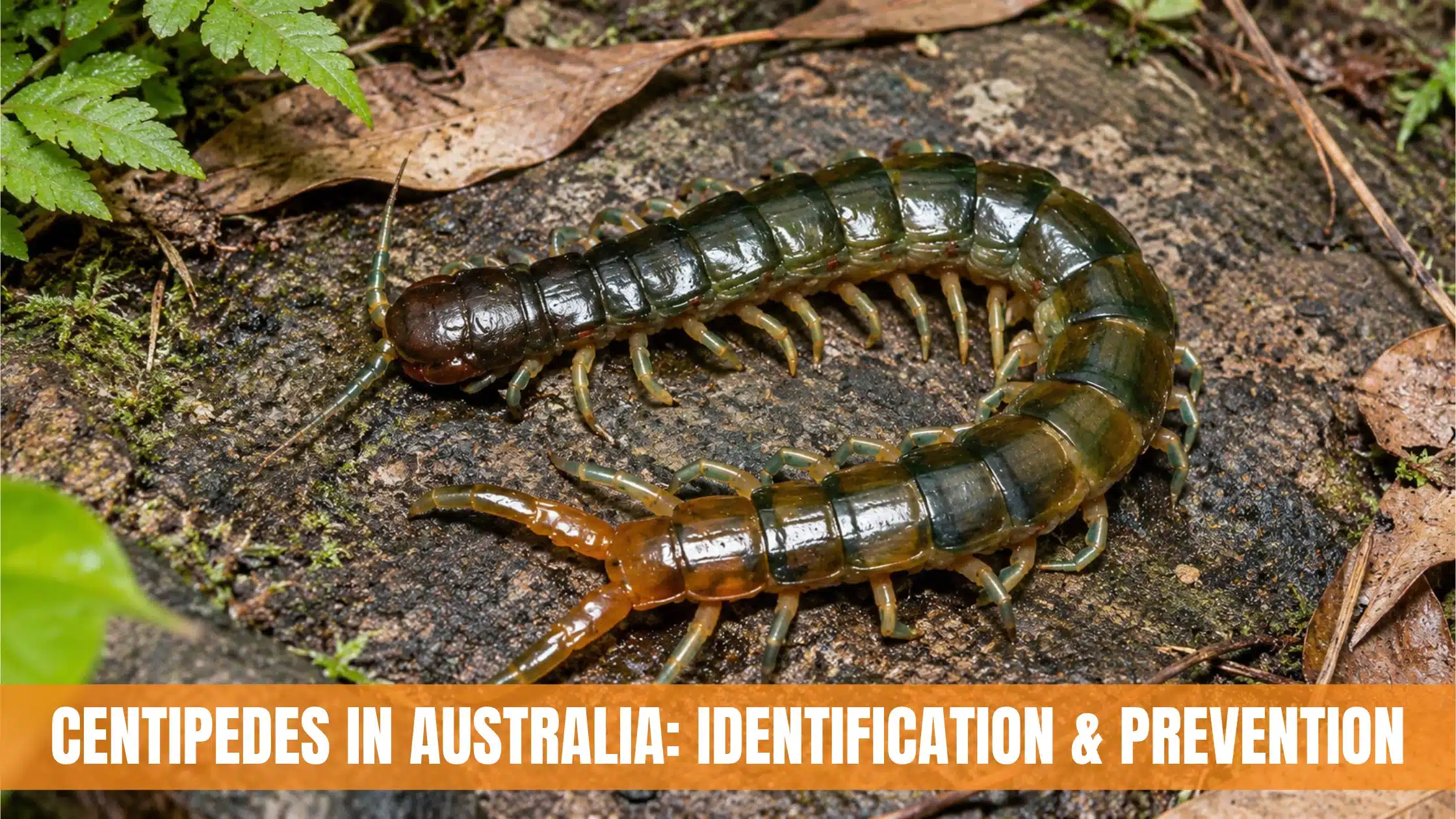
Content Published : November 3, 2026
Centipedes in Australia: Identification, Prevention and Control Guide
Finding a fast-moving centipede in your bathroom, laundry, or garden can be an unpleasant surprise. In Sydney, centipedes often hide in damp, sheltered areas such as gardens, leaf litter, beneath rocks, and around decaying timber. Although their many legs and quick movements can look frightening, these creatures play a role in the ecosystem by feeding on insects and other small invertebrates.
Centipedes may enter homes when they find moisture, food, or suitable hiding places. Bathrooms, basements, and areas beneath sinks can provide favourable conditions, especially when ventilation is poor or leaks go unnoticed. Gaps around doors, windows, and pipes may also allow them to move indoors.
Understanding centipede behaviour is an important first step towards preventing unwanted encounters. Simple measures, including reducing indoor moisture, clearing garden debris, sealing entry points, and controlling other insects, can make your property less attractive to these pests.
This guide explains how to identify centipedes, recognise common hiding spots, and understand why they may appear inside Sydney homes. It also covers practical prevention methods and when professional Sydney pest control may be necessary. By addressing the conditions that attract centipedes, homeowners can reduce their presence and maintain a cleaner, more comfortable living environment.
What Is a Centipede?
A centipede is a many-legged arthropod belonging to the class Chilopoda. Despite their appearance, these animals are not insects. Their long, segmented bodies, antennae, and single pair of legs on each body segment distinguish them from many other small creatures found around Australian homes.
They are predators that feed on insects, spiders, worms, slaters, and other small invertebrates. Their front legs are modified into venom-delivering claws, which help them catch prey and defend themselves when threatened. They generally prefer to avoid people and hide in dark, protected locations.
In Sydney, these animals can be encountered in bushland, gardens, parks, and residential properties. They are particularly associated with damp habitats where they can find shelter and food.
Seeing one occasionally does not necessarily indicate a major pest problem. However, repeated sightings indoors may suggest that suitable hiding places, moisture, or prey are readily available around your property.
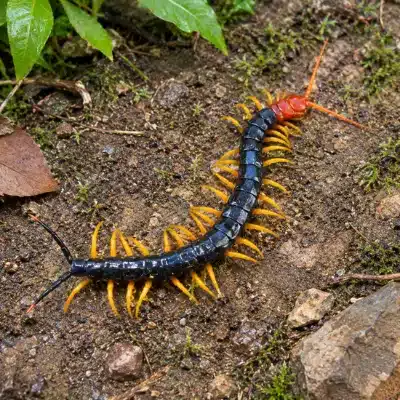
How to Identify a Centipede
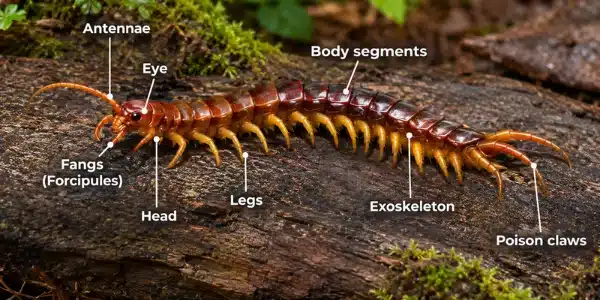
Identifying a centipede correctly can help you understand its behaviour and decide how to manage it around your Sydney property. These fast-moving creatures often hide in damp, sheltered places such as bathrooms, laundries, gardens, and storage areas. Although they may look similar to other crawling pests, their physical features make them easier to recognise.
Look for these common characteristics when identifying a centipede:
- Long, Segmented Body: Centipedes have elongated, usually flattened bodies divided into multiple segments.
- One pair of legs per segment: Each body segment typically has one pair of legs, helping distinguish centipedes from millipedes.
- Long Antennae: Their antennae help them sense their surroundings and locate potential prey.
- Fast Movement: Centipedes can move quickly when disturbed, often disappearing beneath furniture, rocks, or other sheltered spots.
- Predatory Behaviour: Unlike many garden pests, centipedes hunt insects, spiders, and other small invertebrates for food.
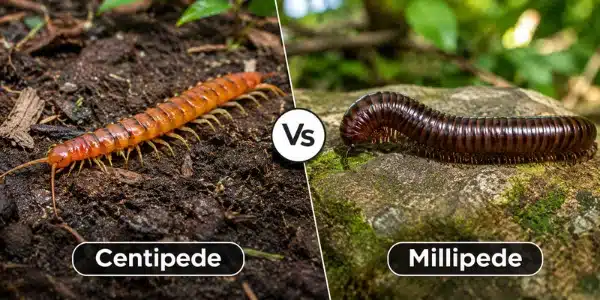
Millipedes are often more rounded and move more slowly. They generally have two pairs of legs on most body segments and feed mainly on decaying vegetation.
Why Do Centipedes Appear Around Sydney Homes?
Centipedes are commonly found around Sydney homes because they need moisture, shelter, and a steady supply of food to survive. Gardens, damp corners, and cluttered outdoor spaces can provide ideal hiding places. When outdoor conditions change or their natural shelters become unsuitable, centipedes may move indoors in search of a more comfortable environment.
Several factors can attract centipedes to residential properties:
- Damp and Humid Conditions: Bathrooms, laundries, leaking pipes, and poorly ventilated rooms provide moisture that attracts centipedes.
- Garden Debris: Leaf litter, mulch, rocks, fallen branches, and decaying timber create sheltered areas where centipedes can hide during the day.
- Availability of Prey: Centipedes feed on insects and other small invertebrates. Properties with ants, cockroaches, spiders, and similar pests may offer a reliable food source.
- Easy Entry Points: Small gaps beneath doors, cracks in walls, damaged screens, and openings around pipes can allow centipedes to enter homes.
- Weather Changes: Heavy rain, warm weather, or changes in outdoor moisture levels may encourage centipedes to seek shelter in more suitable locations.
Although seeing a centipede occasionally is not necessarily a sign of an infestation, repeated sightings may indicate excess moisture, suitable hiding places, or other pest activity. Reducing dampness, clearing garden debris, sealing entry points, and controlling insects can help make your Sydney property less attractive to centipedes.
Common Centipede Species Found in Sydney
Different species occur across New South Wales, and their appearance can vary considerably. Correct identification is useful because size, movement, habitat, and potential bite severity differ between species.
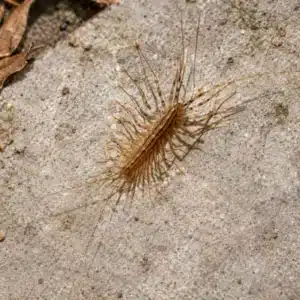
House Centipedes
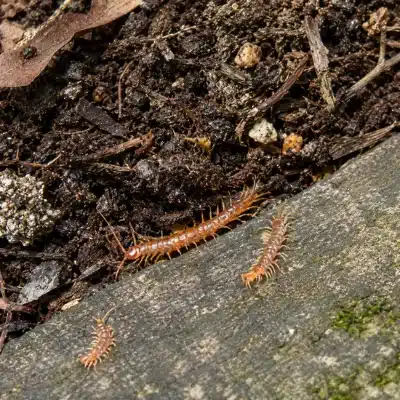
House centipedes are often recognised by their slender bodies and unusually long, delicate legs. The Australian Museum identifies the Australian house centipede, Allothereua maculata, as a species commonly encountered indoors and in urban environments. It feeds on spiders and other insects and is generally considered harmless to people.
Scolopendrid Centipedes
Scolopendrid species are generally more robust, with stronger bodies and shorter, sturdier legs than house centipedes. Several species occur in the Sydney region, including members of the genus Cormocephalus.
They may be found in gardens, woodlands, and urban environments. These larger animals can deliver painful bites if handled or disturbed, so they should never be picked up with bare hands.
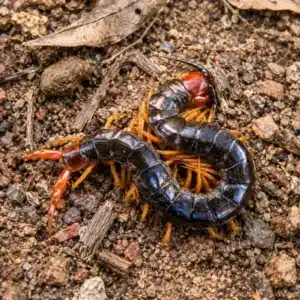
If you cannot confidently identify an animal, avoid touching it. A clear photograph taken from a safe distance may help a pest professional identify the species.
Are Centipedes Dangerous to Humans and Pets?
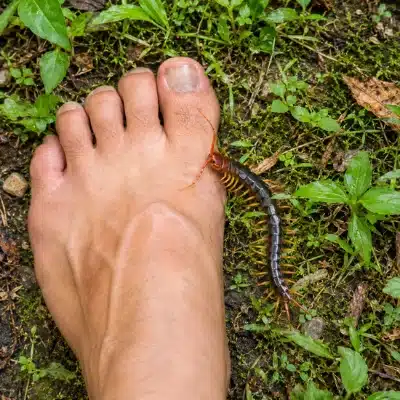
Centipedes may look frightening, but most will try to escape rather than approach people. However, some species can bite if they are handled, stepped on, or accidentally trapped against the skin. Understanding the risks can help you protect your family and pets from unwanted encounters.
A centipede bite may cause localised pain, redness, swelling, or tingling around the affected area. Bites from larger Australian species can be particularly painful, although serious complications are uncommon. The severity of a reaction can vary depending on the species and the individual.
To reduce the risk of a bite, follow these precautions:
- Avoid touching or handling unfamiliar centipedes.
- Wear gloves and closed footwear when gardening.
- Check carefully before moving rocks, firewood, or damp garden debris.
- Teach children to observe centipedes without touching them.
- Keep pets away from centipedes and areas where these creatures may hide.
What to Do After a Centipede Bite
If a centipede bites you, wash the affected area with soap and water and apply a cold pack wrapped in cloth to help ease pain and swelling. Avoid placing ice directly on the skin.
Seek medical advice if the pain persists, symptoms worsen, or you are concerned about the reaction. In Australia, you can contact the Poisons Information Centre on 13 11 26 for guidance. Call Triple Zero (000) if severe symptoms occur, such as difficulty breathing, throat swelling, or collapse.
Taking simple precautions and reducing centipede hiding places can help make your Sydney home safer for everyone.
How to Keep Centipedes Out of Your Sydney Home
Preventing indoor encounters begins with making the surrounding environment less attractive and reducing the number of places where these animals can hide.
1. Reduce moisture around the property
Repair leaking taps, pipes, and outdoor hoses. Clear blocked gutters and check that water drains away from the building. Improve ventilation in damp storage areas and address persistent moisture problems rather than simply treating the visible symptoms.
2. Clear garden debris
Remove unnecessary piles of fallen leaves, rotting branches, old timber, and unused building materials from areas next to the house. Store firewood on a raised rack and, where practical, keep it away from external walls.
3. Maintain garden edges
Trim excessive ground cover and keep vegetation from pressing directly against the building. You do not need to remove every plant or piece of mulch; instead, maintain the garden so it does not create an uninterrupted chain of damp hiding places beside your home.
4. Seal suitable entry points
Inspect gaps around doors, windows, service pipes, and damaged flyscreens. Repair worn door seals and seal suitable cracks where practical. These improvements can reduce entry opportunities for many crawling pests.
5. Keep indoor areas tidy
Avoid leaving damp towels, cardboard boxes, laundry piles, and stored items undisturbed in dark corners for long periods. Keep garages, laundries, and storage rooms organised so that hidden areas can be inspected and cleaned regularly.
6. Manage other insect activity
Since these predators feed on other small invertebrates, reducing persistent insect problems may make the surrounding environment less attractive as a hunting ground. Store food properly, clean spills, empty rubbish regularly, and address any underlying insect infestation.
How to Control Centipede When They Appear Indoors
Finding a centipede indoors can be unsettling, especially when it moves quickly across the floor or disappears into a dark corner. The safest approach is to avoid direct contact and keep children and pets away until the animal has been removed.
Here are some practical ways to manage centipedes inside your home:
- Remove the centipede safely: If it is small and you can approach it without risk, use a container and stiff card to trap and remove it without touching it directly. Avoid attempting this with large or fast-moving centipedes.
- Keep children and pets away: Prevent accidental contact by restricting access to the affected area until the centipede is gone.
- Avoid excessive insecticide use: Spraying entire rooms may expose household members and pets unnecessarily. If you use a pesticide, follow the product label and safety instructions carefully.
- Check for moisture and hiding places: Inspect bathrooms, laundries, storage areas, and spaces beneath sinks for leaks, dampness, and clutter.
- Seal possible entry points: Check gaps around doors, windows, pipes, and wall openings that may allow centipedes to enter.
If centipede sightings continue, look for underlying problems such as excess moisture or other insects that provide a food source.
What Are the Differences Between Millipedes and Centipedes?
Millipedes and centipedes are often confused because both have long, segmented bodies and numerous legs. However, they differ in appearance, behaviour, diet, and the way they interact with their surroundings. Knowing how to distinguish them can help Sydney homeowners choose the right prevention and pest management approach.
1. Body shape: Centipedes usually have flatter, more flexible bodies, while millipedes tend to have rounded, cylindrical bodies.
2. Number of legs: Centipedes have one pair of legs per body segment. Millipedes generally have two pairs on most body segments, although their earliest segments differ.
3. Movement: Centipedes are usually fast-moving predators that hunt insects and spiders. Millipedes move more slowly and typically feed on decaying leaves and other organic matter.
4. Defence mechanisms: Centipedes have venom-delivering front claws that can cause painful bites if they are handled or threatened. Millipedes do not bite in the same way, but some species release defensive chemicals that may irritate skin or eyes.
5. Common hiding places: Both may be found in damp gardens, beneath rocks, under leaf litter, and around decaying timber. Millipedes may enter homes after heavy rain, while centipedes may seek shelter or follow prey indoors.
| Feature | Centipedes | Millipedes |
|---|---|---|
| Body shape | Usually flattened and elongated. | Usually rounded or cylindrical. |
| Legs per body segment | One pair per body segment. | Generally two pairs on most body segments. |
| Movement | Usually move quickly. | Usually move slowly. |
| Diet | Predators that feed on insects, spiders, and other small invertebrates. | Mainly feed on decaying leaves and other organic matter. |
| Defence | Have venom-delivering front claws and may bite when threatened. | Some species release defensive chemicals that can irritate skin or eyes. |
| Typical habitat | Damp, sheltered areas, gardens, under rocks, and beneath timber. | Moist soil, leaf litter, compost, and decaying vegetation. |
| Behaviour around homes | May enter while seeking shelter or hunting prey. | May enter while seeking moisture or after heavy rain. |
| Risk to people | Some species can deliver painful bites. | Generally do not bite, but defensive secretions may cause irritation. |
| Prevention | Reduce damp hiding places, manage other insects, and seal entry points. | Remove excess leaf litter near walls, reduce moisture, and seal entry points. |
How Do I Get Rid of Centipedes?
Finding centipedes inside your Sydney home can be unsettling, especially when they appear in bathrooms, laundries, garages, or bedrooms. The most effective way to manage them is to remove existing hiding places, reduce moisture, and prevent further entry rather than relying solely on insecticide sprays.
Here are practical steps to help keep them away from your property.
1. Reduce Moisture and Dampness
Centipedes often favour damp, sheltered environments. Repair leaking taps and pipes, clear blocked gutters, improve bathroom ventilation, and address moisture in garages or subfloor areas. Keeping these spaces dry can make them less attractive.
2. Remove Garden Debris
Clear accumulated leaves, fallen branches, rotting timber, and unnecessary clutter near external walls. Store firewood away from the house and keep vegetation trimmed to reduce potential hiding places.
3. Seal Entry Points
Inspect gaps around doors, windows, pipes, and foundations. Repair damaged flyscreens and door seals, and seal suitable cracks to limit access to indoor spaces.
4. Reduce Other Insects
Centipedes prey on insects and spiders. Managing other pest activity through regular cleaning, proper food storage, and rubbish control can help reduce their available food sources.
5. Remove Visible Centipedes Safely
Avoid handling unfamiliar species with bare hands. Keep children and pets away, and use a safe removal method or contact a pest professional if the animal is large or difficult to approach.
6. Consider Professional Pest Control
If centipedes keep appearing despite preventive measures, a professional inspection can help identify entry points, damp areas, and conditions contributing to the problem. EMK Termite & Pest Control Sydney provides pest management services for residential and commercial properties.
Remember: Long-term prevention depends on addressing the conditions that attract centipedes. Combining moisture control, garden maintenance, and suitable pest management can help reduce unwanted encounters around your Sydney property.
Common Centipede Control Mistakes to Avoid
Some routine actions can make pest management less effective or create unnecessary risks.
Relying only on insecticide sprays: Killing a visible animal does not remove damp hiding places or prevent others from entering.
Ignoring leaks and poor drainage: Moisture problems can continue to create favourable conditions even after an animal has been removed.
Handling unfamiliar species: Picking up an animal or trying to move it with bare hands increases the risk of a bite.
Removing every garden feature: Rocks, logs, mulch, and leaf litter also support beneficial wildlife. Focus on managing clutter near the building rather than unnecessarily disturbing the entire garden.
Using pesticides incorrectly: Do not mix products, exceed label directions, or apply chemicals in areas where children and pets may be exposed.
A careful, targeted approach is generally more useful than repeated treatments without investigating the underlying conditions.
When Should You Call a Professional Pest Control Service?
An occasional outdoor sighting may not require treatment. However, professional assistance can be worthwhile when encounters become frequent, the species is difficult to identify, or the animals repeatedly appear in living areas.
Consider seeking an assessment if you notice:
- Repeated sightings in bathrooms, laundries, bedrooms, or garages.
- Several animals appearing around the same damp area.
- Persistent activity despite improving drainage and removing garden debris.
- Large or potentially hazardous species near children or pets.
- A broader insect problem that may be providing a food source.
A professional inspection should consider moisture, entry points, surrounding vegetation, and possible prey insects. Treatment recommendations will depend on the species, the location, and the conditions supporting its presence.
EMK Termite & Pest Control Sydney provides pest management services for residential and commercial properties. If unwanted crawling pests are becoming a recurring concern, you can contact the team to discuss your situation and determine whether a property assessment is appropriate.
Conclusion
Understanding the behaviour of these many-legged predators helps Sydney homeowners manage unwanted encounters without unnecessary panic or chemical use. By reducing excess moisture, clearing debris near the house, maintaining garden edges, sealing suitable entry points, and addressing other insect problems, you can make your property less attractive to them.
An occasional sighting does not automatically mean you have an infestation. However, repeated indoor encounters or concerns about a larger species may justify a professional assessment. For tailored advice about pest activity around your home or business, contact EMK Termite & Pest Control Sydney to discuss suitable pest management options.
What Our Customers Had To Say


Frequently Asked Questions About Centipede
1. Why am I finding centipedes in my house?
Centipedes usually enter homes in search of moisture, shelter, and food. Bathrooms, laundries, storage areas, and other damp spaces provide suitable hiding places. They may also enter through gaps around doors, windows, pipes, and walls.
2. Are centipedes dangerous to humans?
Most centipedes avoid people and do not bite unless disturbed or threatened. However, some species can deliver a painful bite that causes redness, swelling, or localised discomfort. Avoid handling unfamiliar centipedes, particularly larger species.
3. How do I get rid of centipedes in my house?
Reduce moisture, repair leaking pipes, clear clutter, and seal gaps around doors and windows. Removing other insects can also help because centipedes feed on small invertebrates. If you continue seeing them indoors, consider professional pest control.
4. What attracts centipedes to bathrooms?
Bathrooms often provide the damp, dark conditions centipedes prefer. Leaking plumbing, poor ventilation, and insects hiding around sinks or cupboards can make these areas attractive. Repair leaks, improve airflow, and keep corners clean and dry.
5. Do centipedes indicate a pest infestation?
Not necessarily. Finding one centipede does not automatically mean your home has an infestation. However, repeated sightings may indicate suitable hiding conditions or an available food source, such as ants, cockroaches, or spiders. Investigating these underlying conditions can help reduce their presence.
6. What is the difference between centipedes and millipedes?
Centipedes generally have flatter bodies, one pair of legs per body segment, and move quickly to hunt prey. Millipedes usually have more rounded bodies, two pairs of legs on most body segments, and feed mainly on decaying plant material.
7. Where do centipedes hide during the day?
Centipedes commonly hide beneath rocks, logs, leaf litter, mulch, and garden debris. Indoors, they may shelter in cracks, cupboards, bathrooms, laundries, and other dark, damp areas. They often become more active at night when searching for food.
8. Can centipedes enter through drains?
Centipedes may be found near bathroom and laundry drains, but this does not necessarily mean they are travelling through the plumbing. They can enter through gaps around pipes, doors, windows, and other openings. Inspecting these areas and reducing moisture can help prevent entry.
9. How can I prevent centipedes from entering my home?
Keep indoor areas dry, fix leaks, seal cracks and gaps, install suitable door seals, and remove leaf litter or decaying timber near exterior walls. Controlling other household insects can also make your property less attractive to hunting centipedes.
10. When should I call professional centipede pest control?
Consider professional pest control if centipedes appear frequently, occur in multiple rooms, or continue returning despite moisture control and sealing entry points. A pest management professional can inspect the property, identify contributing conditions, and recommend an appropriate treatment plan.
About The Author
