
Content Published : November 17, 2026
Black Garden Ant : Signs, Risks, and Removal Tips
Ants are a common sight in Sydney gardens, especially during warmer months when they become more active in search of food and shelter. You may spot them crossing lawns, climbing garden walls, gathering around fallen fruit or following trails into your kitchen. While occasional sightings are usually harmless, frequent ant activity around your property can quickly become a nuisance.
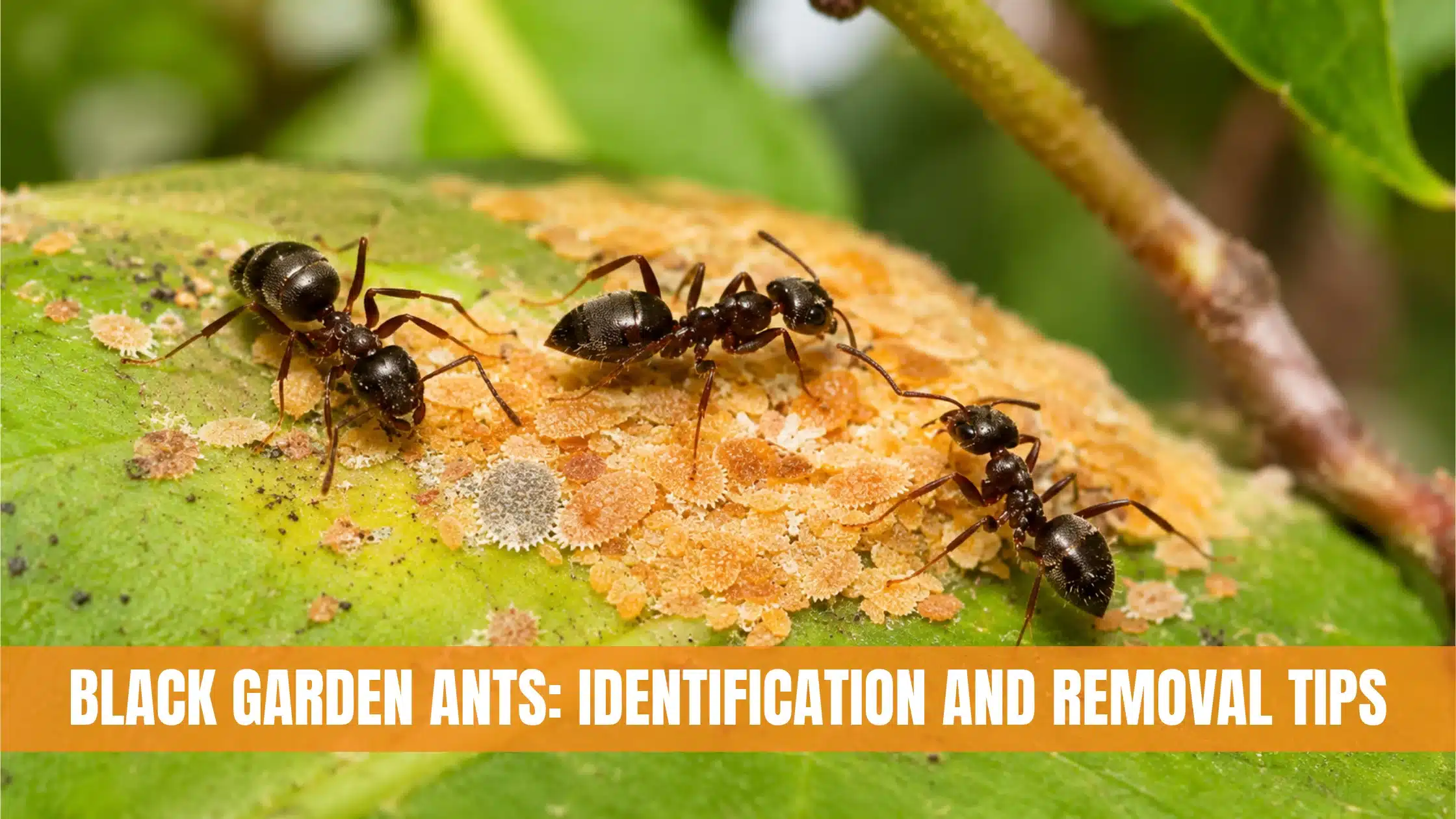
The Black Garden Ant is commonly associated with Iridomyrmex bicknelli, also known as the black trail ant or black tyrant ant. These small, dark-coloured insects are recognised by their organised movement and visible trails as they search for food. They can be found in Australian gardens and other outdoor environments.
Although they are not generally known for causing structural damage, their presence around kitchens, patios and garden beds can create hygiene concerns and inconvenience. Understanding their appearance, feeding habits and nesting behaviour can help you identify unwanted activity early. With the right preventive measures and effective ant pest control, Sydney homeowners can manage infestations and keep their residential and commercial properties free from persistent ant problems.
This guide explains how to identify black garden ants, recognise signs of an infestation, understand potential risks and manage their presence around residential and commercial properties.
What Is a Black Garden Ant?
Black garden ants are small, dark-coloured social insects that live in organised colonies. In Australia, the name is sometimes used for black trail ants, including Iridomyrmex bicknelli. These ants are known for forming visible trails while searching for food.
They are commonly found in gardens, lawns, soil, beneath stones, around pathways and in other outdoor spaces. Their colonies contain worker ants responsible for collecting food, maintaining the nest and caring for developing ants.
Like other types of ant species, they communicate through chemical signals known as pheromones. When one worker discovers food, it can leave a scent trail that guides other workers towards the same source. This explains why a few ants can quickly turn into a long, organised line.
What do black garden ants look like?
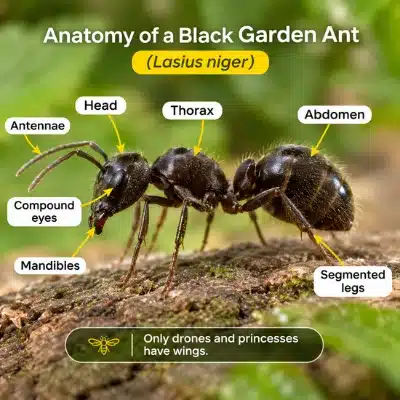
Some common characteristics include:
- Colour: Usually dark brown to shiny black.
- Size: Workers can grow to approximately 5 mm, depending on the species.
- Body: Three distinct body sections with a narrow waist.
- Antennae: Bent or elbow-shaped antennae.
- Movement: Often travel in organised trails.
- Habitat: Gardens, soil, lawns, tree bases and spaces beneath rocks.
It is important to remember that not every small black ant found around a Sydney home belongs to the same species. Black house ants and other native Australian ants can have a similar appearance. Professional identification helps determine the correct treatment.
Where Are Black Garden Ants Commonly Found in Sydney?
Sydney offers a variety of outdoor environments where ants can establish colonies. Residential gardens, parks, landscaped properties and bushland areas provide shelter and access to food.
The warm conditions experienced across much of Sydney can support ant activity throughout the year, although visible foraging may increase during favourable weather.
You may notice ant activity around:
Garden Beds and Lawns
Garden beds provide suitable nesting locations because they contain soil, moisture, organic material and plant roots. Ants may build underground nests beneath mulch, stones and decorative garden features.
Driveways and Footpaths
Small openings between paving stones, cracks in concrete and gaps along garden borders can provide convenient nesting locations. Ants may also travel along these surfaces to reach food.
Trees and Shrubs
Trees and shrubs attract insects that produce honeydew, a sugary substance that some ants collect as a food source. Ants may also search vegetation for other small insects.
Kitchens and Outdoor Eating Areas
Outdoor dining spaces, barbecue areas and kitchen entrances can attract ants when food scraps, sugary drinks or uncovered rubbish are left nearby.
In suburbs across Sydney, including Liverpool, Cabramatta, Cecil Hills, Bankstown and surrounding residential areas, homeowners may encounter ant trails around gardens and building entrances.
Black Garden Ant Behavior And Habitat
Understanding where ants live and how they search for food is essential for managing their activity around residential properties. These insects are social creatures that depend on organised colonies, with different members performing specific tasks to support the nest.
The black garden ant is commonly associated with outdoor environments where soil, vegetation and accessible food sources provide suitable conditions. In Sydney, you may notice activity around garden beds, lawns, footpaths, retaining walls, tree bases and gaps between paving stones.
Feeding habits
These ants are opportunistic feeders and explore their surroundings in search of available food. Their diet can include small insects, other organic materials, sugary substances and honeydew produced by sap-feeding insects such as aphids.
Some of the common food sources around residential properties include:
- Crumbs and leftover food around outdoor dining areas.
- Sugary drinks, fruit juice and food spills.
- Pet food left outside for extended periods.
- Dead insects and other organic matter.
- Honeydew from aphids and scale insects on garden plants.
Their ability to locate food quickly is one reason ant trails can suddenly appear around patios, kitchens and outdoor entertaining areas.
Nesting behaviour
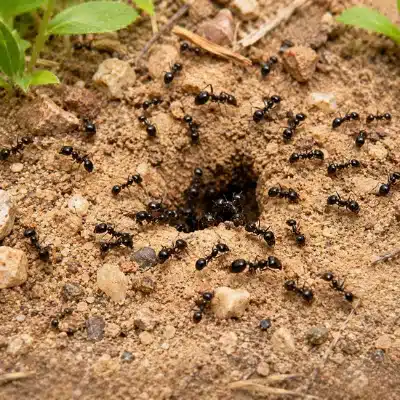
Most black trail ants establish nests in the ground. Their colonies may be located beneath garden soil, around pathways or in other sheltered outdoor spaces. Nest entrances can sometimes be identified by small openings and disturbed soil.
Worker ants regularly leave the nest to collect food and return along established routes. These trails help colony members locate reliable food sources and communicate information about nearby resources.
During warmer weather, ant activity may become more noticeable as workers spend more time foraging. Sydney’s warm summers and suitable garden conditions can provide favourable opportunities for outdoor colonies to remain active.
Black Garden Ant Life Cycle
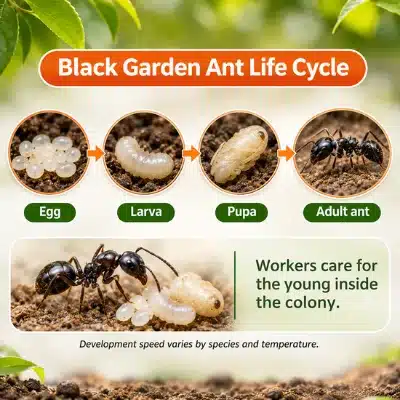
Ants undergo complete metamorphosis, meaning they develop through four distinct stages: egg, larva, pupa and adult. Each stage has a specific role in the development of a new colony member.
Understanding this process explains why an ant infestation may continue even after visible workers have been reduced.
1. Egg stage
The life cycle begins when the queen lays small, oval-shaped eggs inside the nest. These eggs are usually pale or whitish and are carefully maintained by worker ants.
The workers protect the eggs and move them to suitable locations within the nest where temperature and humidity conditions support development.
2. Larval stage
Once the eggs hatch, small, pale larvae emerge. They have soft bodies and cannot move around independently like adult ants.
Worker ants feed and care for the larvae, providing the nutrients needed for growth. As the larvae develop, they increase in size and eventually prepare for the next stage.
3. Pupal stage
During the pupal stage, the larvae undergo significant physical changes as they develop into adult ants. Depending on the species, pupae may be enclosed in protective silk cocoons or remain exposed within the nest.
Worker ants continue protecting them until the adults are ready to emerge.
4. Adult stage
Once development is complete, adult ants emerge and become part of the colony. Depending on their role, they may work as foragers, maintain the nest, care for developing young or participate in reproduction.
A colony’s queen is responsible for producing eggs, while worker ants carry out most of the daily activities required to maintain the nest.
The complete development period varies according to species, temperature, food availability and environmental conditions. Warmer conditions may support faster development, while cooler periods can slow it down.
Common Signs of a Black Garden Ant Infestation
Ant activity is not always a sign of a serious infestation. However, repeated sightings, increasing trail numbers and visible nesting activity may indicate that a colony has become established close to your property.
Recognising the early warning signs can help prevent the problem from becoming more difficult to manage.
1. Long trails of ants
One of the most noticeable signs is a continuous line of small, dark ants moving across the ground. These trails may extend along garden edges, walls, fences, paving stones and outdoor furniture.
If the same routes are being used repeatedly, it may indicate a nearby food source or established nest.
2. Small openings in garden soil
Look for small holes or disturbed patches of soil around lawns, garden beds and footpaths. These openings may indicate underground nesting activity.
However, not every small hole in the ground belongs to an ant colony. Other insects and soil-dwelling creatures can create similar openings.
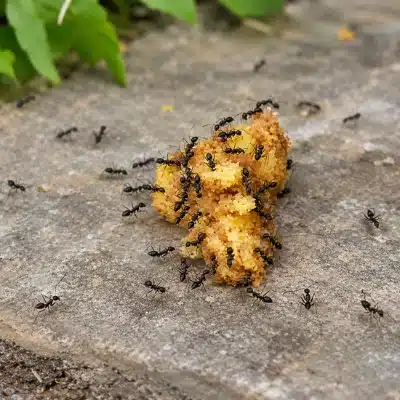
3. Ants gathering around food
You may notice groups of ants collecting around fallen fruit, sugary spills, rubbish bins or pet feeding areas. Even small food residues can attract foraging workers.
Outdoor kitchens, patios and barbecue areas are particularly vulnerable when food is left uncovered.
4. Increased activity around plants
Ants may regularly travel along plant stems, branches and leaves while searching for food. Their presence around certain plants can sometimes be associated with aphids or scale insects that produce honeydew.
Inspect the leaves and stems for small sap-feeding insects if you notice repeated ant activity.
5. Ants entering indoor spaces
Although many garden ant colonies remain outdoors, workers may enter homes through small openings around doors, windows, pipes and wall gaps.
Kitchens, pantries and areas where food is stored are common places to find foraging ants.
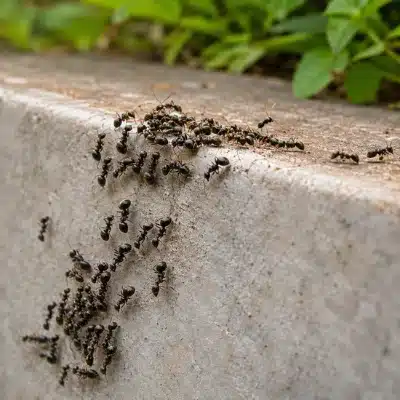
Are Black Garden Ants Dangerous?
Most common black garden ants are not considered highly dangerous to humans. Some species do not have a functional sting, although certain ants may bite when handled or disturbed.
The main concern for homeowners is usually their presence in food preparation areas and the inconvenience caused by repeated activity.
However, their presence can still create several problems around residential and commercial properties.
Food contamination: Ants may travel across soil, rubbish and other unclean surfaces before entering food preparation areas. When they reach uncovered food, kitchen benches or pantry shelves, they can contaminate these surfaces.
Unwanted indoor activity: Large numbers of foraging ants can become frustrating when they repeatedly enter kitchens, bathrooms, storage spaces and other indoor areas.
Garden disturbances: Nesting activity may create small soil openings and disturbed patches around lawns, garden beds and paving. Although this is generally a minor issue, it can affect the appearance of carefully maintained outdoor spaces.
Association with plant pests: Some ant species collect honeydew from aphids and scale insects. This relationship may encourage sap-feeding pests to remain on plants, potentially contributing to further garden problems.
Discomfort from bites: Although this particular species is not known for having a sting, other dark-coloured ants in Sydney can bite or sting. This is another reason not to handle unidentified ants or disturb their nests unnecessarily.
Overall, the main concern is usually persistent ant activity, food contamination and the inconvenience of having colonies established close to living spaces.
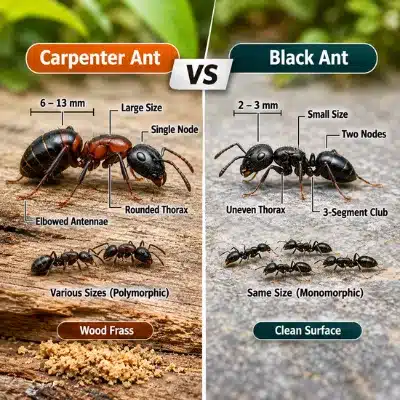
What Is The Difference Between Black Garden Ant And Carpenter Ant?
Black garden ants and carpenter ants are often confused because both can appear dark and may be found around gardens, trees and buildings. However, they differ in size, nesting preferences, physical characteristics and potential impact on properties.
Black garden ants are generally smaller and are commonly associated with outdoor soil nests and organised foraging trails. They search for food across garden surfaces, lawns and other accessible areas.
Carpenter ants belong to the Camponotus genus. They are usually larger, with some Australian species measuring considerably more than small garden ants. Their bodies may also display a combination of black, brown, reddish or orange colouring.
One of the main differences is their nesting behaviour. Carpenter ants often establish nests in decaying, damp or damaged timber. They do not eat wood like termites; instead, they excavate it to create galleries where the colony can live.
| Feature | Black Garden Ants | Carpenter Ants |
|---|---|---|
| Size | Usually small, up to around 5 mm | Generally larger |
| Colour | Dark brown to black | Black, brown or reddish combinations |
| Nesting | Commonly associated with soil nests | Decaying or damaged timber and other sheltered spaces |
| Main Attraction | Food sources and suitable outdoor nesting areas | Moisture, damaged timber and food |
| Property Concerns | Mainly nuisance activity | May indicate timber deterioration or moisture problems |
If you notice larger ants around timber structures, window frames or damp wooden areas, it is worth investigating rather than assuming they are ordinary garden ants. Correct identification helps prevent unnecessary treatments and ensures the appropriate pest management method is selected.
How To Get Rid of Black Garden Ants
Getting rid of ants requires more than removing the workers you can see. The nest may continue producing new workers, allowing activity to return if the underlying colony is not addressed.
A combination of sanitation, habitat management, exclusion and appropriate treatment can help reduce ant activity around Sydney properties.
1. Remove accessible food sources
Start by eliminating anything that may attract foraging ants. Clean kitchen benches, outdoor dining tables and barbecue areas after use.
Store sugary foods, fruit, cereals and other pantry items in tightly sealed containers. Avoid leaving pet food outside for extended periods, and clean food bowls regularly.
Rubbish bins should remain closed, with food residue removed from their lids and surrounding areas.
2. Maintain garden cleanliness
Overgrown vegetation, accumulated garden waste and undisturbed debris can create sheltered spaces for different ant species.
Regularly remove fallen fruit, dead leaves, decaying plant material and unnecessary clutter from outdoor areas.
Keep garden beds maintained and avoid allowing branches or vegetation to create unnecessary access points to buildings.
3. Identify and monitor nest locations
Observe where ant trails begin and where workers disappear. This may help you locate potential nesting areas.
Look around lawn edges, garden beds, paving joints, retaining walls and other sheltered outdoor locations.
Avoid disturbing the nest before identifying the species. Some ants respond to disturbance by relocating, which can make control more difficult.
4. Seal entry points
Inspect your property for small openings around windows, doors, utility pipes, wall joints and foundations.
Use suitable sealants to close gaps where ants may enter. Weather stripping around external doors can also reduce access.
Sealing entry points is particularly useful when ants repeatedly travel from outdoor areas into kitchens, pantries or storage spaces.
5. Consider suitable ant baits
Ant baits can help target foraging workers and, depending on the species and bait formulation, may allow the active ingredient to be carried back to the colony.
Choose products specifically registered for the intended ant species and follow the manufacturer’s instructions carefully.
Place baits away from children, pets and food preparation surfaces. Avoid spraying insecticides directly over bait stations, as this may interfere with feeding activity.
Not every bait works equally well for every ant species. Correct identification and appropriate bait selection are therefore important.
6. Avoid relying only on surface sprays
Spraying visible ants may provide temporary relief, but it does not necessarily eliminate the colony or its queen.
Repeated surface spraying without addressing the nest can result in ongoing activity. Some ant species may also respond to unsuitable treatments by relocating or splitting into additional colonies.
A more targeted approach is generally preferable when infestations keep returning.
7. Seek professional pest management
If ants continue appearing despite cleaning, sealing and suitable baiting, a professional inspection may help identify the source of the problem.
A pest management technician can assess nesting locations, identify the ant species, determine how the colony is entering the property and recommend an appropriate treatment strategy.
For Sydney residential and commercial places, professional assistance can be particularly useful when ant activity extends across several outdoor and indoor areas.
How to Prevent Future Ant Infestations
Preventing ants from returning requires regular cleaning, proper maintenance and a few simple changes around your property. Once an infestation is under control, removing food, water and suitable nesting areas can help keep ants away. These practical steps can make a difference for Sydney homes and businesses.
Follow these prevention tips to reduce future ant activity:
- Store food properly: Keep food in sealed containers, clean kitchen surfaces regularly and avoid leaving crumbs or spills unattended.
- Remove moisture: Repair leaking taps, clear standing water and keep rubbish bins clean and tightly covered.
- Maintain your garden: Trim shrubs and tree branches that touch external walls, and remove fallen leaves, fruit and garden waste.
- Check potential nesting areas: Inspect garden beds, paving joints and building foundations regularly for new ant trails or nests.
- Store timber carefully: Keep firewood, unused timber and other materials away from external walls to reduce sheltered nesting spots.
- Manage garden pests: Check fruit trees and flowering plants for aphids and scale insects, as these pests can provide food sources for certain ant species.
Regular seasonal inspections are also useful, particularly during warmer months when ant activity often becomes more noticeable. If ants continue returning despite these precautions, suitable Sydney pest control can help identify the source of the problem and prevent recurring infestations.
When Should You Consider Professional Ant Control?
Seeing a few ants around your property does not always mean you need professional treatment. However, frequent sightings, recurring trails or ants repeatedly entering your home may indicate a nearby colony or an ongoing infestation. In such cases, professional ant control can help identify the source and determine the most suitable treatment.
Consider arranging a professional inspection if you notice:
- Persistent ant trails: Ants regularly moving through kitchens, bathrooms, walls or outdoor areas.
- Repeated infestations: Ants returning even after cleaning and using DIY treatments.
- Multiple nesting sites: Several suspected nests around garden beds, paving, foundations or other parts of your property.
- Food contamination: Ants appearing in cupboards, pantries and food preparation areas.
- Unidentified ant species: You are unsure which type of ant is present or how it behaves.
- Unsuccessful DIY methods: Store-bought sprays and baits have not provided lasting results.
The right treatment depends on the ant species, colony location, property layout and surrounding environment. A professional assessment helps determine where ants are nesting and how they are entering the building.
Conclusion
Ants are common in Sydney, but colonies near homes and businesses can become a persistent nuisance. Understanding their nesting habits and recognising early warning signs can help prevent infestations. Regular cleaning, garden maintenance, sealed entry points and suitable baiting can reduce ant activity. If ants keep returning, professional treatment may be needed to locate and address the colony. EMK Termite & Pest Control Sydney provides professional pest management solutions to help control unwanted ant activity. Contact the team today to discuss your pest concerns and arrange a suitable inspection to keep your property clean, comfortable and protected from recurring ant problems.
What Our Customers Had To Say


Frequently Asked Questions About Black Garden Ants
1.What attracts black garden ants to houses?
Food, water and shelter are the main attractions. Sweet foods, crumbs, pet food, leaking taps and small openings around windows or doors can encourage ants to enter residential properties.
2. Do black garden ants bite or sting?
This depends on the species. Some common black trail ants do not have a functional sting, while other dark-coloured Australian ants may bite or sting when disturbed. Avoid handling unidentified ants.
3. Are black garden ants harmful to homes?
Most common garden ants do not cause structural damage to sound building timber. Their main impact is usually related to food contamination, nuisance activity and unwanted nesting around buildings.
4. Why do ants keep returning after spraying?
Surface sprays may kill visible workers without eliminating the colony. Other workers may also find alternative routes to food. Identifying the nest and using an appropriate control strategy is important for longer-term management.
5. How long does professional ant treatment take to work?
The timeframe depends on the species, colony size, treatment method and location of the nest. Some treatments produce visible results quickly, while baiting programmes may require patience and monitoring.
6. When should I contact a pest control professional?
Consider professional assistance when ant trails repeatedly return, several areas are affected, nests are difficult to locate or household treatments have not provided satisfactory results.
About The Author
