
Content Published : November 16, 2026
Scarab Beetle – Identification, Life Cycle & Control
Beetles are commonly found in Australian gardens, parks and natural environments. While some are recognised by their shiny bodies and distinctive shapes, others spend much of their lives beneath the soil. Most are harmless, but certain species can damage lawns, ornamental plants and trees.
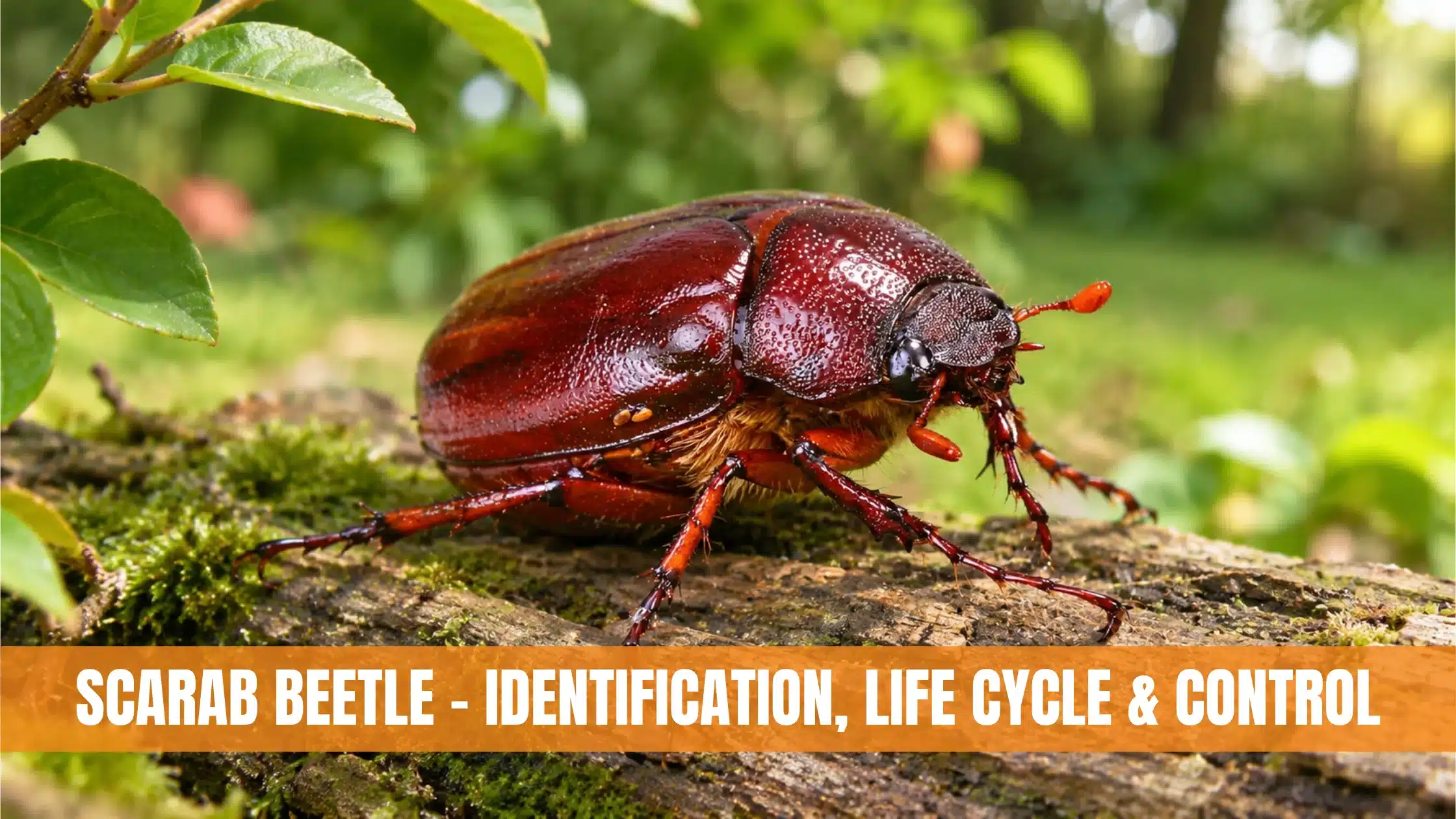
A scarab beetle belongs to the Scarabaeidae family, which includes familiar Australian insects such as Christmas beetles, dung beetles, flower chafers and cockchafers. Across Sydney, these beetles inhabit suburban gardens, public parks, bushland and grassy areas. Their appearance and behaviour vary depending on the species.
Adult beetles are often spotted flying around outdoor lights during warm evenings. However, their larvae, commonly known as curl grubs, can sometimes cause greater problems underground by feeding on grass roots and other organic material. This feeding activity may weaken lawns and affect plant growth when large populations are present.
Understanding how these insects look, behave and develop helps Sydney homeowners identify potential problems before they become serious. If you notice unusual lawn damage or beetle activity, correct identification is important before choosing a treatment. Professional pest control Sydney services can also help assess persistent pest concerns and recommend suitable management options. This guide explores their identification, life cycle, feeding habits and practical ways to protect your garden.
What Is a Scarab Beetle?
A scarab beetle is an insect belonging to the family Scarabaeidae, which is part of the larger beetle order Coleoptera. This is a diverse family containing thousands of species with different sizes, colours, feeding habits and habitats.
In Australia, well-known members include Christmas beetles, dung beetles, rhinoceros beetles, flower chafers and several types of cockchafers. Some feed on leaves or flowers, while others consume animal waste, decaying wood or organic matter in the soil.
Not every species is considered a pest. Many play useful roles in the environment by breaking down organic material, recycling nutrients and supporting healthy soil. Others can become garden or agricultural pests when their larvae feed on living plant roots or when adult beetles consume large amounts of foliage.
In Sydney, Christmas beetles are among the most familiar members of this group. Several species occur in the region, and their appearance is often associated with the warmer months around the end of the year.
How to Identify Scarab Beetles
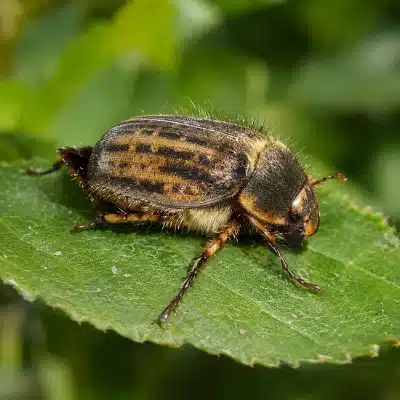
Identifying these insects can be difficult because the family contains species with noticeably different appearances. Some are small and dark, while others are larger and have bright metallic colours.
However, there are several common characteristics that can help with identification.
Body Shape
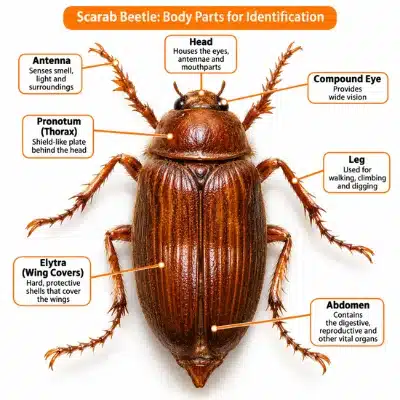
Most have a stout, oval or rounded body. Their outer wings, known as elytra, form a hard protective covering over the delicate wings used for flying.
Colour and Appearance
Their colours vary considerably. Depending on the species, they may be brown, black, reddish-brown, golden, green or bronze. Australian Christmas beetles are particularly recognisable because of their shiny metallic appearance.
Antennae
Many members of this family have distinctive antennae with small, leaf-like segments at the ends. These structures can open into a fan shape and help the insect detect its surroundings.
Legs
Their legs are generally strong, and some species have specialised front legs that help them dig into the soil. This feature is especially useful for insects that spend part of their life underground.
Size
The size varies between species. Some are only a few millimetres long, while larger Australian beetles can reach several centimetres.
Because appearance alone may not provide a definite identification, it is helpful to consider the insect’s location, behaviour, colour and the plants around which it is found.
Common Types of Scarab Beetles Found in Australia
Australia has a wide variety of scarab beetles, including native species that contribute to natural ecosystems. Several types are particularly relevant to Sydney gardens and surrounding environments.
Christmas Beetles
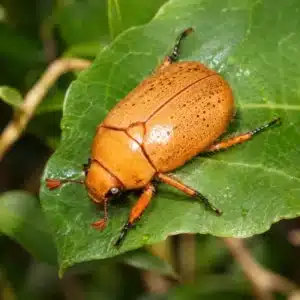
Christmas beetles belong to the genus Anoplognathus. They are among Australia’s best-known beetles and are commonly seen during the warmer months, particularly around November, December and January.
They usually have chunky bodies with shiny green, bronze, gold or brown colouring. Adult beetles feed mainly on eucalyptus leaves, while their larvae develop underground and may feed on grass roots.
Several Christmas beetle species occur in New South Wales, including the Sydney region.
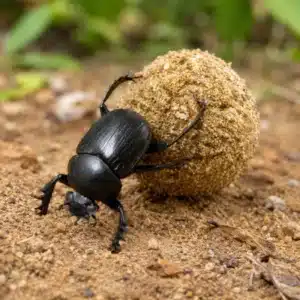
Dung Beetles
Dung beetles are another familiar group within the scarab family. They feed on animal droppings and help break down waste by burying or moving it through the soil.
Their activity supports nutrient recycling and can improve soil structure. Many species are beneficial because they help reduce accumulated animal waste and return nutrients to the ground.
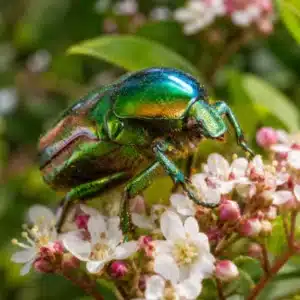
Flower Chafers
Flower chafers are often seen visiting flowering plants and feeding on nectar or pollen. Some species have attractive metallic colours, making them easy to notice in gardens.
Their larvae may develop in compost, rotting wood or other decomposing organic material. Many are not serious garden pests.
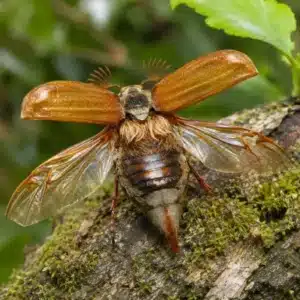
Cockchafers
Cockchafers are generally brown or dark-coloured beetles. Their larvae are often associated with soil and may feed on plant roots.
Some species can damage lawns, turf and other vegetation when their populations become large. Correct identification is important because not all cockchafer larvae have the same feeding habits.
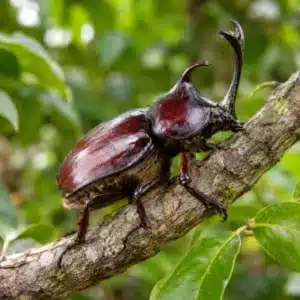
Rhinoceros Beetles
Rhinoceros beetles are among the larger members of this family. Some males have prominent horns on their heads or thorax, which they use during competition with other males.
Their larvae are often found in decaying logs, compost and other organic material. Many species are more useful as decomposers than harmful garden pests.
Where Are Scarab Beetles Found in Sydney?
Scarab beetles occupy a wide range of habitats across Sydney and greater New South Wales. Their preferred locations depend on the species and the food sources available.
In residential areas, adults may be found around trees, shrubs, flowering plants, garden beds and outdoor lights. Some species prefer bushland and open woodland, while others are commonly encountered in suburban gardens and parks.
Their larvae usually develop in soil, compost, rotting wood or other organic material. Root-feeding species may be present beneath lawns and grassy areas.
Common places where they may be found include:
- Residential gardens and lawns.
- Parks and recreational green spaces.
- Eucalyptus trees and native vegetation.
- Compost heaps and garden beds.
- Bushland and woodland areas.
- Soil containing decaying organic material.
Sydney’s mix of urban development, gardens and remaining natural vegetation provides habitats for many different beetle species.
What Is the Life Cycle of a Scarab Beetle?
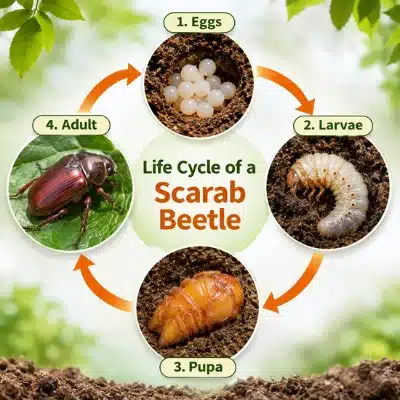
These insects undergo complete metamorphosis, meaning they pass through four distinct stages: egg, larva, pupa and adult. The length of the life cycle varies depending on the species and environmental conditions.
1. Egg Stage
After mating, the female lays eggs in suitable locations, usually beneath the soil or within organic material. The chosen site provides food and shelter for the developing young.
The eggs are generally small and difficult to see without disturbing the surrounding material. Their development depends on temperature, moisture and other environmental conditions.
2. Larval Stage
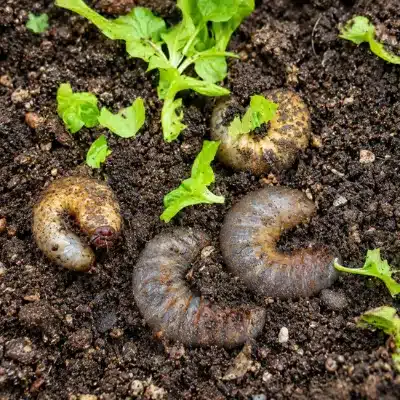
After hatching, the young insects emerge as larvae. These are commonly called curl grubs because many have a curved, C-shaped body.
They are usually cream or whitish in colour, with a brown head and three pairs of legs near the front. Depending on the species, they may feed on grass roots, plant roots, decaying wood, compost or other organic matter.
This stage can last several months or longer. Some Australian species remain underground for approximately one to two years before becoming adults.
3. Pupal Stage
Once the larva has completed its development, it enters the pupal stage. During this period, it transforms into an adult insect.
The pupa generally remains protected underground or within suitable organic material. It does not actively feed while the transformation takes place.
4. Adult Stage
The fully developed beetle eventually emerges from its hiding place. Adults may feed on leaves, flowers, nectar or other food sources, depending on the species.
Some are active during the day, while others are more noticeable at night. Christmas beetles, for example, are frequently seen flying around outdoor lights during summer.
What Do Scarab Beetles Eat?
Their diet depends on the species and its stage of development. Adult beetles and larvae may consume completely different types of food.
Adult Christmas beetles generally feed on eucalyptus foliage. Flower chafers may visit blossoms to consume nectar and pollen, while dung beetles feed on animal waste.
The larvae have their own feeding preferences. Some consume grass roots and living plant roots, while others develop in compost, rotting timber or decaying organic material.
This distinction matters when assessing garden damage. A beetle feeding on a few leaves may have little impact on a property, whereas a large population of root-feeding larvae can weaken turf and garden plants.
Many species are beneficial because they contribute to decomposition and nutrient recycling. Therefore, finding a grub in the soil does not automatically mean that your garden has a pest infestation.
Can Scarab Beetles Damage Lawns and Gardens?
Some species can cause noticeable damage, particularly during their larval stage. Root-feeding grubs may consume grass roots, reducing the plant’s ability to absorb water and nutrients.
When large numbers are present, affected lawns may become weak, yellow or brown. Sections of turf may also become loose because the roots holding the grass in place have been damaged.
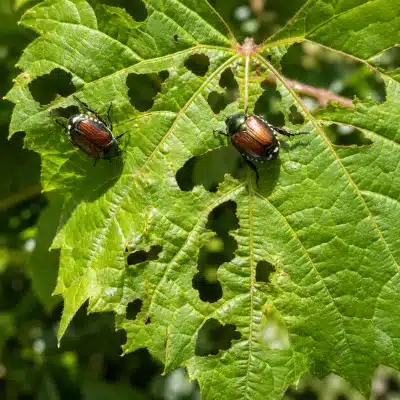
Adult beetles can sometimes chew foliage, particularly when they gather in large numbers around suitable host plants. Certain Christmas beetle species can cause substantial leaf loss on eucalyptus trees, especially in plantations or areas with high beetle activity.
However, not every species causes this type of damage. Dung beetles, many flower chafers and other decomposer species provide environmental benefits.
Before treating an affected garden, it is important to identify the insect and understand whether it is actually responsible for the problem.
Signs of a Scarab Beetle Infestation
Root-feeding larvae are difficult to notice because they spend most of their time beneath the soil. However, certain changes in your lawn or garden may indicate their presence.
Brown or Yellow Lawn Patches
Grass may develop irregular brown or yellow areas when its roots are damaged. Similar symptoms can also result from drought, poor drainage, fungal disease or other lawn pests.
Loose or Easily Lifted Turf
When larvae consume grass roots, the turf may lose its connection with the soil. You may notice that affected sections can be lifted more easily than healthy grass.
Increased Bird Activity
Birds such as magpies and currawongs may search lawns for insects and grubs. Increased feeding activity can sometimes indicate that food sources are available beneath the surface.
Weak or Wilting Plants
Root-feeding larvae may affect ornamental plants, especially when their populations are high. Plants can appear unhealthy even when they receive adequate water and sunlight.
Visible Curl Grubs in Soil
Digging into an affected area may reveal cream-coloured, C-shaped larvae. Their presence should be assessed carefully because some species are harmless decomposers rather than root-feeding pests.
How to Get Rid Of Scarab Beetle Around Your Property
The right management approach depends on the species, the extent of the damage and the location of the infestation. Avoid applying pesticides simply because you notice adult beetles flying around your garden.
Maintain Healthy Lawn Conditions
Regular mowing, appropriate watering and suitable fertilisation help maintain healthy turf. Strong grass can often tolerate minor feeding activity and recover more effectively from environmental stress.
Inspect Damaged Areas
If your lawn develops brown patches or loose sections, inspect the soil beneath the affected areas. Look for curl grubs and assess how many are present before deciding whether control is necessary.
Avoid Excessive Watering
Overwatering can contribute to poor lawn health and create conditions that encourage certain soil-related problems. Water according to your grass variety, soil type and local weather conditions.
Maintain Garden Beds
Remove excessive dead plant material where appropriate and keep garden beds reasonably maintained. However, do not remove all decomposing organic matter, as it provides valuable habitat for beneficial insects.
Reduce Unnecessary Outdoor Lighting
Some adult beetles are attracted to artificial lights. Switching off unnecessary outdoor lights or using appropriately positioned lighting may reduce the number gathering near doors and windows.
Seek Professional Identification
If lawn damage continues or you find large numbers of larvae, professional identification can help determine the cause. Different species require different management methods, so identifying the pest before treatment is important.
Are Scarab Beetles Dangerous to Humans or Pets?
Most Australian scarab beetles are harmless to people and pets. They do not usually attack humans, and they are not known to cause medically significant bites or stings. However, their sudden appearance around homes can sometimes be unsettling, particularly during warmer evenings when adult beetles are attracted to outdoor lights.
Although these insects are generally not dangerous, it is sensible to avoid handling unfamiliar species unnecessarily. Pets may also show interest in beetles they discover while exploring gardens or lawns.
Here are a few things to keep in mind:
- For humans: Adult beetles may accidentally fly into people, windows or outdoor furniture, but they are generally more of a nuisance than a health risk.
- For pets: Eating an occasional beetle is unlikely to cause problems for most pets. However, consuming large numbers of insects may lead to stomach irritation.
- Around the garden: Avoid encouraging pets to investigate or eat unidentified insects, especially when pest treatments have been applied nearby.
- If symptoms appear: Contact a veterinarian if your pet develops vomiting, discomfort or unusual behaviour after eating insects.
Overall, scarab beetles rarely pose a direct threat. If you notice unusual beetle activity around your property, proper identification can help determine whether any pest management is needed.
When Should You Consider Professional Pest Control?
Occasional beetle sightings around your garden are not always a reason for concern. Many Australian beetle species are harmless and contribute to the natural environment by breaking down organic material. However, repeated sightings, damaged lawns or large numbers of curl grubs may indicate a pest problem that needs attention.
Consider seeking professional advice if you notice:
- Persistent lawn damage: Brown patches, weakened grass or turf that lifts easily may indicate root-feeding larvae.
- Large numbers of curl grubs: An increase in soil-dwelling larvae may affect grass roots and garden plants.
- Repeated plant damage: If your trees, shrubs or ornamental plants continue to deteriorate, identifying the cause is important.
- Uncertain pest identification: Different beetle species require different management approaches, so accurate identification should come first.
A pest professional can inspect affected areas, identify the insects and recommend suitable control methods. This also helps prevent unnecessary pesticide use and protects beneficial insects.
Sydney Pest Control professionals provide pest management services for residential and commercial properties. If beetles or other unwanted pests are becoming a concern, contact pest control service for advice on suitable solutions to help manage pest activity around your property.
Conclusion
Scarab beetles are commonly found across Australia, including Sydney’s gardens, parks and natural surroundings. Although certain species and their larvae can damage lawns, trees and ornamental plants, many play an important role in maintaining healthy ecosystems through pollination, decomposition and nutrient recycling. Learning to recognise their appearance, behaviour and life cycle can help you identify potential garden problems early and choose the right management approach.
If you are dealing with persistent lawn damage, increasing numbers of curl grubs or recurring beetle activity, don’t let the problem get worse. Get the right advice and take action before further damage occurs. Contact EMK Termite & Pest Control Sydney for reliable pest management assistance and practical solutions to help protect your property and garden. Take the first step towards a healthier, pest-free outdoor space today!
What Our Customers Had To Say


Frequently Asked Questions About Scarab Beetle
1. Are scarab beetles common in Sydney?
Yes. Several members of the scarab family occur in the Sydney region. Christmas beetles are among the best-known examples, while other species can be found in gardens, parks, bushland and soil.
2. Are all scarab beetles harmful to gardens?
No. Many are beneficial because they break down organic material, recycle nutrients or help maintain soil health. Only certain species cause significant damage to plants, lawns or trees.
3. What do scarab beetle larvae look like?
Many larvae are cream or white, with a brown head, three pairs of legs near the front and a curved C-shaped body. They are commonly called curl grubs.
4. Why do Christmas beetles appear around summer?
Many Christmas beetles emerge as adults during the warmer months, often around November to January. They feed on eucalyptus foliage and may gather around outdoor lights.
5. How can I tell if curl grubs are damaging my lawn?
Look for irregular brown patches, weakened turf and grass that lifts easily from the soil. Digging a small section of affected lawn may reveal larvae, but other causes of lawn damage should also be considered.
6. Should I remove every beetle from my garden?
No. Many beetles are harmless or beneficial. It is better to identify the species and determine whether it is causing damage before taking action.
About The Author
