
Content Published : September 15, 2026
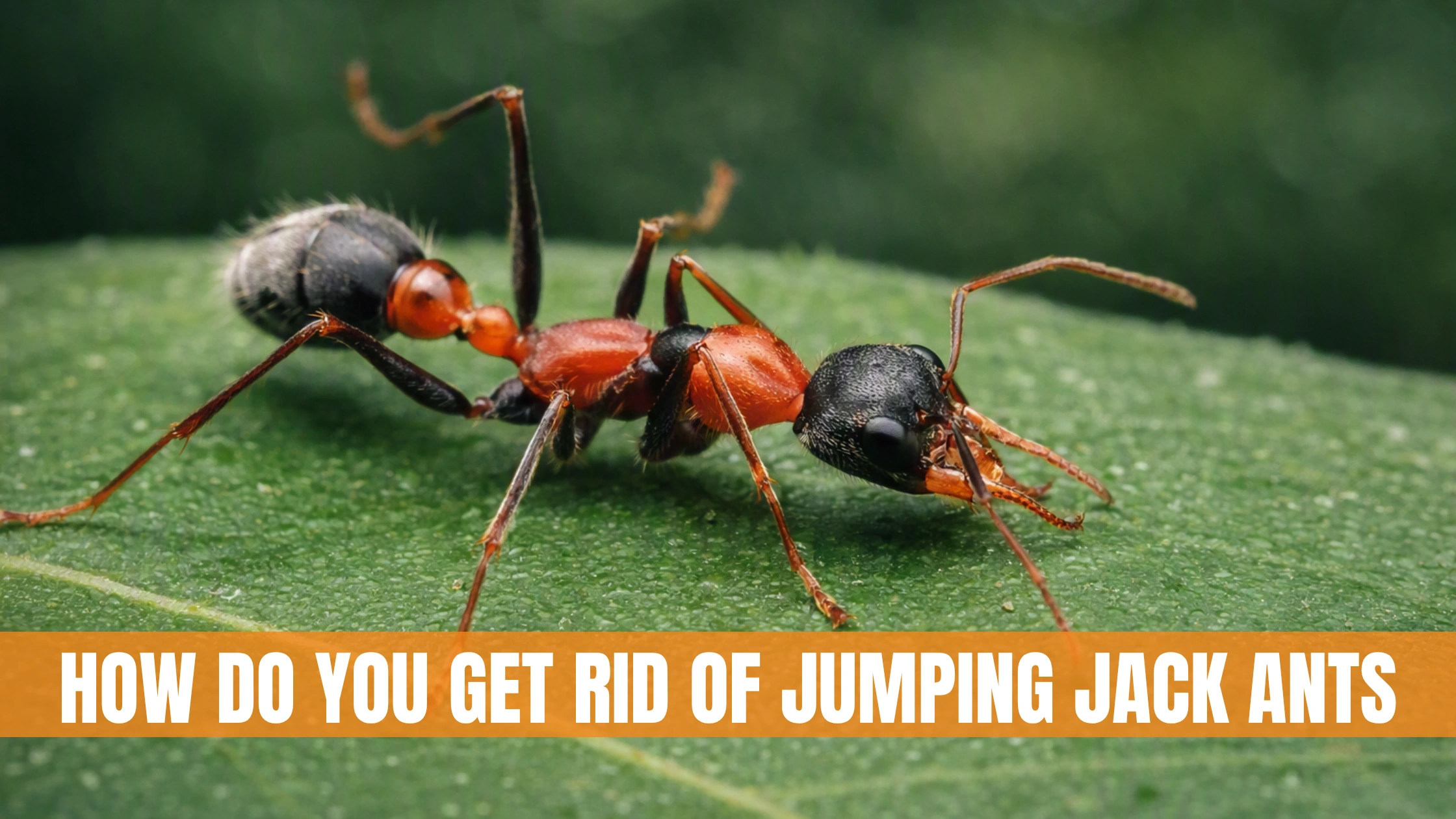
How do you get rid of Jumping Jack Ants
Getting rid of Jumping Jack ants requires more than spraying visible ants. Correct identification, careful nest treatment, and ongoing prevention are important because these ants can deliver painful stings and may cause serious allergic reactions. If you find an active nest, avoid disturbing it and keep children and pets away.
Jumping Jack ants can concern Sydney residents, especially on properties close to bushland, parks, and natural areas. Their defensive behaviour means attempting to remove a nest without experience can increase the risk of being stung.
For safer control, start by reducing areas where ants can shelter. Keep gardens tidy, remove timber or debris, trim vegetation away from buildings, and seal suitable gaps around outdoor structures. However, these steps may not eliminate an established colony.
Professional ant control can provide a targeted approach. Licensed pest professionals can identify nesting areas and select suitable treatment methods, including carefully applied nest treatments or baiting where suitable. Treatment should always follow product labels and applicable NSW pesticide requirements.
If you suspect a Jumping Jack ant infestation, avoid DIY nest disturbance and consider professional assessment to determine the safest and most effective control option.
What Are Jumping Jack Ants and What Do They Look Like?
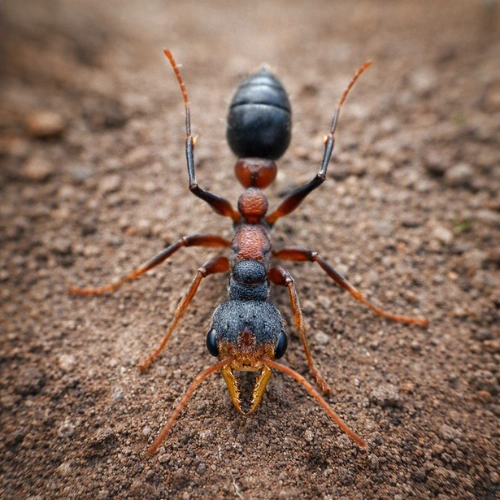
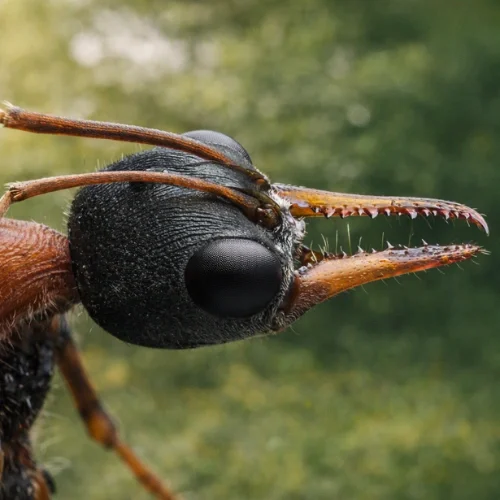
Jumping Jack ants are large, highly defensive Australian ants known for their painful sting and unusual jumping behaviour. They can grow to around 1.5 cm long and are generally recognised by their dark black to reddish-brown bodies, long legs, prominent mandibles, and distinctive abdominal stinger. Their appearance can vary slightly depending on the species and location.
Key Physical Traits
- Segmented body: They have a large head with noticeable eyes, a strong thorax, and a rounded abdomen.
- Fine body hairs: Their bodies may appear slightly fuzzy because of the fine hairs covering them.
- Long legs: Powerful legs allow these ants to jump when they feel threatened.
- Prominent stinger: Their abdomen has a curved, barbless stinger that can be used repeatedly.
Unlike bees, Jumping Jack ants do not lose their stinger after stinging. This means an individual ant can sting more than once when defending itself or its nest. Their strong mandibles also help them grasp and defend against threats.
Because of their defensive behaviour, it is best not to approach or disturb an active nest.
Where Do Jumping Jack Ants Live in Sydney and NSW?
Jumping Jack ants are generally associated with natural and semi-natural environments where suitable soil, vegetation, and shelter are available. In Sydney and surrounding NSW areas, they may be encountered near bushland, parklands, gardens, and properties that border natural vegetation. They typically build nests in soil, leaf litter, or beneath objects that provide protection from the elements.
Natural Habitats
Across Australia, Jumping Jack ants are mainly associated with parts of Tasmania, Victoria, New South Wales, and South Australia. They can adapt to different environments but often favour areas with suitable soil and vegetation.
Common Nesting Locations
You may find Jumping Jack ants around:
- Garden beds and areas beneath rocks or pavers
- Leaf litter and vegetation along fence lines
- Under fallen branches, logs, and garden debris
- Beneath decks, sheds, and outdoor structures
- Mulched areas and around tree bases
- Undisturbed sections of gardens and lawns
Foraging ants can move away from their nest while searching for food, which means seeing individual ants does not always reveal where the colony is located.
How Dangerous Is a Jumping Jack Ant Sting?
A Jumping Jack ant sting can be extremely painful and, for people with venom allergies, may cause a serious allergic reaction. The severity varies from person to person. Most stings cause local symptoms, but anyone experiencing signs of anaphylaxis needs immediate medical attention.
Common Mild Sting Symptoms
Typical reactions may include:
- Sharp or burning pain around the sting
- Redness and localised swelling
- Itching or raised welts
- Tenderness that may continue for several hours or longer
Signs of a Severe Allergic Reaction
Anaphylaxis can develop quickly and may cause:
- Swelling of the lips, face, or throat
- Difficulty breathing or wheezing
- Tightness in the chest
- Dizziness or fainting
- Weakness, confusion, or a rapid pulse
If these symptoms occur after a Jumping Jack ant sting, seek emergency medical help immediately. People with a known severe insect-venom allergy should follow their prescribed emergency action plan and use an adrenaline auto-injector when indicated.
What Should I Do If Stung by a Jumping Jack Ant?
If you are stung by a Jumping Jack ant, move away from the nest or affected area immediately to avoid additional stings. The reaction can vary from mild local pain and swelling to a serious allergic response. For a mild reaction, basic first aid can help ease discomfort, but monitor yourself for any worsening symptoms.
First Aid for Mild Reactions
- Move away from the area: Leave the nest location to prevent further stings.
- Clean the sting: Gently wash the affected area with soap and cool running water.
- Apply a cold pack: Use a cold compress wrapped in cloth for short periods to help reduce swelling and discomfort.
- Manage itching: An appropriate antihistamine may help with itching; follow the product directions or ask a pharmacist.
- Monitor symptoms: Keep an eye on the reaction, particularly if you have experienced insect allergies before.
When to Call Emergency Services (000)
Seek emergency medical help immediately if you develop:
- Difficulty breathing or throat tightness
- Swelling of the face, lips, tongue, or throat
- Dizziness, fainting, or severe weakness
- Widespread symptoms affecting multiple parts of the body
If you have a prescribed adrenaline auto-injector, follow your personal allergy action plan. Do not scratch the sting, as broken skin can increase the risk of infection.
How To Prevent Jumping Jack Ant Stings Around Your Sydney Home?
Preventing Jumping Jack ant stings starts with avoiding nests and reducing situations that could trigger defensive behaviour. If your Sydney property is close to bushland, gardens, or natural areas, take extra care when gardening or spending time outdoors. Simple precautions can help lower the chance of an unexpected encounter.
6 Simple Ways to Reduce Sting Risk
- Wear protective clothing: Choose long sleeves, long pants, and closed, sturdy shoes when gardening or walking near bushland.
- Avoid suspected nests: Never kick rocks, move logs, or disturb leaf litter if you suspect ants are nesting nearby.
- Be careful during active periods: Take extra precautions on warm, sunny days when ants may be more active outdoors.
- Use suitable insect repellent: Apply an appropriate insect repellent to exposed skin according to the product label, particularly when spending time outdoors.
- Keep outdoor areas tidy: Remove food scraps, clean spills, secure rubbish bins, and avoid leaving pet food outside, as these measures can help reduce pest activity.
- Watch pets outdoors: Dogs and cats can accidentally disturb ant nests while exploring. Keep pets under control in areas where Jumping Jack ants may be present.
Regularly check garden beds, lawns, rocks, and other sheltered areas for signs of ant activity. If you discover a suspected nest, avoid disturbing it and consider professional pest control advice for safer identification and management.
Jumping Jack Ants vs Carpenter Ants
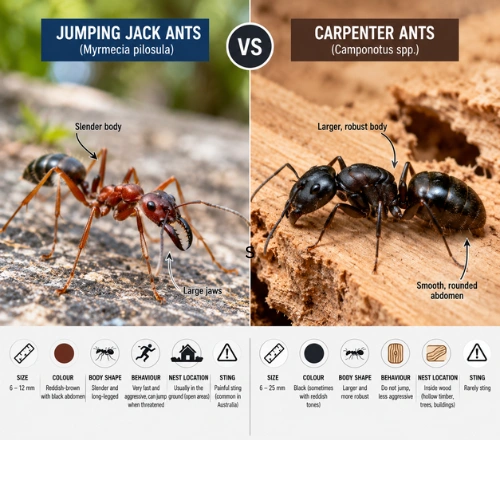
Jumping Jack ants and carpenter ants are both ants, but they differ significantly in appearance, behaviour, nesting habits, and the risks they pose around homes. Understanding these differences can help you identify the pest correctly and choose an appropriate control method.
| Feature | Jumping Jack Ants | Carpenter Ants |
|---|---|---|
| Appearance | Usually dark-coloured, with long legs and a distinctive jumping behaviour. | Generally larger ants that may appear black, brown, or reddish depending on the species. |
| Main Concern | Known for defensive behaviour and painful stings that may cause allergic reactions. | Can excavate wood to create nesting galleries and potentially damage timber. |
| Nesting Habits | Usually nest outdoors in soil, leaf litter, gardens, and sheltered areas. | May nest in damp, damaged, or decaying timber around buildings. |
| Behaviour | Highly defensive and may jump or sting when their nest is disturbed. | Generally avoid confrontation and may retreat when disturbed. |
| Sting Risk | Can deliver painful stings and may pose a serious risk to people with venom allergies. | Not generally considered a significant stinging threat to people. |
| Property Damage | Primarily a safety concern rather than a timber-damaging pest. | May damage or weaken timber by creating nesting galleries. |
| Common Locations | Gardens, lawns, bushland, soil, rocks, and leaf litter. | Wooden structures, wall voids, damp timber, decks, and tree branches. |
| Control Approach | Identify nests carefully and avoid disturbing active colonies. | Locate nesting areas, address moisture problems, and treat affected timber or colonies. |
Key Differences
- Main threat: Jumping Jack ants can deliver painful stings, while carpenter ants can damage timber.
- Nesting: Jumping Jack ants commonly nest outdoors; carpenter ants may nest inside or around wooden structures.
- Behaviour: Jumping Jack ants are highly defensive, whereas carpenter ants generally avoid confrontation.
Correct identification is important for effective ant control and prevention.
What’s the Best Way to Get Rid of Jumping Jack Ants: DIY vs Professional?
Getting rid of Jumping Jack ants can be challenging because treating visible ants does not always address the nest. DIY methods may provide temporary relief, but established colonies can require a more targeted approach. The best option depends on the location of the nest, the level of activity, and the safety risks around your property.
DIY vs Professional TreatmentLimitations of DIY Methods
| Treatment Method | Effectiveness | Safety Considerations | Typical Cost | Best For |
|---|---|---|---|---|
| DIY Ant Baits | Variable | Keep away from children and pets | $15–$40 | Minor activity |
| DIY Sprays | Temporary | Follow the product label carefully | $10–$30 | Immediate surface control |
| Diatomaceous Earth | Variable | Use only as directed | $20–$35 | Dry, sheltered areas |
| Professional Baiting | Higher | Applied by trained professionals | Varies | Established nests |
| Professional Nest Treatment | Higher | Professional application | Varies | Larger or difficult nests |
DIY sprays often target ants that are visible outside the nest without addressing the entire colony. Weather, incorrect application, and inaccessible nesting areas can also reduce their effectiveness.
Benefits of Professional Treatment
Professional pest controllers can identify likely nesting areas and select appropriate treatment methods based on the infestation. They can also provide advice on preventing future activity while applying products according to label directions and applicable NSW requirements.
If Jumping Jack ants are active around your property, avoid disturbing suspected nests and consider professional assessment for safer, targeted control.
When Should I Call a Professional Pest Controller for Jumping Jack Ants?
Knowing when to contact a professional can help reduce the risk of painful encounters with Jumping Jack ants. While minor outdoor activity may sometimes be managed with basic prevention, an established nest or repeated sightings may require professional assessment and treatment.
Consider contacting a licensed pest controller if:
- A nest is close to your home: Nests near entrances, patios, decks, or frequently used outdoor areas can increase the chance of accidental contact.
- Children or pets are at risk: Active nests near play areas, lawns, or walkways should be managed carefully.
- Someone has a known insect-venom allergy: Extra caution is important because an ant sting can cause a serious allergic reaction in susceptible individuals.
- Multiple nests are present: Several active nests across a property can be difficult to manage with basic DIY methods.
- Ants are regularly entering your home: Frequent sightings indoors may indicate activity close to the building or accessible entry points.
- DIY control has not worked: If reasonable prevention and treatment efforts have produced little improvement, professional identification can help determine the next step.
Conclusion
If you notice Jumping Jack ants on your property, avoid disturbing the nest and consider professional pest management. A trained technician can inspect the affected areas, identify the level of activity, and recommend targeted treatment options. Depending on the property, barrier treatments may be used around foundations, gardens, and outdoor areas. Preventive measures such as sealing gaps, removing food sources, reducing garden clutter, and maintaining tidy outdoor spaces can also help discourage future activity. For reliable Sydney pest control, EMK Termite & Pest Control Sydney provides professional solutions tailored to your property. Contact EMK today to arrange an inspection and take the right steps toward effective Jumping Jack ant control.
What Our Customers Had To Say
 Posted on Google
 Rami Anwer
Trustindex verifies that the original source of the review is Google.
We had such a great experience with the pest control service. From start to finish, everything was quick, easy and completely hassle-free. The team were professional, friendly and made the whole process so simple. We’re really happy with the results and the quality of the service we received from Eevil. I would definitely recommend EMK to anyone looking for a reliable pest control company!Posted on Google Rena NajimReally happy with the service today. Professional, friendly and did a great job. Would definitely recommend!Posted on Google
 David DavidEMK provided excellent pest control service. He was professional, punctual, and knowledgeable, explained the process clearly, and ensured it was safe for our family and pets. We saw great results straight away. Friendly, reliable, and highly recommended.Posted on Google
 Ann TranWe highly recommend EMK Termite and Pest Control Sydney. Great service, great prices, friendly and very accommodating. They are very thorough and take pride in their work. Cannot rate them high enough. 5 stars 🌟Posted on Google
 Charlton DurieI had these guys come and sort a termite issue. They got the job done. Thanks again!Posted on Google
 David MarshSuper happy with EMK for getting rid of such a horrible termite infestation! Professional and very friendly.Posted on Google
 Michael ZammitJust had EMK come out to do a rodent control treatment. The service and professionalism was superb!Verified by TrustindexTrustindex verified badge is the Universal Symbol of Trust. Only the greatest companies can get the verified badge who has a review score above 4.5, based on customer reviews over the past 12 months. Read more
Frequently Asked Questions About Jumping Jack Ants
Can Jumping Jack ants kill humans?
Does vinegar or bleach kill Jumping Jack ants?
How long does a Jumping Jack ant sting last?
Are Jumping Jack ants protected in NSW?
How much does professional Jumping Jack ant removal cost in Sydney?
Where do Jumping Jack ants usually build nests?
Are Jumping Jack ants dangerous to pets?
Can I remove a Jumping Jack ant nest myself?
How can I prevent Jumping Jack ants around my property?
How can EMK Termite & Pest Control Sydney help?
About The Author

EMK Termite & Pest Control Team
EMK Termite & Pest Control Team is a licensed and experienced pest control service provider based in Sydney, Australia. Our team specialises in termite treatment, cockroach control, spider control, and general pest management for residential and commercial properties.
With years of hands-on experience, we follow Australian safety standards and use proven, eco-friendly pest control methods to deliver long-lasting results. All content published on this website is written and reviewed by trained pest control professionals to ensure accuracy, safety, and real-world expertise.