
Content Published : November 10, 2026
Mouse Spider: Identification, Bites & Control
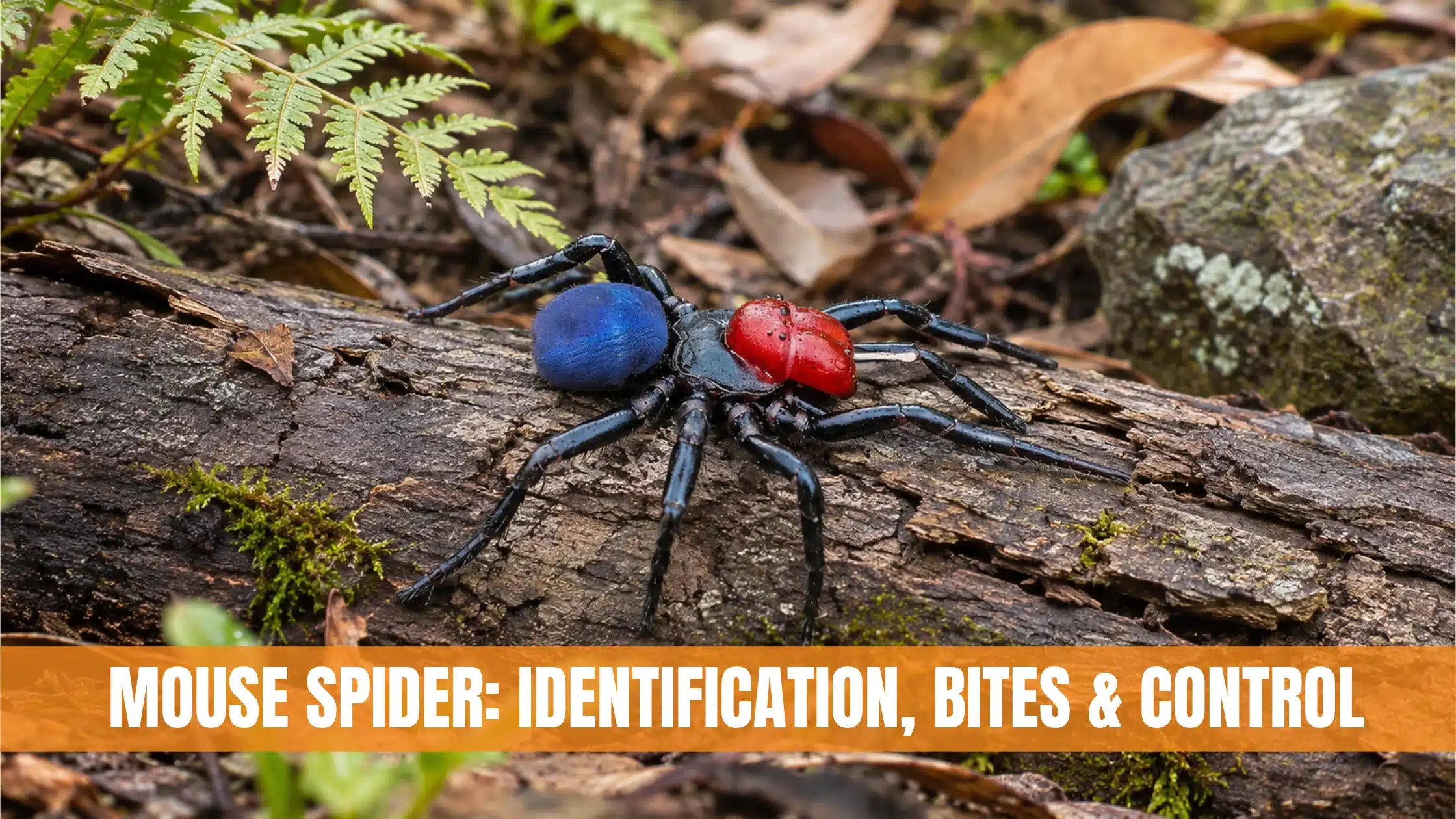
Australia is home to many spider species, but some deserve extra attention because of their appearance and potentially dangerous bites. The mouse spider is one such species. This ground-dwelling spider is often mistaken for the Sydney funnel-web due to its dark, stocky body and powerful fangs. Although encounters are relatively uncommon, knowing how to recognise it can help Sydney homeowners stay safe.
Mouse spiders typically live in underground burrows, where they hunt insects and other small creatures. They are occasionally spotted in suburban gardens, landscaped areas, garden beds and properties bordering bushland. Male spiders may also wander outdoors during the breeding season, increasing the chances of an unexpected encounter.
If you notice a large, dark-coloured spider around your property, avoid handling it and seek proper identification. Understanding its appearance, habitat, behaviour and bite symptoms can help you respond safely. This guide explores everything Sydney residents should know, including first aid, prevention tips and when professional spider pest control may be necessary to manage unwanted spider activity around residential properties.
What Is a Mouse Spider?
The mouse spider is a native Australian spider belonging to the genus Missulena and the family Actinopodidae. It is a ground-dwelling species that spends most of its life in an underground burrow. Rather than building webs to catch insects, it usually waits near the entrance of its burrow and quickly captures prey that comes within reach.
The origin of its common name is not entirely clear. Some explanations refer to its compact, stocky body, while others suggest that early specimens were found in deep burrows resembling mouse holes.
Mouse spiders are found throughout mainland Australia, including several regions of eastern Australia. The eastern mouse spider (Missulena bradleyi) is particularly relevant to Sydney residents and surrounding communities.
Although its dark appearance and strong fangs can make it look threatening, this spider generally avoids contact with people. Encounters and bites are relatively uncommon, but certain species have venom that may cause serious symptoms.
How to Identify a Mouse Spider
Correct identification can be difficult because several Australian spiders have similar dark, glossy bodies. The mouse spider has distinctive physical features that can help distinguish it from other species.
Physical Appearance
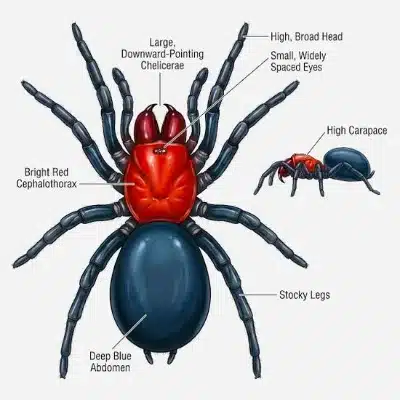
The most noticeable characteristic is its thick, compact body and unusually broad head region. Its appearance is different from the slimmer body shape of many common house spiders.
Common identification features include:
- Body colour: Usually black, dark brown or deep blue, depending on the species and individual
- Body size: Generally around 10–35 mm in body length
- Head: Broad, raised and noticeably bulbous
- Jaws: Large, powerful jaws with prominent fangs
- Surface: Smooth and glossy, particularly around the head and upper body
- Legs: Relatively short and sturdy in females, while males generally have longer, slimmer legs
- Abdomen: Usually dark, sometimes displaying lighter markings
The spider’s large head and powerful jaws are among its most recognisable features.
Differences Between Male and Female Spiders
Male and female spiders can look surprisingly different, even though they belong to the same species.
Female specimens are generally larger, heavier and darker. They usually have a stocky appearance, with a broad head and shorter legs. Females spend much of their lives inside or close to their underground burrows.
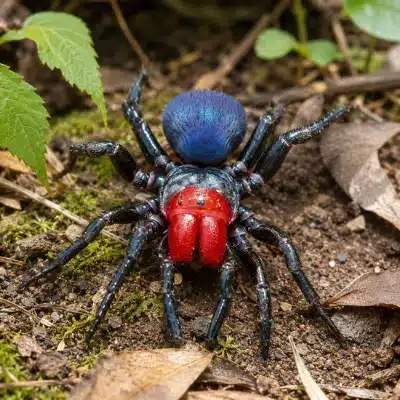
Males are usually smaller and more slender. Depending on the species, they may have distinctive colour patterns. Male red-headed mouse spiders, for example, have a bright reddish head and jaws with a dark blue to black abdomen.
During the breeding season, males leave their burrows to search for females. This wandering behaviour makes them more likely to be noticed by people.
Where Are Mouse Spiders Found in Sydney?
These spiders are ground-dwelling animals that prefer environments where they can construct sheltered underground burrows. They are not typically found living inside household furniture or building permanent webs in indoor corners.
Across Sydney, suitable habitats may include bushland, open woodland, riverbanks, creek areas, gardens and properties with undisturbed soil.
They may be encountered around:
- Garden beds and landscaped outdoor spaces
- Areas beneath rocks and fallen timber
- Soil banks and garden embankments
- Properties bordering bushland
- Parks and natural reserves
- Gardens near creeks and waterways
Their burrows are usually lined with silk and may have one or two trapdoor-like entrances. These structures provide shelter from predators and changing environmental conditions.
In residential areas, gardening, landscaping and excavation can disturb an existing burrow. This is one reason homeowners should be cautious when moving rocks, digging garden beds or clearing accumulated outdoor debris.
Understanding the Behaviour and Life Cycle Of Mouse Spider
Understanding spider behaviour can help homeowners avoid unnecessary encounters.
Unlike spiders that actively chase prey across open surfaces, mouse spiders generally rely on their burrows for shelter and hunting. They wait near the entrance and capture insects or other small animals that come within reach.
Their diet commonly includes ants, beetles and other spiders. Some species may occasionally prey on small vertebrates, including frogs and lizards.
Burrowing Behaviour
The burrow is an important part of the spider’s life. It provides protection from extreme temperatures, predators and environmental changes.
Females usually remain close to their burrows, while mature males leave their shelters to find potential mates.
The entrance may be difficult to notice because it can blend into surrounding soil and vegetation. Some burrows have a trapdoor that helps conceal the opening.
Breeding Season
Male mouse spiders become more noticeable during spider season, particularly when males leave their burrows to search for females. In Australia, this activity is often observed during late summer and autumn, although warmer conditions and rainfall can also encourage movement.
During these periods, Sydney residents may occasionally spot large, dark spiders crossing paths, lawns, driveways and other outdoor areas while searching for a mate.
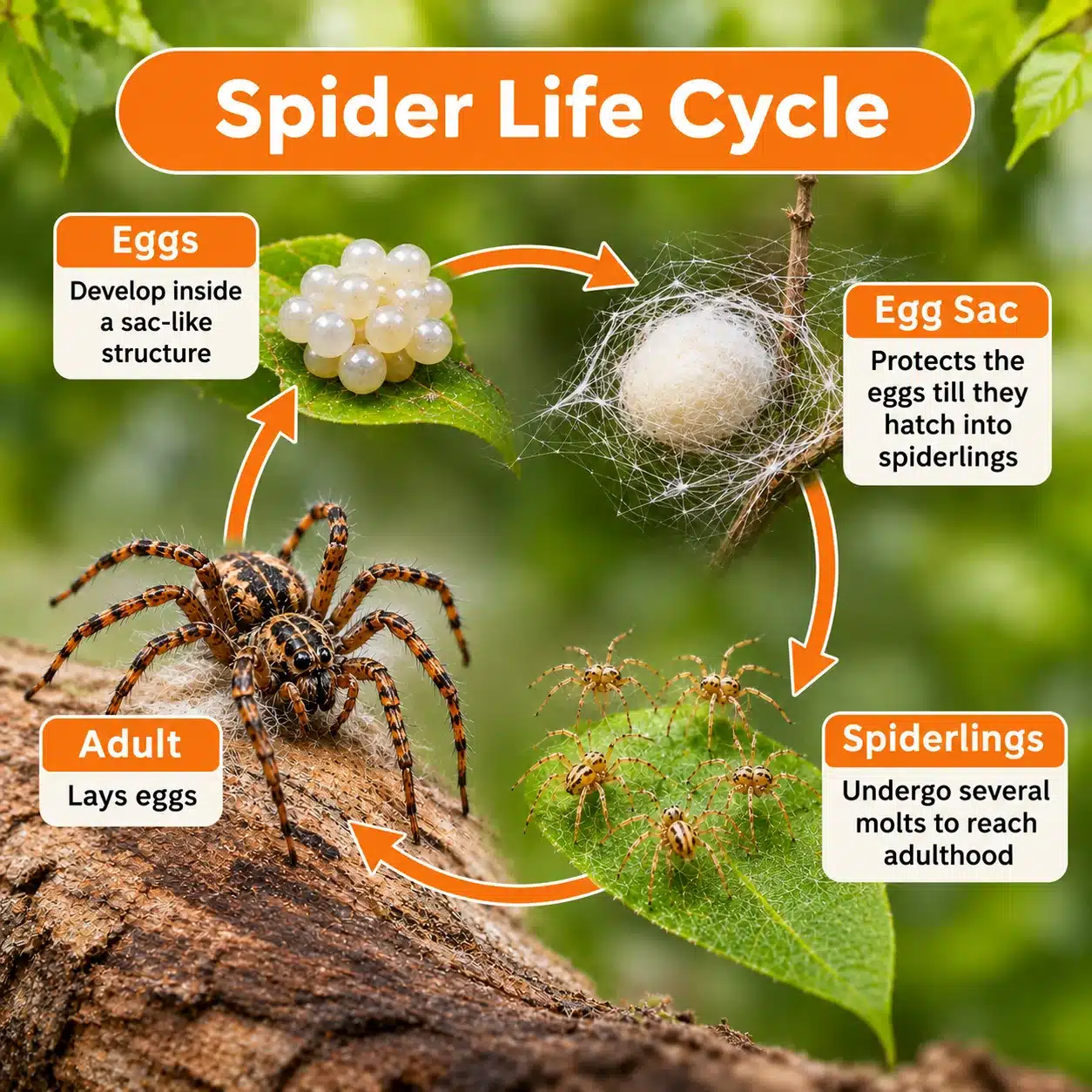
Female mouse spiders generally remain inside their burrows, where they lay eggs in a protected chamber. After hatching, the spiderlings eventually leave the nest, disperse and establish their own habitats.
Are Mouse Spiders Dangerous to Humans?
Many Sydney homeowners worry about encountering a mouse spider around their property and whether it poses a risk to people. Although these spiders generally avoid human contact, some species have medically significant venom and should be treated with caution.
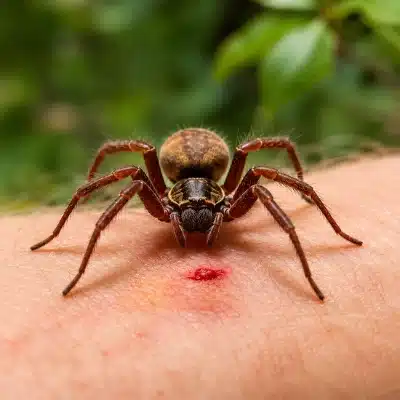
Spider bites are uncommon, but mouse spider bites can be painful because of their large, strong fangs. When threatened, the spider may raise its front legs and display its fangs as a warning. Never attempt to handle or move one yourself.
Here are a few important facts to understand:
- Venom risk: Some mouse spider species have venom that may cause significant medical effects. Its similarities to funnel-web spider venom make suspected bites a serious concern.
- Defensive behaviour: Mouse spiders may raise their front legs and expose their fangs when they feel threatened.
- Bite symptoms: A bite can cause pain and may lead to more serious symptoms in some cases. Do not wait for symptoms to appear before seeking help.
- Safety precautions: Keep children and pets away from unidentified large black spiders and avoid touching them.
If you suspect a mouse spider bite in eastern Australia, call 000 immediately and seek urgent medical attention. Follow the emergency operator’s advice, including pressure immobilisation if instructed. Understanding mouse spider behaviour and recognising potential risks can help you protect your family and manage spider activity safely.
What Happens If a Mouse Spider Bites You?
A bite may produce different effects depending on the species, the amount of venom injected and the individual’s response.
Some bites cause only local pain or minor symptoms. However, more serious envenomation can produce symptoms similar to those associated with funnel-web spider bites.
Common Bite Symptoms
Possible symptoms include:
- Sharp or intense pain around the bite area
- Sweating
- Nausea and vomiting
- Abdominal discomfort
- Excessive saliva production
- Headaches
- Numbness or tingling around the mouth
- Muscle twitching or spasms
- Watery eyes
- Breathing difficulties
- Confusion or anxiety
Not every person will experience all these symptoms. In some cases, symptoms may initially appear mild before becoming more noticeable.
Children require particular attention because a venomous bite can have more serious consequences in smaller individuals.
If you suspect a bite, do not attempt to identify the spider by waiting for symptoms. Seek emergency medical assistance immediately.
First Aid for a Mouse Spider Bite
Knowing the correct first-aid procedure can make an important difference when dealing with a potentially dangerous spider bite.
Australian medical guidance recommends treating suspected bites from large black spiders, including this species, as possible funnel-web bites.
Follow these steps:
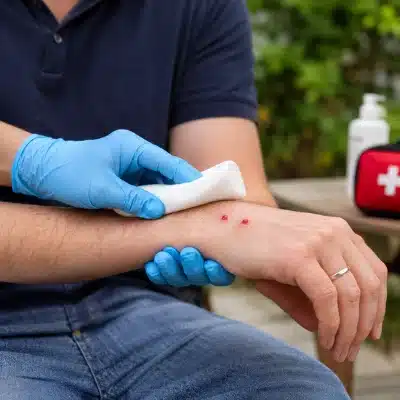
- Call Triple Zero (000): Request an ambulance immediately if a large black spider is suspected of causing the bite.
- Keep the person still: Encourage the affected person to lie down and avoid unnecessary movement.
- Apply a pressure immobilisation bandage: Use an elastic roller bandage over the bite area and along the affected limb, applying firm pressure without cutting off circulation.
- Immobilise the limb: Use a splint if available to restrict movement.
- Wait for medical assistance: Do not remove the bandage until instructed by medical professionals.
Do not cut the bite, suck out venom, apply a tourniquet or wash the bite area. If the spider can be photographed safely without approaching it, the image may help with identification. Never attempt to capture it by hand.
How to Differentiate Mouse Spiders from Funnel-Web Spiders
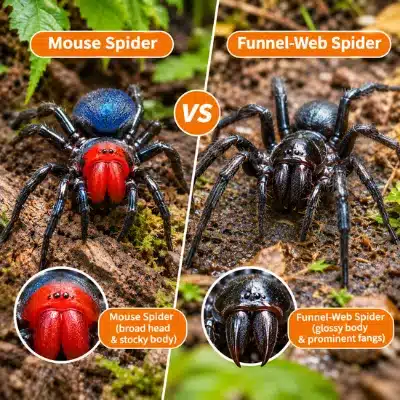
Mouse spiders and funnel-web spiders are often mistaken for one another because they share several physical features. Both can have dark, glossy bodies, powerful fangs and underground burrows. However, a few visible characteristics may help you tell them apart.
Mouse Spiders: These spiders usually have a broad, raised head, a stocky body and relatively short spinnerets at the rear of the abdomen. Depending on the species, males may also display noticeable red, blue or pale markings. They typically live in burrows with a silk-lined entrance.
Sydney Funnel-Web Spiders: The Sydney funnel-web generally has a glossy black or dark brown body, strong downward-pointing fangs and more prominent spinnerets. It can also show defensive behaviour when disturbed.
When comparing these spiders, remember these key points:
- Body shape: Mouse spiders tend to look more compact and stocky.
- Spinnerets: Funnel-web spiders generally have more noticeable rear spinnerets.
- Colouring: Male mouse spiders may have distinctive coloured markings.
- Behaviour: Both species can become defensive when threatened.
Although these features can be helpful, identifying a mouse spider or funnel-web accurately can be difficult without expert knowledge. Never handle an unidentified spider. If you find a large black spider around your Sydney property, keep your distance and seek professional identification.
| Features | Mouse Spider | Funnel-Web Spider | Trapdoor Spider |
|---|---|---|---|
| Body Appearance | Stocky body with a broad, raised head and strong fangs. | Glossy black or dark brown body with a robust build. | Usually thick-bodied, with a brown, dark or sometimes grey appearance. |
| Typical Habitat | Underground burrows in gardens, lawns and open ground. | Moist, sheltered areas, including gardens, bushland and under logs. | Soil, garden beds, leaf litter and sheltered outdoor areas. |
| Burrow Structure | Silk-lined underground burrow, often with a simple entrance. | Silk-lined retreat or burrow; some species build funnel-like silk entrances. | Often has a hinged, trapdoor-like lid made from silk and soil. |
| Spinnerets | Generally short and less prominent. | Usually visible at the rear of the abdomen. | Often short and not especially prominent. |
| Behaviour | Usually stays in its burrow; males may wander while searching for females. | Generally stays in a sheltered retreat but may become defensive when threatened. | Usually remains hidden in its burrow and waits for passing prey. |
| Medical Risk | Some species have venom that can cause significant symptoms. | Some species, including the Sydney funnel-web, can cause life-threatening envenomation. | Most bites are not considered medically significant, but bites should still be assessed. |
| Key Identification Clue | Compact body, broad head and strong fangs. | Glossy body, prominent fangs and visible spinnerets. | Distinctive hinged trapdoor covering its burrow. |
Safety note: These features are general identification clues, not a reliable way to confirm a spider’s species. Several Australian spiders look alike. Never handle an unidentified spider or disturb its burrow. If you suspect a bite from a funnel-web or mouse spider, call 000 immediately and follow emergency first-aid instructions.
How to Get Rid Of Mouse Spiders Around Your Sydney Home
Although completely eliminating outdoor spiders is neither practical nor environmentally desirable, homeowners can reduce unwanted encounters by maintaining their gardens and outdoor spaces.
Here are some useful prevention measures.
1. Maintain Your Garden Regularly
Remove unnecessary garden debris, fallen branches and accumulated leaves. Keeping outdoor areas tidy makes it easier to notice unusual spider activity and reduces suitable hiding places for various ground-dwelling pests.
2. Be Careful When Digging Soil
Because these spiders live underground, digging and landscaping can disturb their burrows.
Wear protective gloves and suitable footwear when gardening. Take additional care when moving rocks, removing tree roots or working near undisturbed soil.
3. Remove Unnecessary Outdoor Clutter
Old timber, unused building materials, rocks and stored garden equipment can provide shelter for spiders and other pests.
Keep storage areas organised and avoid leaving materials directly on the ground for extended periods.
4. Reduce Unnecessary Insects
Outdoor lights can attract flying insects, which may become food sources for spiders. Consider using appropriately positioned outdoor lighting and maintaining screens around doors and windows.
5. Seal Entry Points
Inspect gaps around doors, windows, vents and other openings. Install suitable door seals and repair damaged screens to reduce the chances of outdoor spiders entering indoor spaces.
These measures help reduce unwanted encounters but cannot guarantee that spiders will never enter your garden or home.
When Should You Contact Professional Spider Pest Control in Sydney?
Finding a large unidentified spider in your garden can be concerning, particularly when children or pets use the outdoor space.
If you regularly notice spiders around your property, professional advice can help you understand the species involved and identify possible harbourage areas.
Professional spider pest control may be useful when:
- Large spiders are repeatedly appearing around the property.
- Outdoor storage or garden areas contain frequent spider activity.
- You have concerns about spider access to living spaces.
- Landscaping or construction work has disturbed potential spider habitats.
- You need advice on reducing other insects that attract spiders.
A qualified Sydney pest control professional can assess the property and recommend suitable control or prevention measures.
Avoid attempting to remove an unidentified large black spider yourself. Professional assessment is particularly important when the species could be medically significant.
Professional Spider Pest Control Services in Sydney
Managing spider activity requires an understanding of the types of spider species, its habitat and the conditions attracting it to a property.
EMK Termite & Pest Control Sydney provides pest management services for residential and commercial properties across Sydney. Services include spider pest control, termite treatment and inspection, rodent control, cockroach control, ant treatment, bed bug control, silverfish control and general pest solutions.
If you are concerned about recurring spider activity around your property, a professional inspection can help identify potential harbourage areas and recommend suitable preventive measures.
Rather than disturbing unidentified spiders, contact a qualified pest management provider to discuss your concerns and the most appropriate approach for your property.
Conclusion
Mouse spiders are fascinating native Australian animals, but their powerful fangs and potentially significant venom mean they should always be treated with caution. Although bites are uncommon and severe envenomation is rare, recognising their appearance and understanding their behaviour can help Sydney residents avoid unnecessary encounters.
Maintaining gardens, reducing outdoor clutter and taking care during landscaping can help minimise contact with ground-dwelling spiders. If you discover a large black spider, avoid handling it and seek professional identification where necessary.
For recurring spider concerns around your property, EMK Termite & Pest Control Sydney can help with suitable spider pest control and prevention advice.
What Our Customers Had To Say


Frequently Asked Questions About Mouse Spider
1. Are mouse spiders common in Sydney?
They occur in eastern Australia, including areas around Sydney, but are not generally abundant in heavily populated urban environments. They are more likely to be associated with suitable natural habitats and gardens.
2. Can a mouse spider bite cause serious symptoms?
Yes. Although serious bites are uncommon, some species have potentially dangerous venom. Suspected bites from large black spiders should be treated as medical emergencies.
3. What do mouse spiders eat?
They mainly feed on insects, including ants and beetles, as well as other spiders. Some species may occasionally consume small vertebrates.
4. Do mouse spiders enter houses?
They are primarily ground-dwelling spiders that live in underground burrows. They may occasionally be encountered around residential buildings, particularly when outdoor habitats are disturbed.
5. How can I identify a mouse spider?
Look for a stocky, dark-coloured body, broad raised head, large jaws and glossy appearance. However, professional identification is recommended because several Australian spiders look similar.
6. What should I do if I find one in my garden?
Keep your distance, prevent children and pets from approaching it and avoid disturbing its burrow. Seek professional advice if the spider is near frequently used areas.
7. Does professional pest control remove all spiders?
No treatment can guarantee the permanent removal of every spider. Professional pest management focuses on reducing unwanted activity, addressing harbourage conditions and recommending practical prevention measures.
About The Author
