
Content Published: May 13, 2026
Content Updated : June 11, 2026
What is a Carpenter Ant?
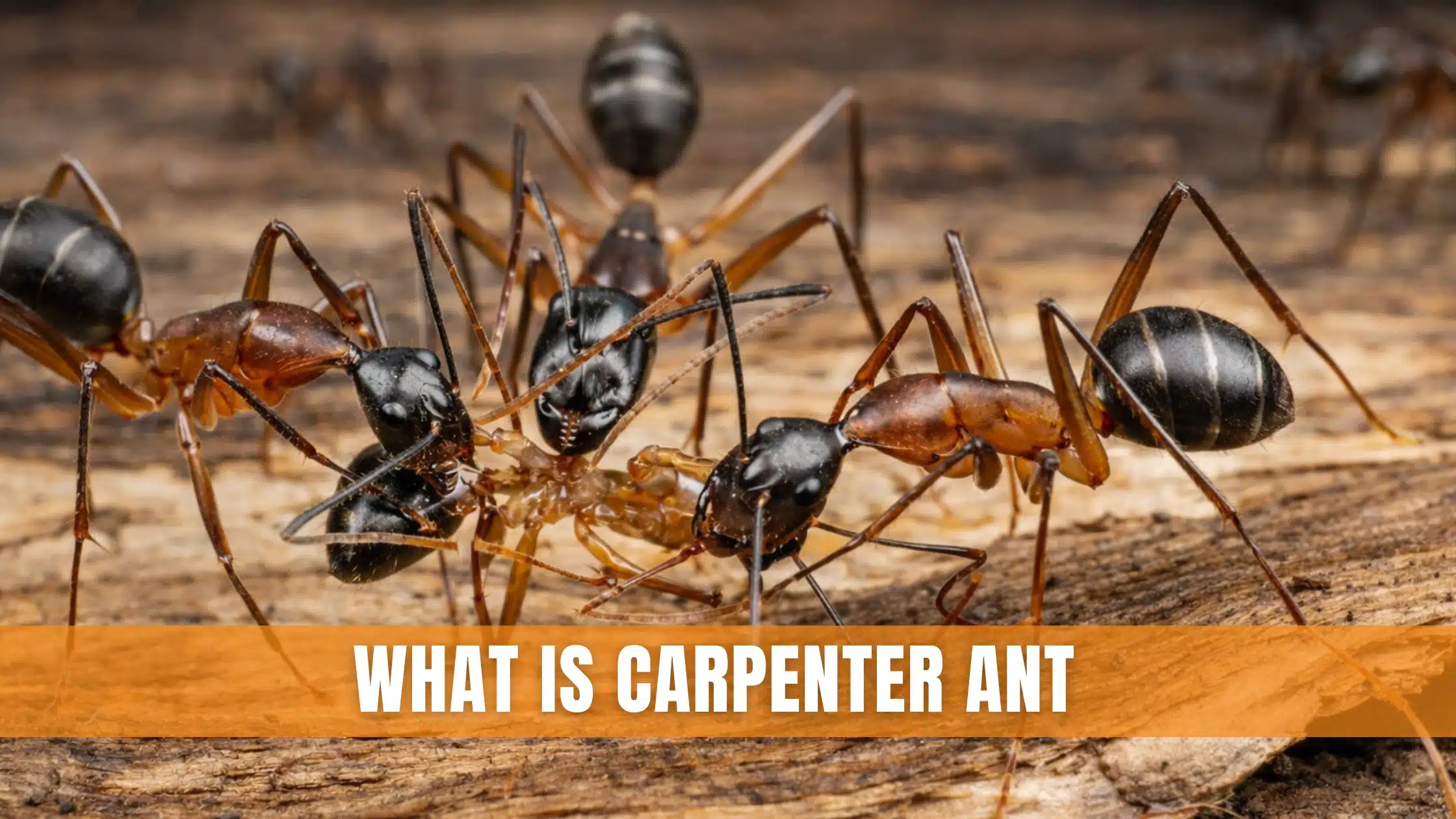
Carpenter ants are a type of ant known for their unique nesting behavior. They get their name from their ability to work through wood, creating smooth tunnels and galleries inside it. Unlike termites, carpenter ants do not eat wood for nutrition. Instead, they chew through it to build and expand their nests, often targeting damp or decaying timber that is easier to excavate.
These ants can become a concern when they invade homes, as their tunneling activity may weaken wooden structures over time. One of the most noticeable signs of a carpenter ant infestation is the presence of small piles of fine sawdust, often referred to as frass. This material is pushed out of their tunnels as they clean out their nesting areas, and it is commonly found near walls, wooden beams, or furniture.
Homeowners may also notice increased ant activity, especially at night when carpenter ants are most active. While they do not consume wood, their continuous excavation can still cause structural damage if left untreated. Identifying these signs early is important, as it may indicate the need for professional carpenter ant extermination to prevent further damage and protect your property. Carpenter ants are one of the most destructive wood-nesting pests found in Sydney homes. Although they do not eat wood like termites, they tunnel through timber to build nests, causing structural damage over time. In this guide, EMK Termite & Pest Control Sydney explains how to identify carpenter ants, recognize infestation signs, and remove them effectively.
How to Identify Carpenter Ants
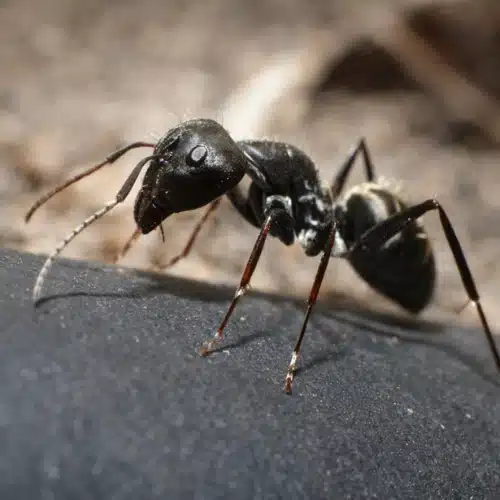
Carpenter ants are among the largest ants found in Australia, and several species are known to infest homes and buildings. Proper identification is important to ensure the right treatment and control methods are used.
Here are some key features to help recognize carpenter ants:
- They have a narrow waist with one node and a smoothly rounded thorax when viewed from the side
- Worker ants are usually black or a combination of red and black
- Most workers range in size from about 3/8 to 1/2 inch, although some species may be smaller
- Within the same colony, worker ants can vary in size, with both major and minor workers present
- Queens and males are larger than workers and have wings during their reproductive stage
- After establishing a new nest, queens shed their wings and remain inside the colony
- Queens can grow up to one inch in length, making them significantly larger than other ants
It is also important to note that other ant species can look similar but may have one or two nodes and an uneven thorax. These species typically do not infest wood like carpenter ants. Correct identification helps ensure effective pest control and prevents unnecessary treatments.
Do Carpenter Ants Bite, Sting, Damage Property, or Spread Disease?
Carpenter ants may not seem dangerous at first, but it’s important to understand how they can affect both you and your home. Here’s a simple breakdown:
- Biting
Carpenter ants can bite, but they are not aggressive. They usually bite only when disturbed or threatened. Their bite may cause a slight sting due to a small amount of formic acid, but it is not harmful and typically heals quickly. - Stinging
Unlike fire ants, carpenter ants do not sting. This means you won’t experience the intense pain associated with stinging insects. Any discomfort is limited to their bite. - Property Damage
This is the biggest concern. Carpenter ants do not eat wood, but they tunnel through it to build nests. Over time, this can weaken wooden structures such as beams, floors, and furniture. They are especially attracted to damp or decaying wood, making homes with moisture issues more vulnerable. - Disease Risk
Carpenter ants are not known to spread diseases. However, their presence may indicate moisture problems, which can lead to mold or attract other harmful pests.
Overall, while they are not dangerous to health, carpenter ants can cause serious damage if ignored.
Life Cycle of Carpenter Ants
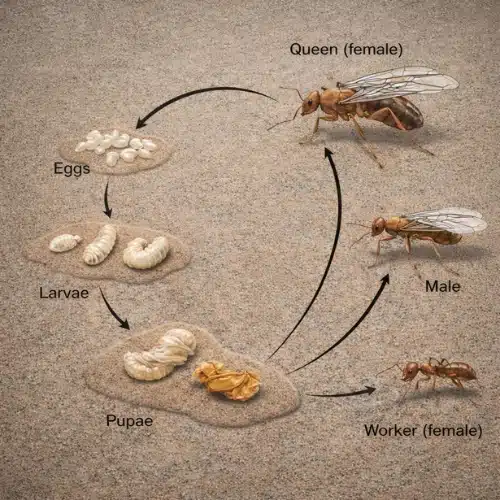
Carpenter ants go through a fascinating life cycle known as complete metamorphosis. This process includes four stages: egg, larva, pupa, and adult. Depending on the species and environmental conditions, the full cycle can take several weeks to a few months. Each stage plays an important role in developing these ants into active members of the colony.
Here is how the life cycle progresses:
- Egg Stage
The life of a carpenter ant begins as a tiny, soft, oval egg. These eggs are very small, and not all survive, as some may be consumed within the colony. - Larva Stage
Once the egg hatches, it becomes a larva. Larvae are small, legless, and completely dependent on adult ants for food. They grow rapidly and shed their outer layer several times. - Pupa Stage
After reaching full size, the larva transforms into a pupa. During this stage, the ant develops its legs, antennae, and body structure. Pupae may be pale at first and gradually darken as they mature. - Adult Stage
Finally, the adult ant emerges. At first, it appears lighter in color, but soon darkens as its body hardens. At this stage, the ant becomes an active worker in the colony.
Signs of a Carpenter Ant Infestation
The appearance of winged carpenter ants inside a home can be alarming for homeowners. These ants are usually reproductive males and females, and their presence often indicates that a colony may be established within the property. Unlike regular worker ants that forage for food, winged ants are a strong sign that nesting activity is happening nearby, often inside walls, wooden structures, or hidden areas of the home.
Homeowners may also notice unusual signs such as faint rustling or crackling sounds coming from wall cavities or wooden surfaces. This noise is often caused when the ants are disturbed inside their nest, especially if the colony is active. These subtle sounds can be an early warning of an infestation that is not yet visible.
Seeing even a single carpenter ant indoors should not be ignored. While it may seem insignificant, it can often indicate a larger hidden problem. Carpenter ants typically live in groups, so spotting one may mean there are many more present out of sight.
Early detection is important to prevent further damage. If you notice winged ants, unusual sounds, or repeated sightings, it is a good idea to investigate further or consider professional pest control assistance.
What Does Carpenter Ant Infestation Looks Like
One of the most common signs of a carpenter ant infestation is the presence of small openings or holes in wooden surfaces. These openings are used by the ants to push out debris from their nests. The material they remove often looks like fine sawdust and may also include bits of insulation or insect remains.
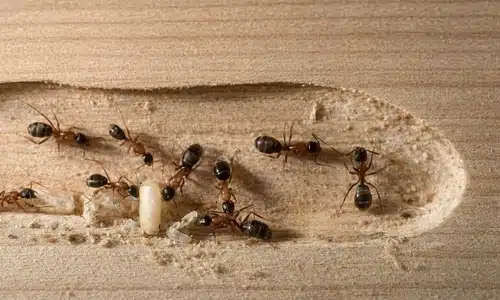
Below these small holes, you may notice a pile of this debris, which is a strong indication that the infestation is active. This material, often called frass, is a key sign that carpenter ants are tunneling inside the wood. Unlike termites, carpenter ants keep their tunnels clean, so their galleries appear smooth and polished, almost like they have been sanded.
You may also notice increased ant activity around these areas, especially at night when carpenter ants are more active. The damage may not always be visible from the outside, as much of their nesting occurs within walls, beams, or other wooden structures.
If you observe any of these signs, it is important to act quickly. Carpenter ants can cause significant structural damage over time if left untreated. Contacting a pest control professional as soon as possible will help eliminate the infestation and prevent further damage to your home.
What Do Carpenter Ants Eat?
Carpenter ants have a varied diet, which makes them highly adaptable in different environments. As omnivores, they consume both plant based and animal based foods, allowing them to survive both outdoors and inside homes. Here is a breakdown of what carpenter ants typically eat:
Sweet foods and honeydew
Carpenter ants are attracted to sugary substances, especially honeydew produced by aphids. They often protect these insects to maintain a steady food source. Indoors, they may also feed on fruits, syrups, and sugary spills.
Protein sources
These ants are active hunters and scavengers. They feed on dead insects and small invertebrates, which provide essential nutrients needed for the growth of larvae.
Human food
When inside homes, carpenter ants will consume a variety of food items. Sweets, meats, pet food, and crumbs are all common targets.
Moisture rich areas
Although they do not eat wood, carpenter ants prefer damp environments. Kitchens, bathrooms, and basements provide both moisture and easy access to food.
Carpenter ants are mostly active at night, often traveling long distances in search of food. They follow established trails marked by pheromones, which help guide them between their nest and food sources.
Carpenter Ant vs Termite: What’s the Difference?
Carpenter ants and termites are both wood-damaging pests, but they cause damage in very different ways. Many homeowners in Sydney confuse the two because both infest timber structures. However, identifying the correct pest is important for effective treatment and prevention.
Key Differences Between Carpenter Ants and Termites:
- Wood Consumption:
Termites eat wood as their food source, while carpenter ants only tunnel through wood to create nests. - Appearance:
Carpenter ants have a narrow waist, bent antennae, and darker bodies. Termites have straight antennae, broad waists, and pale-colored bodies. - Signs of Infestation:
Carpenter ants leave behind small piles of sawdust-like material called frass. Termites usually create mud tubes and hollow wood damage. - Damage Style:
Carpenter ants create smooth, clean tunnels inside timber. Termites produce rough and muddy galleries because they consume the wood. - Moisture Attraction:
Both pests are attracted to damp wood, leaking pipes, and moisture-damaged areas.
Although carpenter ants are less destructive than termites, they can still weaken wooden structures over time if left untreated. Professional pest inspections help identify the pest correctly and ensure proper treatment before serious structural damage occurs.
Best Ways to Get Rid of Carpenter Ants
A carpenter ant infestation can cause serious damage to your home over time if not treated early. These ants tunnel through wood to build nests, which can weaken structures and lead to costly repairs. Taking quick action is essential to protect your property.
Here are effective ways to control and prevent carpenter ants:
- Destroy the nest
Locating the nest is key, though it is often hidden in walls or floors. Methods include:- Bait stations that ants carry back to the colony
- Insecticides to eliminate ants or create barriers
- Vacuuming small and accessible nests
- Professional pest control for large or hidden infestations
- Bait stations that ants carry back to the colony
- Use simple bait solutions
Homemade options can help reduce activity:- Borax and sugar mixture to attract and eliminate ants
- Baking soda and sugar as an alternative bait
- Vinegar and water spray to disrupt trails
- Borax and sugar mixture to attract and eliminate ants
- Prevent nesting opportunities
- Remove wood debris around the home
- Fix leaks and reduce moisture
- Seal cracks and gaps
- Trim trees and shrubs near structures
- Remove wood debris around the home
- Control moisture and water sources
- Repair leaks and improve drainage
- Clean gutters regularly
- Avoid standing water around the property
- Repair leaks and improve drainage
Early prevention and proper treatment help keep your home safe and pest free.
When To Seek Help From Professional Pest Management Service
In most cases, dealing with carpenter ants effectively requires the help of a professional pest management service. These experts have the knowledge and experience needed to thoroughly inspect a property, identify signs of infestation, and locate hidden nests that are often difficult to find. Their understanding of carpenter ant behavior allows them to apply the most suitable treatment methods for long term results.
Pest control professionals use proven techniques to eliminate infestations quickly and efficiently. These include:
- Detailed property inspections to detect nesting areas
- Advanced baiting methods to target the entire colony
- Safe and correct application of professional grade insecticides
- Use of specialized products designed for effective ant control
In addition, professionals often provide preventative solutions to reduce the risk of future infestations. This may include sealing entry points, repairing cracks and crevices, and offering advice on reducing moisture and other attractants around the property.
By choosing expert pest control services, homeowners can ensure that carpenter ants are treated properly and prevented from returning. This approach not only protects the structure of the home but also saves time and effort compared to DIY methods.
Seeing carpenter ants in your Sydney home? Contact EMK Termite & Pest Control Sydney for fast and affordable ant inspections.
Frequently Asked Questions (FAQ's) About Carpenter Ants
Carpenter ants are attracted to moisture-damaged wood, damp areas, food sources, and decaying timber. Leaking pipes, wet roofs, rotting wood, and unsealed food can encourage carpenter ants to enter homes and build nests. They are also commonly found in kitchens, bathrooms, wall voids, and wooden structures with high moisture levels.
Carpenter ants are generally less destructive than termites because they do not eat wood. However, they can still cause serious structural damage by tunneling through timber to create nests. Termites usually spread faster and cause more severe damage, but large carpenter ant infestations can also weaken wooden structures over time if left untreated.
Yes, carpenter ants can damage homes by hollowing out wood to build their nesting galleries. Over time, repeated tunneling can weaken timber structures, furniture, doors, ceilings, and wall frames. Homes with moisture problems are especially
Yes, carpenter ants can bite humans if they feel threatened or disturbed. Their bites are usually not dangerous but may cause mild pain, irritation, or a burning sensation. Some carpenter ants may also spray formic acid into the bite, which can increase discomfort.
Common signs of carpenter ants include seeing large black ants indoors, hearing rustling noises inside walls, finding piles of sawdust-like material (frass), spotting winged ants near windows, and noticing smooth tunnels inside wood. Increased ant activity around damp timber areas may also indicate an infestation.
Professional pest control experts remove carpenter ants using targeted treatments, baiting systems, nest identification, and insecticide applications. They also inspect the property for moisture issues, entry points, and hidden nests to prevent future infestations. Professional carpenter ant control provides faster and more effective long-term results compared to DIY treatments.
About The Author

EMK Termite & Pest Control Team
EMK Termite & Pest Control Team is a licensed and experienced pest control service provider based in Sydney, Australia. Our team specialises in termite treatment, cockroach control, spider control, and general pest management for residential and commercial properties.
With years of hands-on experience, we follow Australian safety standards and use proven, eco-friendly pest control methods to deliver long-lasting results. All content published on this website is written and reviewed by trained pest control professionals to ensure accuracy, safety, and real-world expertise.
One Response