

Content Updated: April 2, 2026
How to Get Rid of Brown Rats
Brown rats (Rattus norvegicus) are one of the most common rodent species found across Australia, particularly in urban and suburban areas. Often referred to as Norway rats or sewer rats, they are known for their large size, coarse brown or grey fur, blunt noses, and relatively small ears. In Australia, they are commonly seen around homes, restaurants, warehouses, and coastal regions where food and shelter are easily available.
These rodents are highly adaptable and thrive in Australian conditions, especially in cities like Sydney where waste, moisture, and dense housing provide ideal environments. Brown rats typically live at ground level, building burrows under buildings, gardens, and near rubbish areas. They are strong swimmers and can enter properties through drains and pipes, making them difficult to control.
Brown rats are omnivores and will feed on household waste, pet food, and stored goods. Their constant gnawing can damage wood, insulation, and electrical wiring, leading to costly repairs.
In Australia, brown rats are also a serious health concern as they can spread diseases through their droppings, urine, and parasites. Due to their rapid breeding and resilience, early detection and professional control are essential to prevent widespread infestations.
Where Do Brown Rats Live ?
Brown rats (Rattus norvegicus) are highly adaptable and live in large colonies, often dominated by stronger males. In Australia, they are commonly found in urban and suburban environments where food, water, and shelter are easily available. Cities like Sydney, Melbourne, and Brisbane provide ideal conditions, with rats frequently inhabiting sewers, drains, basements, and areas around homes and commercial buildings.
These rodents are skilled burrowers and create extensive underground tunnel systems that can house multiple generations. Their burrows are often located beneath buildings, garden beds, rubbish areas, and along foundations. Brown rats prefer ground-level living and are rarely found nesting in higher areas compared to other rat species.
In rural parts of Australia, brown rats are commonly found around farms, sheds, and storage facilities where grains and food supplies are stored. They may also live under vegetation, woodpiles, and along fence lines or hedgerows, where they can remain hidden and protected.
Because they are excellent swimmers, brown rats can travel through drainage systems and waterways, allowing them to spread quickly across different areas. Their ability to adapt to various environments makes them one of the most persistent and widespread pests in Australia.
How to identify a brown rat
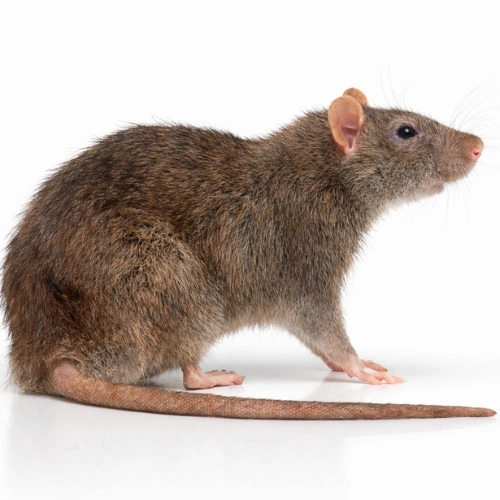
Brown rats (Rattus norvegicus) are noticeably larger than any mouse species, making them easier to identify once you know what to look for. They typically have a strong, heavy body with coarse grey-brown fur, giving them a slightly rough appearance. Their bodies are long and robust rather than slender, which helps distinguish them from smaller rodents.
One of their most recognisable features is their long, scaly tail, which is usually thick and almost hairless. The tail is often shorter than their body length but still quite prominent. Brown rats also have small to medium-sized ears that are less noticeable compared to other rat species, along with a blunt or slightly rounded nose rather than a sharp, pointy one.
Their eyes are relatively small, and their overall appearance tends to look stocky and powerful. In Australia, you may spot them near ground-level areas such as gardens, drains, or rubbish zones. Common signs include droppings, gnaw marks, and burrows.
Understanding these physical characteristics can help you quickly identify a brown rat and take early action before an infestation becomes more serious.
Brown Rat Life-Cycle
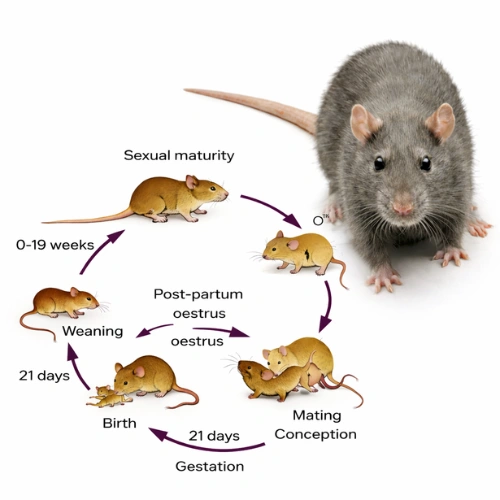
The brown rat (Rattus norvegicus) has a rapid life cycle, allowing populations to grow quickly when conditions are favourable. In Australia, where food, shelter, and warm environments are often available, their breeding can occur throughout the year.
- Brown rats can reproduce year-round if conditions are ideal, leading to frequent infestations.
- A female typically produces 3 to 5 litters annually, depending on environmental factors.
- Each litter usually contains around 6 to 8 pups, allowing populations to expand rapidly.
- The gestation period is short, lasting only about 3 weeks, which speeds up reproduction.
- Young rats develop quickly and can become sexually mature within 5 to 10 weeks, continuing the breeding cycle.
Although a brown rat can live up to 2 to 3 years, most do not reach this age due to predators, environmental conditions, and pest control measures. Despite their relatively short lifespan, their fast reproduction rate makes them one of the most persistent pests.
Understanding the brown rat life cycle is essential for effective pest control, as early intervention can prevent a small issue from turning into a large-scale infestation in a short period.
What Do Brown Rats Eat?
Brown rats (Rattus norvegicus) are highly adaptable feeders and are not selective when it comes to food. As omnivores, they consume a wide variety of items, which helps them survive in both urban and rural environments across Australia. Their flexible diet is one of the key reasons they are so difficult to control.
- Grains and cereals form a major part of their diet, especially in homes, farms, and storage areas.
- They also eat fruits, seeds, and vegetables, often found in gardens or kitchens.
- Brown rats will consume eggs and small animals, including insects, making them opportunistic hunters.
- In urban areas, they rely heavily on food scraps, garbage, and pet food, taking advantage of easily available waste.
These rodents are known for contaminating far more food than they actually eat, spreading bacteria through droppings and urine. Their strong teeth allow them to gnaw through packaging, making stored food vulnerable to infestation.
Because brown rats can survive on almost any food source, maintaining proper sanitation and secure food storage is essential. Eliminating access to food is one of the most effective ways to reduce their presence and prevent infestations from growing.
Do Brown Rats Carry Diseases?
Yes, brown rats (Rattus norvegicus) are known carriers of various diseases, which can be transmitted through their droppings, urine, saliva, or bites. While direct transmission to humans is relatively uncommon, the risk still exists, especially in areas with active infestations or poor sanitation.
- Droppings and urine: These can contaminate food, surfaces, and air, potentially spreading bacteria and infections.
- Bites and scratches: Although rare, rat bites can introduce harmful bacteria into the body and may require medical attention.
- Parasites: Brown rats often carry fleas, mites, and ticks, which can transmit additional diseases to humans and pets.
Common illnesses associated with brown rats include leptospirosis, salmonellosis, and other bacterial infections. In some cases, inhaling particles from dried droppings or urine can also pose health risks.
Even though disease transmission is not frequent, it’s important to avoid direct contact with rats or their waste. Always use protective gear when cleaning contaminated areas and disinfect surfaces properly.
If you suspect exposure or experience symptoms after contact, it’s best to consult a medical professional promptly. Taking preventive measures and controlling infestations early can significantly reduce health risks associated with brown rats.
Are Brown Rats Dangerous?
Brown rats, also known as Norway rats, are more than just unpleasant pests—they can pose serious health risks to humans. While they may appear harmless at a glance, they are known carriers of various diseases that can spread through direct contact, droppings, urine, or even airborne particles contaminated with their waste.
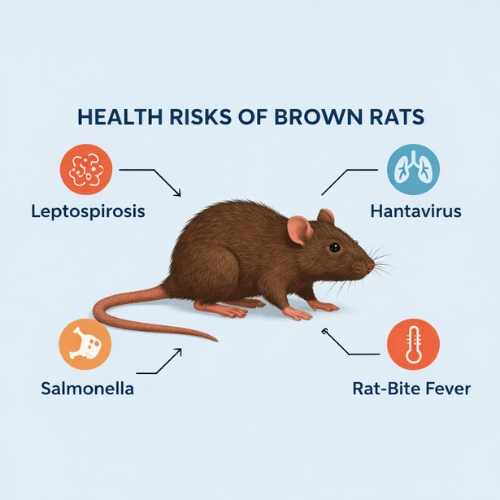
Here are some key health risks associated with brown rat infestations:
- Leptospirosis: A bacterial infection that can cause fever, headaches, muscle pain, and in severe cases, kidney damage or meningitis.
- Hantavirus Pulmonary Syndrome: A rare but potentially fatal respiratory disease that can develop after inhaling contaminated dust from rat urine or droppings.
- Rat-Bite Fever: Transmitted through bites or scratches, this infection can lead to fever, chills, vomiting, and muscle aches if untreated.
- Salmonella: Rats can contaminate food and surfaces with this bacteria, causing food poisoning symptoms like diarrhoea, cramps, and vomiting.
Although not every rat carries these diseases, the risk increases in areas with active infestations. Avoiding contact with rats and maintaining proper hygiene is essential.
Prompt action, including professional pest control, is crucial to minimise health risks and keep your environment safe and rodent-free.
What’s the Difference Between Brown Rats and Roof Rats?
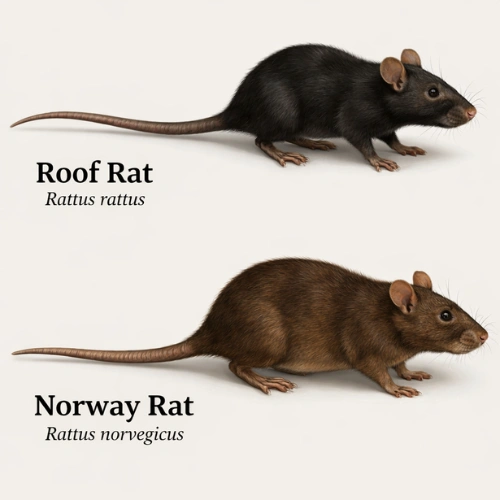
Brown rats (Rattus norvegicus) and roof rats (Rattus rattus) are both common pests, but they differ significantly in appearance, behaviour, and habitat. Identifying the correct species is important for effective control.
Brown Rats (Norway Rats):
- Larger and heavier with a stocky body and coarse brown or grey fur.
- Have a blunt nose, small ears, and a thick tail that is shorter than their body.
- Prefer ground-level living, commonly found in burrows, basements, sewers, and around building foundations.
- Strong swimmers often enter properties through drains.
- Less agile climbers compared to roof rats.
Roof Rats (Black Rats):
- Smaller and more slender with smooth black or dark brown fur.
- Have a pointed nose, large ears, and a long tail that is longer than their body.
- Prefer elevated areas such as roofs, ceilings, attics, and trees.
- Excellent climbers and often enter homes via branches or overhead cables.
- More agile and active in higher spaces.
Both species can cause damage and spread disease, but their different habits require targeted pest control methods. Proper identification helps ensure effective removal and prevention strategies.
How to Get Rid of Brown Rats
Effective brown rat control begins with proper identification and a targeted approach. Simply placing traps without understanding their behaviour or entry points often leads to ongoing infestations.
- Identify entry points: Inspect your property carefully and seal any gaps larger than half an inch. Pay close attention to foundation vents, garage doors, pipes, and wall openings.
- Eliminate attractants: Remove food sources such as unsecured garbage, pet food, and compost. Trim overgrown vegetation and keep surroundings clean to reduce hiding spots.
- Use the right trapping method: Snap traps are highly effective in residential settings as they provide immediate results and reduce risks associated with poison. Place traps along walls, near burrows, and along known travel routes where brown rats are active.
- Focus on ground-level areas: Unlike roof rats, brown rats stay close to the ground, so traps should be positioned accordingly.
Consistency is key when dealing with infestations. If rodent activity continues despite these efforts, it usually means some entry points have been overlooked or nesting sites remain undetected.
In such cases, professional pest control is recommended to ensure complete removal. A comprehensive approach combining exclusion, sanitation, and targeted treatment is the most effective way to get rid of brown rats and prevent their return.
About The Author

EMK Termite & Pest Control Team
EMK Termite & Pest Control Team is a licensed and experienced pest control service provider based in Sydney, Australia. Our team specialises in termite treatment, cockroach control, spider control, and general pest management for residential and commercial properties.
With years of hands-on experience, we follow Australian safety standards and use proven, eco-friendly pest control methods to deliver long-lasting results. All content published on this website is written and reviewed by trained pest control professionals to ensure accuracy, safety, and real-world expertise.