
Content Updated: August 10, 2026
Best Cockroach Killer: The Complete Guide to a Roach-Free Home
Cockroaches are among the most resilient pests on the planet, capable of surviving in almost any environment and multiplying at an alarming rate. If you’ve spotted even a single roach scurrying across your kitchen floor at night, chances are there are dozens more hiding in the walls, under appliances, or behind cabinets. Finding the right cockroach killer isn’t just about eliminating the pest you see; it’s about breaking the infestation cycle before it spirals out of control.By understanding the strengths of each one, you can make an informed decision, eliminate existing infestations, and prevent future outbreaks. Whether you need a DIY solution or professional cockroach pest control .In this guide, we’ll walk through everything you need to know about choosing an effective roach elimination product, understanding how these pests operate, and combining chemical, natural, and preventive methods to keep your home permanently roach-free.
Why You Need a Reliable Cockroach Killer
Cockroaches aren’t just unsightly. They pose genuine health risks. They contaminate food, spread bacteria like E. coli and Salmonella, and their shed skin and droppings are a well-documented trigger for asthma and allergies, especially in children. A single female roach can produce hundreds of eggs in her lifetime, which means a minor sighting today can become a full-blown infestation within weeks if left untreated.
This is exactly why choosing the right cockroach killer matters so much. A weak or improperly applied product might kill the roaches you see, but it won’t touch the eggs and nymphs hiding deep in cracks and crevices. An effective roach treatment targets the entire colony, not just the visible adults, ensuring long-term results rather than a temporary fix.
Beyond the immediate discomfort of seeing a roach in your home, there’s a financial dimension too. Untreated infestations can damage electrical wiring, contaminate stored food, and even affect the resale value of a property if left unaddressed for too long. Investing early in a dependable solution is almost always cheaper than dealing with the fallout of a full-scale infestation later.
Understanding Cockroach Behavior Before You Treat
Before reaching for any treatment product, it helps to understand how roaches behave. These insects are nocturnal, thrive in warm and humid conditions, and are drawn to food residue, grease, and standing water. They tend to nest in dark, secluded areas: behind refrigerators, under sinks, inside wall voids, and near pipes.
Different cockroach species also behave differently. German cockroaches, the most common household variety, reproduce extremely fast and prefer kitchens and bathrooms, while American cockroaches are larger, favor basements and drains, and tend to wander in from outside. Knowing which species you’re dealing with can help you decide where to focus your treatment and which entry points need the most attention.
Because they’re excellent at hiding, many homeowners underestimate the size of an infestation. For every roach spotted during the day, experts estimate there could be dozens more hidden away. This is why a single spray or trap is rarely enough. A combination approach involving a strong pest control product, ongoing cockroach repellant strategies, and sanitation is essential for lasting results.
Types of Cockroach Killer Products
1.Gel Baits
Gel baits are widely considered one of the most effective forms of cockroach killer available today. Roaches eat the poisoned gel and carry residue back to their nest, where other roaches consume it too, effectively wiping out the colony from the inside. Gel baits are long-lasting, low-odor, and safe to place in cracks, cabinets, and behind appliances. Most homeowners find they only need a small amount per hotspot, which makes a single tube last for months of ongoing protection.
2.Sprays and Aerosols
Spray-based roach treatments offer fast knockdown, making them ideal for visible roaches or quick treatment of infested areas. However, sprays only kill on contact and don’t address hidden nests, so they work best as a supplement to baits rather than a standalone solution. Look for formulations with a residual effect, meaning they continue killing roaches that cross the treated surface for days or weeks after application.
3.Insect Growth Regulators (IGRs)
IGRs don’t kill roaches outright. Instead, they disrupt the reproductive cycle, preventing nymphs from maturing into breeding adults. When paired with a traditional roach-killing bait, IGRs help stop future generations before they start, which is especially valuable for long-standing infestations that have already established multiple breeding sites within a home.
4.Bait Stations and Traps
These enclosed stations combine attractant lures with poison, offering a mess-free and pet-safer way to monitor and reduce roach activity over time. They’re especially useful for ongoing maintenance after the initial infestation has been dealt with, and placing several throughout the kitchen, bathroom, and utility areas creates a wide net that catches roaches before they can settle in for good.
5.Dust Formulations (Boric Acid and Diatomaceous Earth)
Applied in thin layers along baseboards, wall voids, and entry points, dust-based products act as a slow but highly effective by damaging the roach’s exoskeleton or digestive system. These formulations can remain effective for months as long as they stay dry, making them a smart choice for hard-to-reach areas like wall cavities and behind built-in cabinetry that you can’t treat regularly.
Natural and Organic Alternatives
Not everyone wants to use harsh chemicals indoors, especially in homes with children or pets. Fortunately, there are several organic cockroach repellant and natural cockroach repellant options that can complement or, in mild cases, replace synthetic treatments.
1.Essential Oils
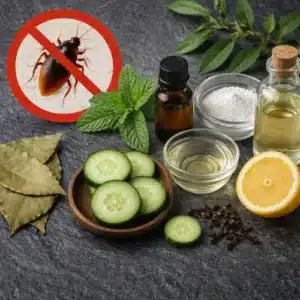
Peppermint oil, tea tree oil, and eucalyptus oil are popular choices for a natural cockroach repellant because roaches dislike their strong scent. Mixing a few drops with water in a spray bottle and applying it around entry points, baseboards, and under sinks can help deter roaches from settling in.
2.Diatomaceous Earth
This naturally occurring powder is a favorite organic cockroach repellant because it’s non-toxic to humans and pets yet lethal to insects. It works by dehydrating roaches on contact, making it a safe long-term barrier when applied in dry areas.
2.Baking Soda and Sugar Mixture
A homemade blend of baking soda and sugar can act as both an attractant and a roach-killing remedy. The sugar lures the roach in, while the baking soda reacts internally, offering a low-cost, chemical-free option for minor infestations.
3.Bay Leaves and Cucumber Peels
While their effectiveness is milder compared to essential oils, bay leaves and cucumber peels have long been used to discourage roaches in kitchens and pantries. Placing them near entry points won’t eliminate an infestation but can help keep new roaches from wandering in.
4.Vinegar Solutions
A simple mix of white vinegar and water, sprayed along countertops, drains, and skirting boards, works as a mild deterrent while also disinfecting surfaces roaches are drawn to. It won’t kill an existing colony, but as part of a regular cleaning routine, it makes your kitchen a far less appealing environment for roaches to explore.
It’s worth setting realistic expectations with any natural or organic method: these approaches work best as prevention and light deterrence rather than as a cure for an established infestation. For heavier roach activity, they’re most effective when combined with a dedicated bait or dust product that can reach and eliminate the nest itself.
Building an Effective Cockroach Deterrent Strategy
Killing existing roaches is only half the battle. Keeping new ones from moving in requires a solid cockroach deterrent plan. Here’s how to build one:
1.Seal Entry Points
Roaches can squeeze through gaps as thin as a coin. Caulking cracks around pipes, windows, and baseboards removes easy access points and strengthens your overall prevention efforts.
2.Eliminate Food and Water Sources
Wipe down counters, store food in airtight containers, and fix leaky faucets. Roaches need very little moisture to survive, so even a damp sponge left overnight can sustain them.
3.Declutter Regularly
Piles of cardboard, newspapers, and clutter provide perfect hiding spots. Regular decluttering removes shelter and makes any cockroach repellant or bait far more effective, since roaches have fewer places to retreat to.
4.Maintain Kitchen and Bathroom Hygiene
Since kitchens and bathrooms offer the food and moisture roaches crave most, keeping these spaces clean is one of the simplest yet most powerful habits you can practice daily.
5.Manage Outdoor Areas
Roaches often enter homes from outside, so trimming vegetation away from exterior walls, clearing leaf litter, and storing firewood away from the foundation all reduce the chances of roaches finding their way in. Sealing gaps around utility lines and vents adds another layer of protection.
6.Fix Moisture Problems
Leaky pipes, condensation on windows, and poor ventilation in bathrooms create the exact humid conditions roaches need to thrive. Installing a dehumidifier in damp areas like basements or laundry rooms can make a noticeable difference in how attractive your home is to these pests.
How to Apply a Cockroach Killer for Maximum Effectiveness
- Identify hotspots. Check under sinks, behind appliances, inside cabinets, and near drains for droppings or egg casings.
- Clean the area first. Grease and food residue can reduce the effectiveness of baits, so a thorough clean-up before treatment is essential.
- Apply bait in multiple locations. Rather than one large application, place small amounts of roach gel in several spots to increase the chances roaches encounter it.
- Be patient. Gel baits and IGRs can take one to two weeks to show full results, since the goal is colony elimination, not just instant kills.
- Reapply as needed. Follow product instructions for reapplication schedules to maintain a continuous barrier against new roaches.
- Monitor with sticky traps. Placing a few glue traps around the treated areas lets you track activity levels over time, so you know whether your treatment strategy is working or needs adjusting.
- Rotate active ingredients occasionally. Roach populations can develop resistance to certain chemicals over time, so switching between product types every few months helps maintain long-term effectiveness.
Combining Chemical and Natural Methods
The most effective pest control strategies rarely rely on a single method. Using a fast-acting cockroach killer like a gel bait alongside a natural repellant such as peppermint oil creates layered protection: one method addresses the existing colony while the other discourages new roaches from entering. This integrated approach tends to outperform any single product used in isolation.
For households especially concerned about chemical exposure, leading with an organic option for prevention and reserving stronger treatments only for active infestations offers a practical middle ground.
When to Call a Professional
While DIY products can be effective for small infestations, severe cockroach problems often require professional cockroach pest control. If cockroach activity continues despite using bait, sprays, or traps, it may indicate a large hidden colony that needs specialist treatment.
Signs You Need Professional Cockroach Control
Consider hiring a licensed pest control company if:
- You regularly see cockroaches during the day, which often indicates a large infestation.
- Egg cases (oothecae) are found in cupboards, kitchens, or storage areas.
- DIY cockroach killer treatments have failed after several weeks.
- Cockroaches are present in multiple rooms, floors, or units.
- You own a restaurant, café, or food business that requires ongoing pest management.
- You are preparing to sell, lease, or rent out a property.
What Does Professional Cockroach Treatment Include?
A professional cockroach pest control service typically provides:
- Comprehensive inspection to identify cockroach species, nesting sites, and entry points.
- Application of commercial-grade cockroach gel baits in high-activity areas.
- ️ Residual insecticide treatments in cracks, crevices, and hidden harbourage zones.
- Dust treatments for roof voids, wall cavities, and subfloor spaces when required.
- Detailed treatment reports, product information, and prevention recommendations.
- Service warranties and follow-up treatments for ongoing protection.
Professional cockroach control delivers faster, more effective results and is often the best solution for recurring or large-scale infestations.
Common Mistakes to Avoid
Even with the best products on hand, a few common missteps can undermine your results. Using surface sprays too close to bait stations, for instance, can repel roaches away from the very traps meant to eliminate them, effectively cancelling out your efforts. Similarly, cleaning too aggressively right after placing gel bait can wipe away the product before roaches have a chance to find it, so it’s best to apply bait to areas you won’t be scrubbing for at least a few days.
Another frequent mistake is giving up too soon. Because baits and IGRs work gradually, it’s easy to assume a product isn’t working when in reality it just needs more time to reach the full colony. Sticking with a consistent plan for several weeks, rather than switching products every few days, typically produces far better outcomes.
Conclusion
Dealing with a roach problem can feel overwhelming, but with the right combination of products and habits, it’s entirely manageable. Choosing an effective cockroach killer for active infestations, layering in preventive habits for ongoing protection, and committing to consistent household hygiene will keep your home roach-free for the long haul. Whether you prefer chemical solutions or lean toward gentler alternatives, consistency is the real key to success: roaches thrive on neglect, and they disappear when denied the conditions they need to survive.
Start with a thorough inspection, choose the right products for your situation, and don’t underestimate the power of simple prevention. A cleaner, drier, better-sealed home is ultimately the best defense you’ll ever have. EMK Termite & Pest Control Sydney delivers fast, guaranteed cockroach elimination using APVMA-approved treatments, with same-day service across all Sydney suburbs. Don’t let roaches take over your home.
What Our Customers Had To Say
 Posted on Google
 Rami Anwer
Trustindex verifies that the original source of the review is Google.
We had such a great experience with the pest control service. From start to finish, everything was quick, easy and completely hassle-free. The team were professional, friendly and made the whole process so simple. We’re really happy with the results and the quality of the service we received from Eevil. I would definitely recommend EMK to anyone looking for a reliable pest control company!Posted on Google Rena NajimReally happy with the service today. Professional, friendly and did a great job. Would definitely recommend!Posted on Google
 David DavidEMK provided excellent pest control service. He was professional, punctual, and knowledgeable, explained the process clearly, and ensured it was safe for our family and pets. We saw great results straight away. Friendly, reliable, and highly recommended.Posted on Google
 Ann TranWe highly recommend EMK Termite and Pest Control Sydney. Great service, great prices, friendly and very accommodating. They are very thorough and take pride in their work. Cannot rate them high enough. 5 stars 🌟Posted on Google
 Charlton DurieI had these guys come and sort a termite issue. They got the job done. Thanks again!Posted on Google
 David MarshSuper happy with EMK for getting rid of such a horrible termite infestation! Professional and very friendly.Posted on Google
 Michael ZammitJust had EMK come out to do a rodent control treatment. The service and professionalism was superb!Verified by TrustindexTrustindex verified badge is the Universal Symbol of Trust. Only the greatest companies can get the verified badge who has a review score above 4.5, based on customer reviews over the past 12 months. Read more
Frequently Asked Questions (FAQs) About Cockroach Killer
What is the most effective cockroach killer in Sydney?
What kills cockroaches instantly in Australia?
How do I get rid of cockroaches permanently in Sydney?
Are natural cockroach killers effective?
Where can I buy cockroach killers in Sydney?
What are the signs of a cockroach infestation in Sydney?
How long does cockroach treatment take to work?
About The Author

EMK Termite & Pest Control Team
EMK Termite & Pest Control Team is a licensed and experienced pest control service provider based in Sydney, Australia. Our team specialises in termite treatment, cockroach control, spider control, and general pest management for residential and commercial properties.
With years of hands-on experience, we follow Australian safety standards and use proven, eco-friendly pest control methods to deliver long-lasting results. All content published on this website is written and reviewed by trained pest control professionals to ensure accuracy, safety, and real-world expertise.