
Content Published : October 5, 2026
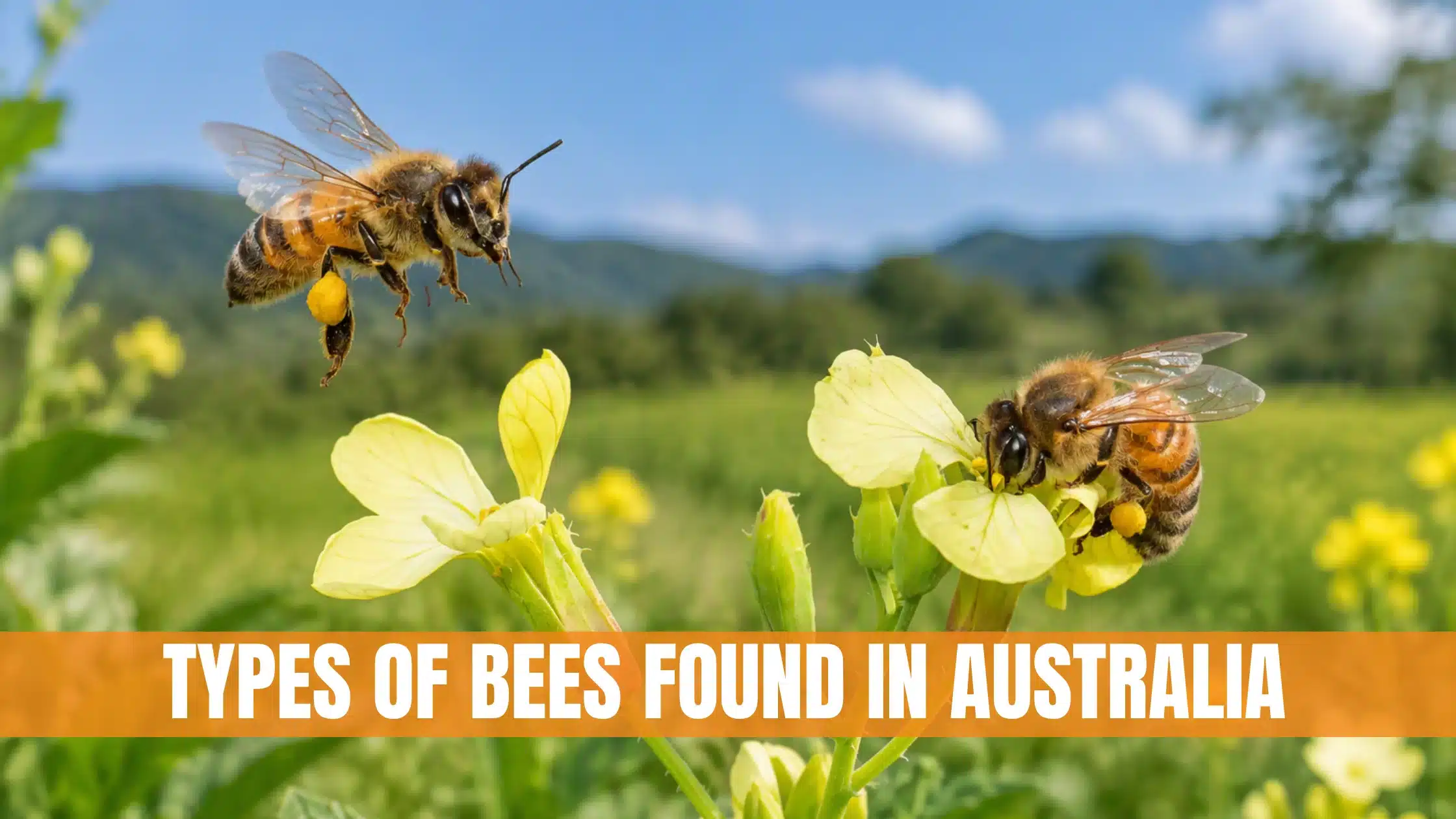
What Types Of Bees Are Found In Australia
Australia is home to more than 1,500 species of native bees, making it one of the most diverse bee populations in the world. Bees belong to the Hymenoptera order, which also includes ants and wasps. While many Australian native bees are solitary and generally non-aggressive, their behaviour, appearance, nesting habits, and size can vary significantly between species.
Most native bees do not establish large colonies around homes. However, some species may build nests in gardens, soil, tree hollows, wall cavities, sheds, or other sheltered areas. Introduced European honey bees can also create colonies in wall cavities, roof spaces, chimneys, and sheds, particularly when suitable nesting sites are available.
Bees play an essential role in Australia’s environment by pollinating flowers, plants, and crops. Although most bees prefer to avoid people, some species can sting when threatened or when their nest is disturbed. A bee sting may cause temporary pain, redness, or swelling, while people with serious allergies can experience a severe reaction requiring urgent medical attention.
Understanding the different types of bees in Australia can help homeowners recognise bee activity and respond appropriately. In this guide, we explore several common native and introduced bee species found across Australia.
The Different Types of Bees Family
Bees are among the world’s most important pollinators, and their diversity developed alongside flowering plants and different habitats. Scientists estimate that around 20,000 bee species exist worldwide, grouped into seven families. These families are grouped by tongue length: short-, medium-, and long-tongued bees.
Short-Tongued Bees
Andrenidae, often called mining bees, are mainly solitary and commonly nest in soil. Colletidae, including plasterer, masked, and yellow-faced bees, are especially diverse in Australia. Many create underground nests lined with a smooth, waterproof secretion. Stenotritidae is the smallest bee family and is found only in Australia. These large, fuzzy bees generally nest underground.
Medium-Tongued Bees
Melittidae are mostly solitary, ground-nesting bees known for specialised relationships with certain plants. Halictidae, commonly called sweat bees, occur worldwide. They range from solitary species to social colonies and may nest in soil or sand.
Long-Tongued Bees
Apidae is the largest bee family and includes honey bees, carpenter bees, bumble bees, digger bees, stingless bees, and cuckoo bees. Megachilidae includes leaf-cutter, mason, and carder bees. Many carry pollen using a specialised structure called a scopa, usually located on the underside of the abdomen.
Together, these seven bee families demonstrate the variety of pollinators worldwide.
What Is the Difference Between Native Bees and Honey Bees Of Australia?
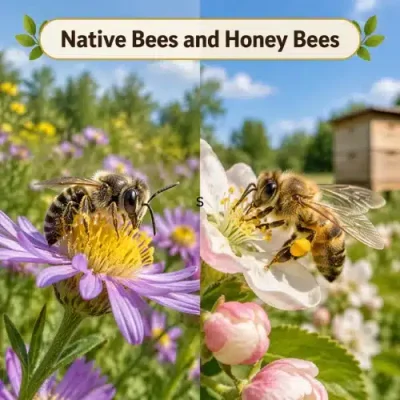
Native bees and honey bees are both important pollinators, but they differ in their behaviour, nesting habits, appearance, and social structure. Australia has more than 1,500 native bee species, many of which are solitary. A solitary native bee does not live in a large colony with a queen and worker bees. Instead, an individual female usually builds and manages her own nest. Some native species, however, are social and live in groups.
Honey bees (Apis mellifera) are social insects that live together in organised colonies. They typically build nests in tree hollows or are kept by beekeepers in managed hives. A honey bee colony includes a queen, worker bees, and drones, with each having a different role.
Another important difference is their pollination behaviour. Honey bees are highly effective generalist pollinators and visit a wide variety of flowering plants. Native Australian bees also make an important contribution to pollination, and some species are particularly well adapted to certain native plants or flower types. Smaller native bees can access flowers that may be difficult for larger bees to reach, while species such as blue-banded and Teddy Bear bees can perform specialised buzz pollination.
Both native bees and honey bees are valuable to Australia’s ecosystems and agriculture.
Identifying The Types of Bees Found In Australia
Types Of Native Australian Bees
Australia is home to many native bee species, with most being solitary rather than colony-living. Unlike honey bees, solitary bees usually have no queens or worker bees. They vary widely in size, colour, and appearance, ranging from tiny 2 mm species to bees several centimetres long. Native bees may be fluffy, shiny, dark, or brightly coloured and play an important role in pollinating Australian plants and crops.
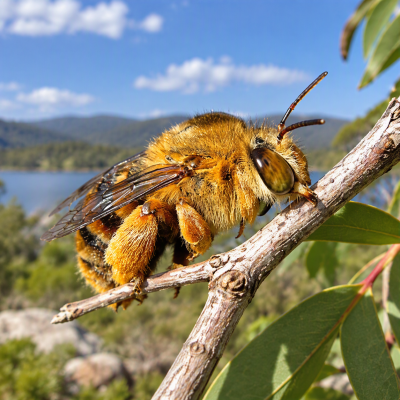
Teddy Bear Bees
Teddy Bear Bees (Amegilla bombiformis) are distinctive native Australian bees recognised for their soft, furry bodies and important role as pollinators. They use a unique process called “buzz pollination,” vibrating their bodies to release pollen from certain flowers, including tomatoes, capsicums, and blueberries.
- Size: Around 10–15 mm long
- Appearance: Furry body with dark and golden-brown markings
- Behaviour: Generally solitary and non-aggressive; males may be territorial around flowers
- Habitat: Gardens, bushland, forests, open woodland, and areas with flowering plants
- Location: Found across much of mainland Australia but not native to Tasmania
- Nesting: Often nests in soil banks, cracks, cavities, or other sheltered locations
Teddy Bear Bees are valuable native pollinators and an important part of Australia’s diverse bee population.
Carpenter Bees
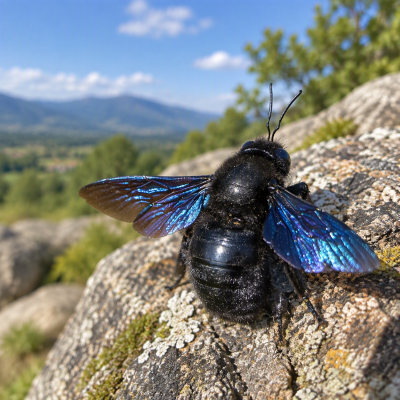
Carpenter Bees (Xylocopa aerata) are striking native Australian bees known for their metallic green and golden colouring. They are valuable pollinators and are named for their habit of creating nesting tunnels in timber and woody materials.
- Size: Around 20–25 mm long
- Appearance: Metallic green to blue-green body with golden or yellowish hairs
- Behaviour: Generally solitary and not aggressive, but females may defend their nesting area if disturbed
- Habitat: Woodlands, forests, gardens, and areas with suitable timber for nesting
- Location: Mainly found in eastern and southeastern parts of Australia, including New South Wales and Victoria
- Nesting: Creates tunnels in dead or weathered timber, branches, and suitable wooden materials
Although carpenter bees can occasionally use timber around properties, they are primarily native pollinators and should not automatically be considered destructive wood pests.
Cuckoo Bees
Cuckoo Bees (Thyreus nitidulus, Thyreus caeruleopunctatus, and Thyreus lugubris) are striking native Australian bees known for their bright blue, white, or patterned bodies. Unlike many bees, they do not build and provision their own nests. Instead, female cuckoo bees lay their eggs inside the nests of other bee species, where their larvae use the food provided by the host.
- Size: Around 10–15 mm long
- Appearance: Dark body with distinctive blue, white, or pale markings
- Behaviour: Solitary and generally non-aggressive; females are nest parasites
- Habitat: Gardens, woodland, forests, and areas with flowering plants
- Location: Found in various parts of Australia, particularly eastern and northern regions
Cuckoo bees are fascinating native pollinators and an important part of Australia’s diverse bee ecosystem.
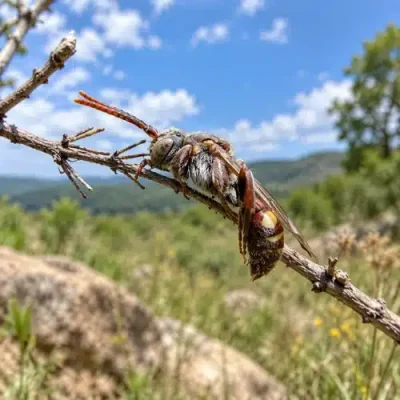
Quasihesma Bees
Quasihesma Bees (Euryglossina clypearis) are among Australia’s smallest native bees, measuring only a few millimetres long. These tiny pollinators are easily overlooked but play an important role in native ecosystems, particularly when foraging on flowering eucalyptus trees.
- Size: As small as 1.8 mm long
- Appearance: Tiny black body with a distinctive yellow face
- Behaviour: Active foragers that feed on nectar and collect pollen from flowers
- Habitat: Eucalyptus woodland, forests, bushland, and areas with flowering native plants
- Location: Mainly found across northern Australia
- Food Source: Frequently associated with eucalyptus flowers
Despite their tiny size, Quasihesma Bees contribute to Australia’s diverse native bee population and help support the pollination of native flowering plants.
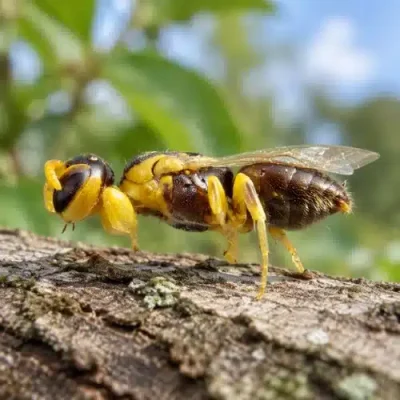
Types Of Honey Bees in Australia
Honey bees (Apis mellifera), also known as European honey bees, are among Australia’s best-known bee species. Introduced from England in 1822, they quickly adapted to Australian conditions. Unlike most native solitary bees, honey bees are social insects that live in colonies with a queen and worker bees. They build nests in tree hollows or managed beehives. Honey bees are important to Australian agriculture because they pollinate many crops and flowering plants while producing honey, beeswax, and other valuable hive products.
Carniolan Honey Bees
Carniolan bees (Apis mellifera carnica) are a well-known subspecies of European honey bees, originally associated with Slovenia, southern Austria, and parts of the Balkans and Central Europe. They are valued by beekeepers for their calm nature, efficient foraging, and ability to defend their colonies against certain pests.
- Size: Around 10–13 mm long
- Appearance: Grey to brown body with lighter abdominal bands
- Behaviour: Generally gentle and defensive when protecting the hive
- Habitat: Woodlands, gardens, agricultural areas, and managed apiaries
- Location: Native to Slovenia, Austria, Croatia, Bosnia and Herzegovina, Serbia, Hungary, Romania, and Bulgaria
- Australia: May be encountered in managed honey bee colonies through introduced genetic lines
Carniolan bees are particularly appreciated for their adaptability and useful characteristics in beekeeping.
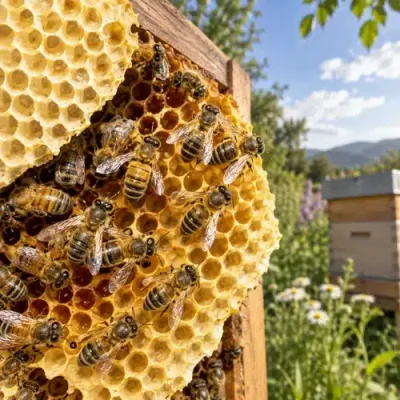
Italian Honey Bees
Italian bees (Apis mellifera ligustica) are a well-known subspecies of European honey bees that originated in mainland Italy, particularly areas south of the Alps and north of Sicily. They are recognised for their golden-yellow colouring, large colonies, and strong brood-rearing ability. Italian bees are also widely used in beekeeping because of their productive and generally gentle nature.
- Size: Around 12–15 mm long
- Appearance: Golden-yellow body with lighter abdominal bands
- Behaviour: Generally calm, active, and productive foragers
- Habitat: Gardens, forests, farmland, and managed apiaries
- Location: Originally from Italy; now kept in many countries, including Australia
- Colony: Known for maintaining large colonies and extensive brood nests
Italian bees remain a popular choice among beekeepers because of their adaptability and honey-producing potential.
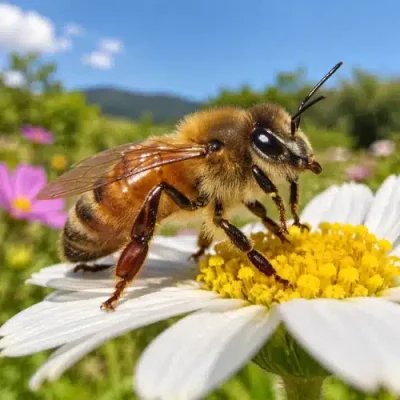
Caucasian Honey Bees
Caucasian bees (Apis mellifera caucasia) are a subspecies of European honey bees that originated in the high valleys of the Central Caucasus. They are traditionally associated with Georgia and have also been found across parts of Turkey, Armenia, and Azerbaijan. These bees are recognised for their grey to dark colouring and their ability to perform well in cooler climates.
- Size: Around 12–13 mm long
- Appearance: Grey to dark grey body with fine hair
- Behaviour: Generally gentle, calm, and steady foragers
- Habitat: Mountain valleys, woodland areas, gardens, and managed apiaries
- Location: Native to the Caucasus region; may also be kept in beekeeping operations elsewhere
- Climate: Well adapted to cooler conditions
Caucasian bees are valued by beekeepers for their calm temperament and adaptability to cooler environments.
How to Detect a Bee Infestation
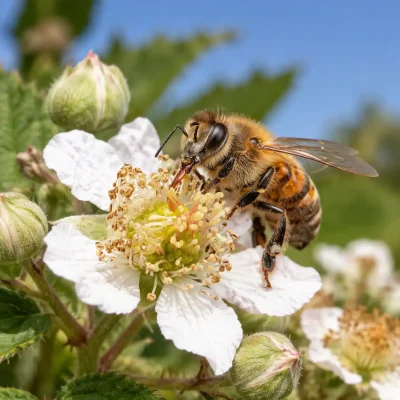
Finding bees around your home does not always mean you have an infestation. A few bees visiting flowers or gardens are usually a normal part of the local ecosystem. However, regular bee activity around one particular area may indicate that a colony or nest is nearby. Understanding bee behaviour and recognising common signs can help you decide when professional bee control may be needed.
Common Signs of Bee Activity
- Frequent bee activity: A steady flow of bees entering and leaving the same opening can suggest a nearby nest.
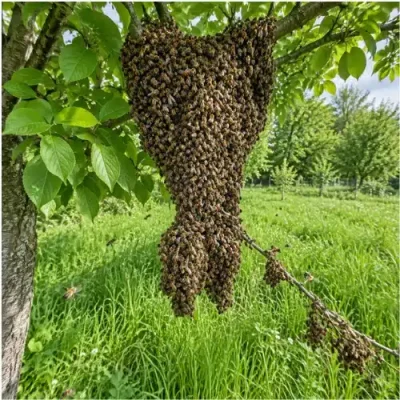
- Visible nesting: Bees may establish nests in tree hollows, wall cavities, roof spaces, sheds, fences, or other sheltered locations.
- Buzzing sounds: Persistent buzzing from walls, ceilings, roof spaces, or other enclosed areas may indicate an established colony.
- Increased bee numbers: A sudden increase in bees around your property, particularly in one location, can be a warning sign.
- Small holes in timber: Carpenter bees may create round openings in wooden structures when excavating nesting tunnels.
- Wood debris: Fine sawdust or loose material below timber holes can indicate carpenter bee activity.
- Repeated sightings: Bees appearing regularly around the same part of your property may indicate an active nesting site.
If you notice these signs, avoid disturbing the nest. Professional bee removal specialists can identify the species, locate the colony, and recommend an appropriate removal or management approach.
What Should You Do in Case of a Bee Sting?
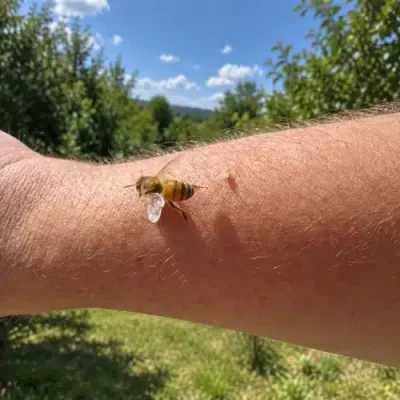
A bee sting can cause immediate pain, redness, swelling, and itching. Most mild reactions improve with basic first aid, but it is important to watch for signs of a serious allergic reaction. Taking the right steps can help reduce discomfort and prevent complications.
First Aid For Bee Sting
- Move away from the bee: Get to a safe location to avoid additional stings, particularly if you are near a hive.
- Remove the stinger if present: If a stinger remains in the skin, carefully remove it as soon as possible. Avoid squeezing or crushing the stinger while removing it.
- Clean the area: Wash the sting gently with soap and water to help keep the area clean.
- Apply a cold pack: Place a wrapped ice pack or cold compress over the affected area for short periods to help reduce pain and swelling.
- Relieve itching: An appropriate antihistamine or other pharmacy-recommended treatment may help with itching. Follow the product directions or ask a pharmacist.
- Watch for allergic symptoms: Difficulty breathing, swelling of the lips, tongue or throat, dizziness, fainting, or widespread hives can indicate anaphylaxis.
- Use prescribed medication: If the person has been prescribed an adrenaline auto-injector, use it according to their allergy action plan and seek emergency medical help immediately.
Even if you have never experienced an allergic reaction to a bee sting before, serious symptoms can occur unexpectedly. Seek medical advice if swelling becomes severe, symptoms worsen, or you are concerned about the reaction.
Conclusion
Understanding the different types of bees in Australia can help homeowners recognise bee activity and respond safely. From native solitary bees such as Teddy Bear Bees and carpenter bees to introduced European honey bees, each species has different nesting habits and behaviours. While bees are valuable pollinators, colonies established near homes may require professional attention. Avoid disturbing active nests or attempting DIY removal, as this can increase the risk of stings. If you notice repeated bee activity, buzzing from enclosed spaces, or a visible hive, contact EMK Termite & Pest Control Sydney for professional bee inspection and removal services .
What Our Customers Had To Say
 Posted on Google
 Rami Anwer
Trustindex verifies that the original source of the review is Google.
We had such a great experience with the pest control service. From start to finish, everything was quick, easy and completely hassle-free. The team were professional, friendly and made the whole process so simple. We’re really happy with the results and the quality of the service we received from Eevil. I would definitely recommend EMK to anyone looking for a reliable pest control company!Posted on Google Rena NajimReally happy with the service today. Professional, friendly and did a great job. Would definitely recommend!Posted on Google
 David DavidEMK provided excellent pest control service. He was professional, punctual, and knowledgeable, explained the process clearly, and ensured it was safe for our family and pets. We saw great results straight away. Friendly, reliable, and highly recommended.Posted on Google
 Ann TranWe highly recommend EMK Termite and Pest Control Sydney. Great service, great prices, friendly and very accommodating. They are very thorough and take pride in their work. Cannot rate them high enough. 5 stars 🌟Posted on Google
 Charlton DurieI had these guys come and sort a termite issue. They got the job done. Thanks again!Posted on Google
 David MarshSuper happy with EMK for getting rid of such a horrible termite infestation! Professional and very friendly.Posted on Google
 Michael ZammitJust had EMK come out to do a rodent control treatment. The service and professionalism was superb!Verified by TrustindexTrustindex verified badge is the Universal Symbol of Trust. Only the greatest companies can get the verified badge who has a review score above 4.5, based on customer reviews over the past 12 months. Read more
FAQ's About Types Of Bees Are Found In Australia
How many types of bees are found in Australia?
What are the most common types of native Australian bees?
Are Australian native bees dangerous?
What is the difference between native bees and honey bees?
Are honey bees native to Australia?
What are stingless bees in Australia?
Where do native Australian bees build their nests?
Are native Australian bees important pollinators?
Can native bees live around Sydney homes?
What should I do if I find a bee nest at my property?
About The Author

EMK Termite & Pest Control Team
EMK Termite & Pest Control Team is a licensed and experienced pest control service provider based in Sydney, Australia. Our team specialises in termite treatment, cockroach control, spider control, and general pest management for residential and commercial properties.
With years of hands-on experience, we follow Australian safety standards and use proven, eco-friendly pest control methods to deliver long-lasting results. All content published on this website is written and reviewed by trained pest control professionals to ensure accuracy, safety, and real-world expertise.