
Content Published : June 25, 2026
What Is a Pantry Moth? Everything You Need to Know
Pantry moths, also known as Indian meal moths, are one of the most common pantry pests that infest homes by contaminating stored dry food products. They are attracted to flour, rice, cereals, pasta, grains, nuts, seeds, dried fruit, spices, pet food, and other pantry staples, where they lay eggs that quickly develop into larvae.
Understanding what is a pantry moth? is the first step toward preventing a costly infestation. While adult pantry moths do not bite or spread diseases, their larvae contaminate food with webbing, silk, droppings, and shed skins, making affected products unsuitable for consumption. Because pantry moths reproduce rapidly, even a small infestation can spread throughout your kitchen in a matter of weeks.
Early identification is essential for effective pantry moth control. By recognizing the signs of an infestation, locating contaminated food sources, and taking immediate action, you can stop pantry moths before they multiply. This guide explains what is a pantry moth, how these pests enter your home, the damage they cause, and the most effective ways to eliminate and prevent future pantry moth infestations.
Pantry Moth Identification - What do they look like
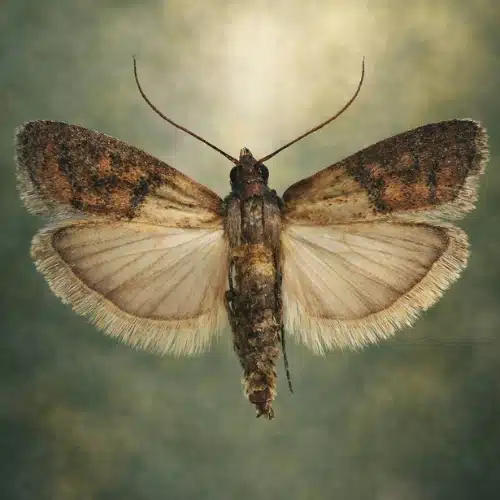
A pantry moth is the common name used for several moth species that invade and breed inside dry pantry goods. The most prevalent species found in homes worldwide is the Indian Meal Moth (Plodia interpunctella). You may also encounter the Mediterranean Flour Moth (Ephestia kuehniella) or the Almond Moth (Ephestia cautella), though the Indian Meal Moth is by far the most reported.
Despite being called a “moth,” it’s actually the larvae , not the adult moth that cause all the damage. Adult pantry moths do not eat your food. Their sole purpose is reproduction. It’s the caterpillar-like larvae that chew through packaging, spin fine silky webs, and burrow deep into your dry goods.
Key Physical Characteristics of a Pantry Moth
Knowing what a pantry moth looks like helps you identify an infestation early. Here’s what to look for:
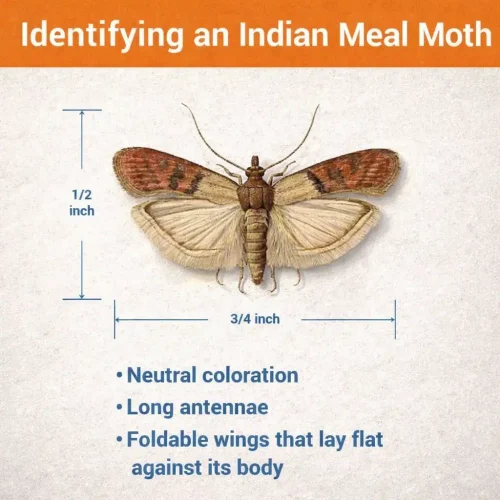
- Wingspan: Approximately 16–20 mm (about ¾ of an inch)
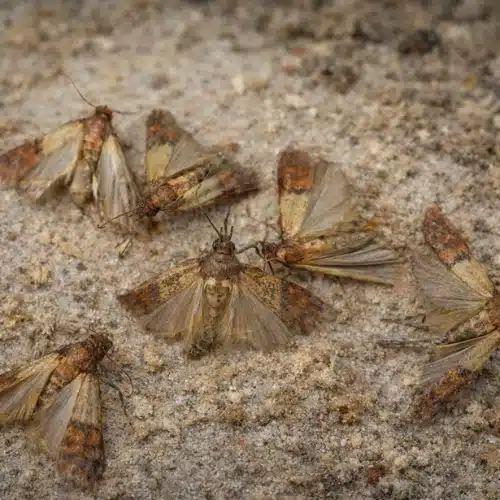
- Wing Pattern: The outer two-thirds of the wings are reddish-brown or copper-colored, while the inner third near the body is pale grayish-white. This two-toned pattern is the most reliable visual identifier.
- Body: Slender, elongated body with a slightly arched resting posture
- Larvae: Creamy white or pinkish caterpillars up to 13 mm long, with a brown head capsule
- Eggs: Tiny, oval, and whitish — nearly invisible to the naked eye
Where Do Pantry Moths Come From?
This is one of the most common questions homeowners ask — and the answer is often surprising. Pantry moths do not typically enter your home through open windows or doors. In most cases, you bring them in yourself, unintentionally.
Common Entry Points
- Infested Grocery Purchases The most frequent source of a pantry moth infestation is store-bought dry goods. Products like flour, cornmeal, oats, cereals, birdseed, dry pet food, nuts, dried fruits, and spices can already contain pantry moth eggs or larvae when you purchase them. Eggs are microscopic, so even visually inspecting the packaging won’t always reveal a problem.
- Packaging Vulnerabilities Thin plastic bags, cardboard boxes, and paper packaging offer little resistance to pantry moth larvae, which can chew through them with ease. Even sealed or undamaged packaging is not a guarantee of safety, as eggs may have been laid before sealing at a warehouse or distribution center.
- Open Windows and Doors While less common, adult pantry moths can occasionally fly into a home through gaps in screens, open windows, or doorways particularly during warmer months when they are more active.
- Neighboring Infestations In apartments or closely spaced homes, a severe infestation next door can sometimes spread, especially if moths have access to shared structural gaps or vents.
The Pantry Moth's Life Cycle: Understanding the 4 Stages
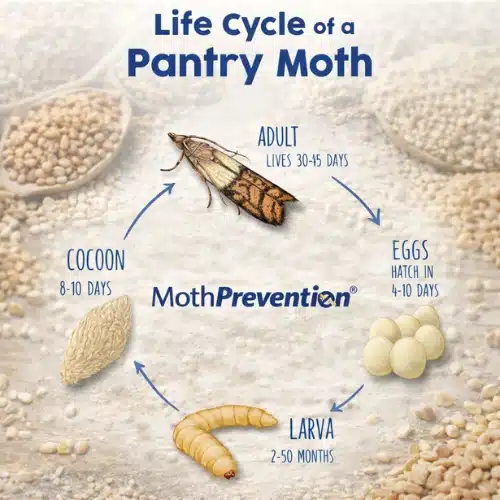
Understanding the pantry moth’s life cycle is essential if you want to eliminate an infestation completely. Missing even one stage means the problem will return.
Stage 1: Egg
A female pantry moth lays between 100 to 400 tiny eggs directly on or near a food source. The eggs hatch within 2 to 14 days, depending on temperature and humidity. Warmer environments speed up the process significantly.
Stage 2: Larva
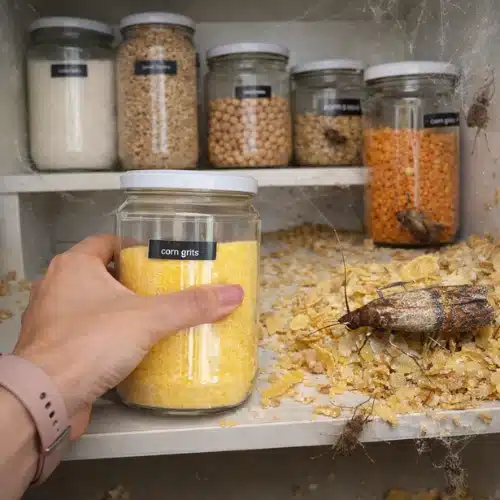
This is the destructive stage. Pantry moth larvae feed voraciously on dry foods, spinning silken threads as they move. You’ll often notice fine webbing, clumping, or a powdery residue inside infested products. The larval stage lasts anywhere from 2 to 8 weeks.
Stage 3: Pupa
When ready to pupate, larvae spin a silken cocoon and attach themselves to corners, cracks, or the undersides of shelving. This stage lasts 1 to 8 weeks.
Stage 4: Adult Moth
Adult pantry moths emerge and live for only 1 to 4 weeks, during which they do not eat — they simply mate and lay eggs, restarting the cycle. A single female can start a new wave of infestation.
Total life cycle: Approximately 4 to 7 weeks under warm conditions, but it can extend up to a year in cooler environments.
What Foods Do Pantry Moths Infest?
Pantry moths are not selective. They will target a wide range of dry and semi-dry pantry staples, including:
- Flour, cornmeal, and baking mixes
- Rice, quinoa, and pasta
- Rolled oats and cereals
- Nuts, seeds, and trail mix
- Dried fruits and raisins
- Spices and herbs
- Dry pet food and birdseed
- Chocolate and candy
- Powdered milk and baby formula
- Coffee (especially flavored varieties)
This wide diet makes pantry moths particularly difficult to control , there are simply many places for them to hide and breed.
How to Detect a Pantry Moth Infestation Early
Early detection is your greatest advantage. Here are the signs to look for before an infestation becomes severe:
Webbing inside food packages: Fine silk threads or webbing clumped in corners of bags or boxes is one of the most reliable early signs.
Live moths flying in your kitchen: Adult moths tend to fly erratically and are often spotted near light sources in the evening.
Larvae crawling in food or on shelves: Small, cream-colored worms moving through your dry goods are unmistakable.
Small cocoons in corners and cracks: Check the corners of shelves, underneath shelf liners, and where walls meet ceilings for small, papery cocoons.
Unusual smell or taste: Heavily infested food may develop an off smell or taste due to larval waste and secretions.
Clumped or discolored food: Infested flour or grains may appear lumpy, discolored, or have a grayish powdery residue.
Are Pantry Moths Dangerous?
Pantry moths are not directly dangerous to humans in the way that some pests are. They do not bite, sting, or transmit disease. However, they pose several indirect health and safety concerns:
Contaminated food: Consuming food infested with pantry moth larvae, eggs, or waste can cause gastrointestinal discomfort in sensitive individuals. While accidentally ingesting a small amount is generally not harmful to healthy adults, it is certainly unpleasant and inadvisable.
Allergic reactions: Some people may experience allergic reactions to pantry moth frass (excrement) or shed larval skins, particularly those with pre-existing respiratory allergies or sensitivities.
Food and financial waste: A single infestation can force you to throw out significant quantities of stored food, resulting in both waste and financial loss.
Pet and baby food concerns: Infested pet food or baby formula presents a heightened concern, as these populations may be more sensitive to contaminants.
How to Get Rid of Pantry Moths: A Step-by-Step Approach
Eliminating a pantry moth infestation requires thoroughness and patience. Half-measures rarely work because eggs and cocoons are easy to overlook.
Step 1: Identify and Remove All Infested Food
Go through every single item in your pantry. Inspect packaging carefully for webbing, larvae, or clumping. When in doubt, throw it out. Seal discarded items in a plastic bag before placing them in an outdoor trash bin to prevent re-entry.
Step 2: Deep Clean Your Pantry
Remove everything from your shelves and vacuum every surface thoroughly — paying special attention to shelf corners, cracks, crevices, and hinges. After vacuuming, wipe all surfaces down with a solution of warm water and white vinegar. The mild acidity disrupts any remaining eggs and deters future moths.
Step 3: Inspect and Clean Beyond the Pantry
Pantry moths do not stay confined to shelves. Check under appliances, in cabinet hinges, behind the refrigerator, inside wall vents, and underneath sink areas. Cocoons are often found far from the original food source.
Step 4: Use Pheromone Traps
Pantry moth pheromone traps attract and catch adult male moths, breaking the reproductive cycle. They are non-toxic, safe to use around children and pets, and serve the dual purpose of monitoring and reducing the adult population. Place them on shelves and inside cabinet doors for best results.
Step 5: Freeze or Heat-Treat New Dry Goods
A highly effective preventive measure is to freeze newly purchased dry goods for at least 72 hours or heat them in an oven at 60°C (140°F) for 30 minutes before storing. This kills any eggs or larvae that may already be present.
Step 6: Store Food in Airtight Containers
Transfer all pantry staples into hard-sided, airtight containers made of glass, heavy-duty plastic, or stainless steel. This single habit is the most powerful long-term prevention strategy, as it eliminates both the food source and the breeding ground for pantry moths.
Step 7: Consider Natural Deterrents
Several natural substances are known to deter pantry moths:
- Bay leaves: Place dried bay leaves in your pantry and food containers. The strong oils are thought to repel moths.
- Lavender sachets: Hang dried lavender in your pantry as an aromatic deterrent.
- Cedar blocks: Untreated cedar has mild moth-repelling properties.
Step 8: Use Insecticides as a Last Resort
For severe infestations, food-safe insecticide sprays containing pyrethrin can be applied to non-food surfaces inside empty cabinets. Always follow the manufacturer’s instructions carefully and ensure surfaces are fully dry before returning food or cookware. If the infestation is widespread, consulting a licensed pest control professional is the safest option.
How to Prevent Pantry Moths from Returning
Successfully eliminating pantry moths is only the first step. To keep your kitchen pest-free, it’s important to follow good food storage and cleaning practices that prevent future pantry moth infestations. Consistent maintenance can significantly reduce the risk of these pests returning.
Effective Pantry Moth Prevention Tips
- Inspect groceries before storing them. Check food packaging for holes, damaged seals, webbing, or signs of pantry moth larvae before bringing products into your home.
- Rotate stored food regularly. Follow the “first in, first out” method by using older food items before newer ones to prevent long-term storage where pantry moth eggs can hatch unnoticed.
- Store food in airtight containers. Transfer flour, rice, cereals, pasta, nuts, pet food, and other dry goods into sealed glass or plastic containers immediately after purchase.
- Keep your pantry clean, cool, and dry. Pantry moths thrive in warm, humid conditions. Regularly wipe shelves, vacuum corners, and clean up food spills or crumbs as soon as they occur.
- Use pantry moth traps. Pheromone traps help monitor pantry moth activity and should be replaced every few months for continuous protection.
- Check pet food storage. Dry pet food is a common source of reinfestation, so always store it in airtight containers.
Following these simple prevention tips will help protect your pantry, preserve your food, and keep pantry moths from returning.
Final Thoughts
A pantry moth infestation is a nuisance, but it is entirely manageable with the right knowledge and approach. The key takeaways are simple: identify the signs early, respond quickly and thoroughly, and build lasting habits around proper food storage. Whether you’re dealing with an active infestation or simply want to keep your kitchen pest-free.With the strategies outlined in this guide, you have everything you need to tackle pantry moths head-on and keep them gone for good. DIY methods work well for minor cases, but if pantry moths keep coming back no matter what you try, it’s time to call in the professionals. At EMK Termite & Pest Control Sydney, we specialize in fast, thorough, and family-safe pest elimination solutions tailored to Sydney homes and businesses.
Our experienced team doesn’t just treat the symptoms , we identify the root cause of your infestation, eliminate every stage of the pantry moth life cycle, and put preventive measures in place so the problem doesn’t return.
Don’t let pantry moths take over your kitchen another day.
Contact EMK Termite & Pest Control Sydney today for a free inspection and let us give you the clean, pest-free home you deserve.
Sydney’s trusted pest control experts — because your family’s health and peace of mind are worth protecting.
What Our Customers Had To Say
 Posted on Google
 Rami Anwer
Trustindex verifies that the original source of the review is Google.
We had such a great experience with the pest control service. From start to finish, everything was quick, easy and completely hassle-free. The team were professional, friendly and made the whole process so simple. We’re really happy with the results and the quality of the service we received from Eevil. I would definitely recommend EMK to anyone looking for a reliable pest control company!Posted on Google Rena NajimReally happy with the service today. Professional, friendly and did a great job. Would definitely recommend!Posted on Google
 David DavidEMK provided excellent pest control service. He was professional, punctual, and knowledgeable, explained the process clearly, and ensured it was safe for our family and pets. We saw great results straight away. Friendly, reliable, and highly recommended.Posted on Google
 Ann TranWe highly recommend EMK Termite and Pest Control Sydney. Great service, great prices, friendly and very accommodating. They are very thorough and take pride in their work. Cannot rate them high enough. 5 stars 🌟Posted on Google
 Charlton DurieI had these guys come and sort a termite issue. They got the job done. Thanks again!Posted on Google
 David MarshSuper happy with EMK for getting rid of such a horrible termite infestation! Professional and very friendly.Posted on Google
 Michael ZammitJust had EMK come out to do a rodent control treatment. The service and professionalism was superb!Verified by TrustindexTrustindex verified badge is the Universal Symbol of Trust. Only the greatest companies can get the verified badge who has a review score above 4.5, based on customer reviews over the past 12 months. Read more
Frequently Asked Questions (FAQs) About Pantry Moths
Can pantry moths make you sick?
How long does it take to get rid of pantry moths?
Do pantry moths only live in the kitchen?
What is the difference between a pantry moth and a clothes moth?
Are pantry moths seasonal?
Where do pantry moths come from?
About The Author

EMK Termite & Pest Control Team
EMK Termite & Pest Control Team is a licensed and experienced pest control service provider based in Sydney, Australia. Our team specialises in termite treatment, cockroach control, spider control, and general pest management for residential and commercial properties.
With years of hands-on experience, we follow Australian safety standards and use proven, eco-friendly pest control methods to deliver long-lasting results. All content published on this website is written and reviewed by trained pest control professionals to ensure accuracy, safety, and real-world expertise.