
Content Published : November 5, 2026
Drugstore Beetle : Identification,Behavior And Control
Have you noticed tiny brown beetles crawling across your kitchen shelves or appearing inside food packets? Finding these unwanted insects can be frustrating, especially when they contaminate food and spread to other pantry items. One possible cause is a drugstore beetle infestation. These small, reddish-brown insects feed on a variety of dry food products and can remain hidden in cupboards until their numbers increase.
In Sydney, drugstore beetles can affect houses, apartments, restaurants, cafes and commercial food storage facilities. Everyday pantry items such as flour, cereals, spices, dried fruit, nuts, seeds and pet food can attract these pests. Infestations may begin when contaminated groceries enter your property or when food is stored in poorly sealed packaging.
Identifying the source early is essential to prevent the problem from spreading. Regularly inspecting stored food, cleaning pantry shelves and using airtight containers can help reduce the risk of infestation. If beetles continue appearing despite these steps, professional pest control Sydney services can help locate hidden breeding sources and recommend suitable treatment options. This guide explains how to identify drugstore beetles, understand what attracts them and protect your kitchen and stored food from future infestations.
What Is a Drugstore Beetle?
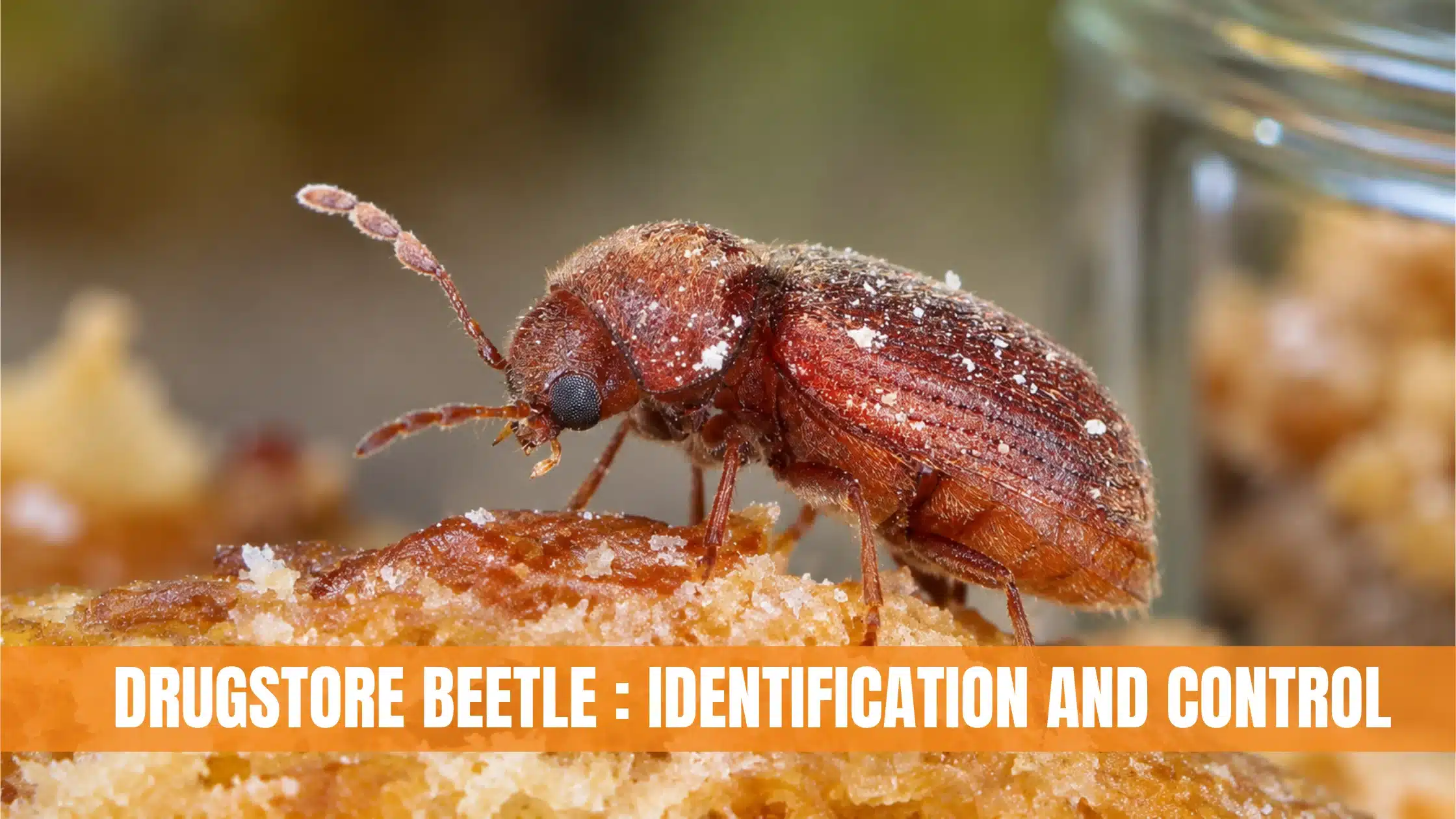
The drugstore beetle (Stegobium paniceum), also known as the biscuit beetle, is a small insect commonly found in stored food products. It belongs to the Ptinidae family and can infest pantry cupboards, food containers, warehouses and commercial storage areas. Despite its unusual name, this pest is not restricted to pharmacies or drugstores. It can easily become a problem in everyday Sydney homes and businesses.
These beetles are attracted to a variety of dry goods, including flour, bread, biscuits, cereals, spices, dried herbs, seeds and pet food. Their larvae can also feed on certain non-food materials, such as dried flowers and animal-based products, making infestations harder to trace.
One reason drugstore beetles are difficult to detect is that their larvae often develop inside food products or hidden packaging. As a result, the infestation may go unnoticed until adult beetles begin appearing on pantry shelves, windowsills or around kitchen lights. Identifying the pest early and locating its food source can help prevent further contamination and make control more effective.
What Does a Drugstore Beetle Look Like?
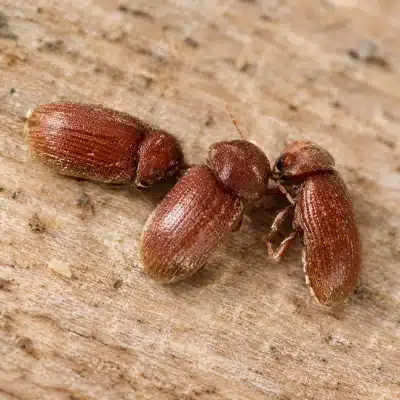
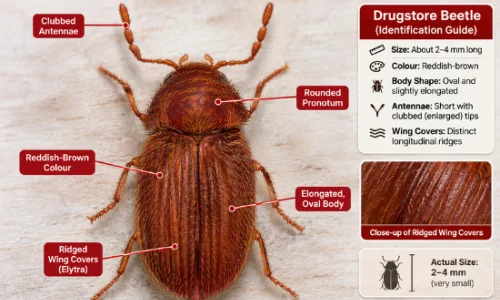
Identifying a drugstore beetle correctly is important because it can easily be mistaken for other small pantry pests. These insects are tiny, reddish-brown and usually measure around 2–4 millimetres long. Their oval, slightly cylindrical bodies and distinctive wing markings make them easier to recognise when examined closely.
Here are some common physical features to look for:
- Body colour: Adults are usually reddish-brown with a hard, rounded body.
- Body shape: Their bodies are oval to cylindrical, with the head tucked beneath the pronotum (the shield-like section behind the head).
- Wing covers: The wing cases have fine, parallel grooves running along their length, helping distinguish them from similar pantry beetles.
- Larvae: Young insects are creamy-white, slightly curved and covered with fine hairs. They develop inside stored food and cause much of the damage.
- Flying behaviour: Adult beetles can fly and may appear around windows, kitchen lights or pantry areas.
Spotting an adult does not necessarily reveal where the infestation started. Eggs and larvae may remain hidden inside food packets, cupboards or storage containers. If you notice repeated sightings, inspect dry food products and less accessible pantry corners to locate the source before the infestation spreads.
Why Are Drugstore Beetles Found in Sydney Homes?
Sydney homes can provide ideal conditions for pantry pests when dry food products are left accessible or stored for long periods. Kitchen cupboards, food containers and pet food storage areas can offer plenty of hiding places and feeding opportunities. A drugstore beetle infestation often begins when contaminated food enters the property or insects find their way into poorly maintained storage areas.
Several common factors can attract these pests:
1. Poorly Sealed Food Packaging
Opened flour bags, cereal packets, biscuit boxes and spice containers can give beetles easy access to stored food. Damaged or thin packaging may also allow insects to spread between products.
2. Forgotten Pantry Items
Old packets of grains, flour, dried herbs and pet food can remain untouched at the back of cupboards. If contaminated, these products may become breeding sites.
3. Infested Groceries
Sometimes beetles enter your home through groceries that already contain eggs or larvae. The infestation may develop after these products are placed in your pantry.
4. Cluttered Storage Areas
Food crumbs, spilled ingredients and dust can collect in cupboard corners, shelf gaps and containers. These neglected areas make it easier for pests to remain hidden and harder to locate the source.
Keeping pantry shelves clean, checking groceries and storing dry food in airtight containers can help reduce the risk of an infestation.
Common Signs of a Drugstore Beetle Infestation
Spotting a pantry pest problem early can help prevent contaminated food and stop the insects from spreading to other storage areas. A drugstore beetle infestation may not be obvious at first, but a few common warning signs can help you identify the problem.
1. Small Brown Beetles Around Cupboards
Adult beetles may crawl across pantry shelves, kitchen benches, cupboard doors and windowsills. You might also notice them flying around lights, particularly in the evening.
2. Tiny Holes in Food Packaging
Small holes, tears or damaged edges in cardboard boxes, paper bags and thin plastic packets may indicate insect activity. Check packaging carefully, especially around stored dry foods.
3. Contaminated Pantry Products
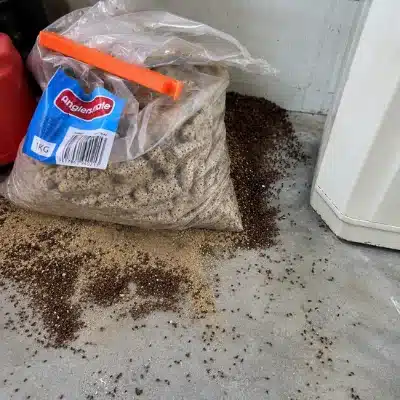
Infested food may contain tiny beetles, pale larvae, shed skins or fine debris. You may also notice unusual clumping or visible damage inside packets.
4. Repeated Beetle Sightings
Finding one beetle does not always mean you have a serious infestation. However, regularly spotting them in different parts of your kitchen may indicate a hidden breeding source.
5. Larvae or Shed Skins
Creamy-white larvae and their discarded skins may appear inside food packets or near cupboard shelves. These signs can help you locate the affected products.
If you notice several of these warning signs, inspect your pantry thoroughly and remove any contaminated food before the infestation spreads.
What Do Drugstore Beetles Eat?
Drugstore beetles are not fussy eaters. Their larvae can survive on a wide range of dry food products and organic materials, which makes an infestation difficult to track down. Even when your pantry looks clean, forgotten packets or hidden food sources may allow these pests to remain active.
Common food items that can attract them include:
- Grains and cereals: Flour, rice, pasta, breakfast cereals and bread.
- Baked goods: Biscuits, crackers and other dry bakery products.
- Dried foods: Nuts, seeds, dried fruit, tea and dried herbs.
- Spices: Ground spices and other dried seasoning ingredients.
- Pet food: Dry dog food, cat food and bird seed.
Their feeding habits are not limited to kitchen supplies. They may also infest dried flowers, decorative plant arrangements, animal-based materials and other dry organic products.
This is why checking only flour and cereal packets may not solve the problem. If you continue noticing beetles after removing visibly infested food, inspect forgotten pantry items, pet food containers and decorative materials. Finding and removing the actual food source is an important step towards effective pest control and preventing the infestation from returning.
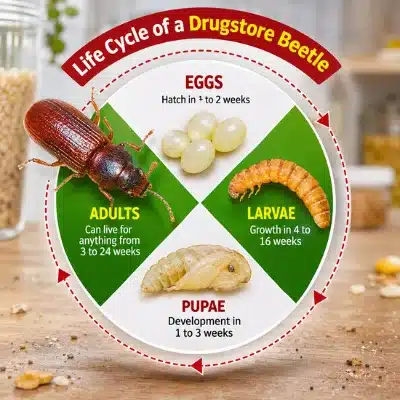
Understanding the Life Cycle of a Drugstore Beetle
Understanding how drugstore beetles develop can help you control an infestation more effectively. These pantry pests pass through four stages: egg, larva, pupa and adult. Since some stages remain hidden inside stored food, the infestation may continue even after visible beetles have been removed.
1. Egg Stage
Female beetles lay tiny eggs on or near suitable food sources. These eggs are difficult to spot, especially inside flour, cereals, spices and other stored products.
2. Larval Stage
Once the eggs hatch, the larvae begin feeding on nearby food materials. This is the most damaging stage, as the young insects consume stored products while growing.
3. Pupal Stage
After completing their growth, the larvae enter the pupal stage. During this period, they remain relatively inactive while developing into adult beetles.
4. Adult Stage
Fully developed beetles emerge, mate and reproduce when suitable food sources are available. Their development time varies depending on temperature, humidity and food availability.
This life cycle explains why removing adult insects alone may not eliminate an infestation. Eggs, larvae or pupae can remain hidden in contaminated products and allow the problem to return.
How to Get Rid of Drugstore Beetles in Sydney Homes
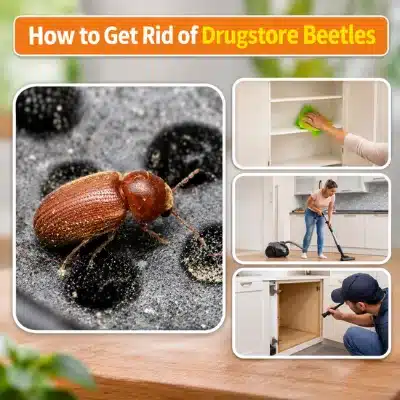
The most effective approach is to identify and remove the source of the infestation. Spraying visible insects without addressing contaminated food products is unlikely to provide lasting results.
1. Inspect All Stored Food
Start by checking pantry shelves, cupboards and storage containers. Examine flour, rice, pasta, cereal, spices, nuts, seeds, dried fruit and pet food.
Pay particular attention to products that have been stored for a long time or have damaged packaging. Do not assume that unopened-looking packets are automatically pest-free.
2. Dispose of Infested Products
Place contaminated food in a securely sealed bag and dispose of it outside the home. Avoid transferring infested products to another cupboard or storage area.
If several products are affected, inspect neighbouring packets before returning them to storage.
3. Empty and Clean Cupboards
Remove all food items and clean the shelves thoroughly. Use a vacuum cleaner to remove crumbs, insect remains, larvae and debris from corners, shelf joints and cupboard gaps.
Empty the vacuum cleaner or dispose of its contents safely after cleaning. Wipe the surfaces and allow them to dry before replacing food.
4. Use Airtight Storage Containers
Transfer suitable dry goods into clean, tightly sealed containers made from durable materials. Glass, metal and sturdy food-grade plastic containers can help prevent insects from accessing stored products.
Keep containers clean and check their contents regularly.
5. Check Less Obvious Food Sources
If beetles continue appearing, inspect pet food, bird seed, dried flowers, stored herbs and decorative organic materials. These less obvious sources may be responsible for repeated sightings.
6. Monitor the Area
Continue checking pantry shelves and nearby surfaces after cleaning. Sticky monitoring traps designed for stored-product insects may help you understand whether adult beetles are still active.
Traps can assist with monitoring, but they do not replace the removal of infested products.
7. Seek Professional Pest Control if Needed
If the infestation continues despite thorough cleaning and source removal, a professional pest inspection may help identify hidden breeding areas.
A qualified pest management professional can assess the property and recommend an appropriate treatment plan. Any pest-control products used near food storage areas should be selected and applied according to their label directions.
How to Prevent Future Infestations
Keeping drugstore beetles out of your pantry starts with good food storage habits and regular cleaning. A few simple precautions can help protect your kitchen and reduce the risk of another infestation.
Follow these practical prevention tips:
- Use airtight containers: Store flour, rice, cereals, spices, nuts and other dry foods in tightly sealed containers rather than leaving opened packets in cupboards.
- Clean pantry shelves regularly: Remove spilled flour, cereal crumbs and food particles that may attract pests. Pay attention to cupboard corners and hard-to-reach spaces.
- Check groceries before storage: Inspect food packaging for holes, damage or signs of insect activity before placing new products in your pantry.
- Rotate stored food: Use older products first and avoid keeping dry goods unused for extended periods.
- Inspect alternative food sources: Check pet food, bird seed, dried herbs and decorative plant materials, as these can also attract pantry pests.
- Keep storage areas organised: Maintain clean, dry shelves so you can easily spot unusual insect activity.
For Sydney cafes, restaurants and commercial kitchens, regular inspections and proper food storage procedures are especially important. Large quantities of stored food can create opportunities for pests if products are not monitored carefully.
Not every small beetle found inside a Sydney property is the same species. Identifying the insect correctly helps determine where to look for its source and which prevention methods are appropriate.
Drugstore Beetle vs Other Common Beetles in Australian Homes
Not every small beetle found inside a Sydney property is the same species. Identifying the insect correctly helps determine where to look for its source and which prevention methods are appropriate.
Drugstore Beetles and Carpet Beetles
These two pests have different feeding habits. Stored-food beetles are mainly associated with pantry products, while carpet beetles can damage natural fibres, clothing, carpets, upholstery and other materials.
If you are noticing damage to woollen fabrics, rugs or stored clothing rather than contaminated food, the insect may be a different species. Read our guide to carpet beetle identification and control to learn about their appearance, behaviour and prevention.
Drugstore Beetles and Christmas Beetles
Christmas beetles are familiar seasonal insects in Australia. They are generally larger and are commonly noticed around gardens, trees and outdoor lights during warmer months.
Unlike pantry pests, Christmas beetles are not typically associated with stored food infestations. If you are seeing larger beetles around outdoor lights or garden areas, our article on Christmas beetles in Australia explains their characteristics and seasonal behaviour.
Correct identification helps avoid using the wrong control approach. A beetle found near a kitchen light may have entered from outdoors, while repeated sightings around food cupboards may indicate an indoor breeding source.
| Features | Drugstore Beetle | Carpet Beetle | Christmas Beetle |
|---|---|---|---|
| Scientific name | Stegobium paniceum | Various species in the family Dermestidae | Various species in the genus Anoplognathus |
| Appearance | Small, oval, reddish-brown body with grooved wing covers. | Small, rounded or oval body, often with mottled patterns of brown, black, white or yellow scales. | Larger, robust body, commonly metallic green, bronze or brown. |
| Typical size | Around 2–4 mm. | Usually around 2–5 mm, depending on species. | Generally around 15–25 mm, depending on species. |
| Common habitat | Pantry cupboards, food containers and dry food storage areas. | Carpets, wardrobes, furniture, rugs and areas containing natural fibres. | Gardens, trees, outdoor areas and sometimes around household lights. |
| Main food source | Flour, cereals, spices, dried foods, seeds and pet food. | Larvae feed on wool, feathers, fur, leather and other animal-based materials. | Adults feed mainly on foliage, while larvae develop in soil and feed on plant roots. |
| Signs of infestation | Small beetles, larvae, shed skins and damaged or contaminated food packets. | Fabric holes, damaged carpets, shed larval skins and hairy larvae. | Adult beetles around trees, gardens, windows and outdoor lights. |
| Seasonal activity | Can occur throughout the year indoors when food and suitable conditions are available. | Can occur throughout the year indoors, depending on species and conditions. | Most commonly noticed during warmer months in Australia. |
| Potential damage | Contaminates stored food and causes food wastage. | Larvae can damage carpets, clothing, upholstery and other natural materials. | Adults may feed on tree foliage; larvae can affect plant roots. |
| Recommended control | Remove infested food, clean cupboards and store dry goods in airtight containers. | Vacuum affected areas, clean fabrics and remove infested materials where appropriate. | Manage outdoor attraction sources and seek professional advice if activity becomes problematic. |
Are Drugstore Beetles Harmful to Humans?
Finding drugstore beetles in your kitchen can be unpleasant, especially when they appear inside food packets or storage containers. The good news is that these pantry pests are not generally considered dangerous to humans. They do not normally bite or sting, and they are not known to spread diseases through direct contact in the way some other household pests can.
However, their presence in stored food should never be ignored. These insects can contaminate pantry products with their bodies, larvae, shed skins and other debris. Flour, cereals, spices, biscuits, dried fruits and pet food may become unsuitable for consumption once infested.
The main concern is food contamination, unnecessary waste and the cost of replacing affected products. Eating visibly infested food is not recommended, even if the insects appear harmless.
If you discover these beetles in your pantry, take the following precautions:
- Remove and securely discard food products showing signs of infestation.
- Check nearby packets and containers for beetles or larvae.
- Clean cupboard shelves thoroughly to remove food debris and insect remains.
- Transfer unaffected dry foods into clean, airtight containers.
Taking prompt action can help protect your stored food, maintain kitchen hygiene and prevent the infestation from spreading to other pantry items.
When Should You Contact Professional Pest Control in Sydney?
Finding a few beetles in your pantry may not always require professional treatment. If the problem comes from a single contaminated food packet, removing the affected product and cleaning the cupboard thoroughly may be enough. However, repeated sightings could indicate that hidden eggs, larvae or additional breeding sources remain.
Consider contacting a professional pest control Sydney service if you notice any of these warning signs:
- Repeated beetle sightings: Adult beetles continue appearing even after cleaning and removing affected food.
- Multiple affected areas: You discover insects in several cupboards, storage containers or pantry sections.
- Hidden infestation sources: You cannot identify where the beetles are breeding or feeding.
- Ongoing food contamination: Stored products repeatedly show signs of insect activity.
Professional inspections are particularly important for restaurants, cafes, commercial kitchens, food warehouses and retail premises. Stored-product pests can affect food hygiene, damage stock and lead to unnecessary business losses. Regular monitoring and suitable pest management practices help maintain cleaner storage environments.
EMK Termite & Pest Control Sydney provides pest management services for residential and commercial properties. If pantry beetles or other pests continue causing problems, a professional assessment can help identify the source and recommend appropriate control measures. Acting early can protect your property, stored food and peace of mind.
Conclusion
Small pantry beetles can quickly become a frustrating problem when they find suitable food sources inside Sydney homes and businesses. Identifying the insect, locating infested products and thoroughly cleaning storage areas are essential steps towards controlling an infestation. Simply removing visible adults may not be enough if eggs and larvae remain hidden in stored food. Regular pantry inspections, airtight containers and proper food storage habits can help prevent future problems.
If you continue noticing beetles or cannot identify the source of the infestation, professional assistance may be necessary. EMK Termite & Pest Control Sydney provides pest management services for residential and commercial properties, helping address unwanted pest problems with suitable control solutions.
Don’t let pantry pests put your stored food and property at risk. Contact EMK Termite & Pest Control Sydney today to arrange a professional pest inspection and take the first step towards a cleaner, pest-free environment!
What Our Customers Had To Say


Frequently Asked Questions About Drugstore Beetle
1. Why are small brown beetles appearing in my kitchen?
Small brown beetles may be entering your kitchen through infested groceries or developing in stored dry food. Check flour, cereals, spices, pet food and other pantry products for larvae, adults and damaged packaging.
2. Can these beetles infest sealed food packets?
They may enter through damaged packaging, and some adults can chew through certain packaging materials. Durable airtight containers offer better protection than ordinary paper or thin plastic packets.
3. Do drugstore beetles fly?
Yes. Adult beetles can fly and may be seen near windows and lights. However, their ability to fly does not indicate where the infestation is developing.
4. How long does it take to get rid of a pantry beetle infestation?
The time required depends on how widespread the infestation is and whether all breeding sources have been removed. Thorough inspection, disposal of contaminated products and continued monitoring are important.
5. Can I get rid of pantry beetles without insecticide?
In many cases, removing infested food, vacuuming cupboards and storing products in airtight containers are the most important steps. Insecticides should not be sprayed directly onto food or food-contact surfaces unless the product label specifically permits that use.
6. Can these beetles spread from one cupboard to another?
Yes. Adult insects can move between storage areas, and infested products may transfer the pests to other cupboards. Inspect nearby food items when an infestation is discovered.
7. Should I throw away all my pantry food?
Not necessarily. Carefully inspect all stored products and dispose of those showing signs of infestation. Keep unaffected products in clean, airtight containers and monitor the storage area.
About The Author
