
Content Published : June 22, 2026
Bird Mites Identification & Control
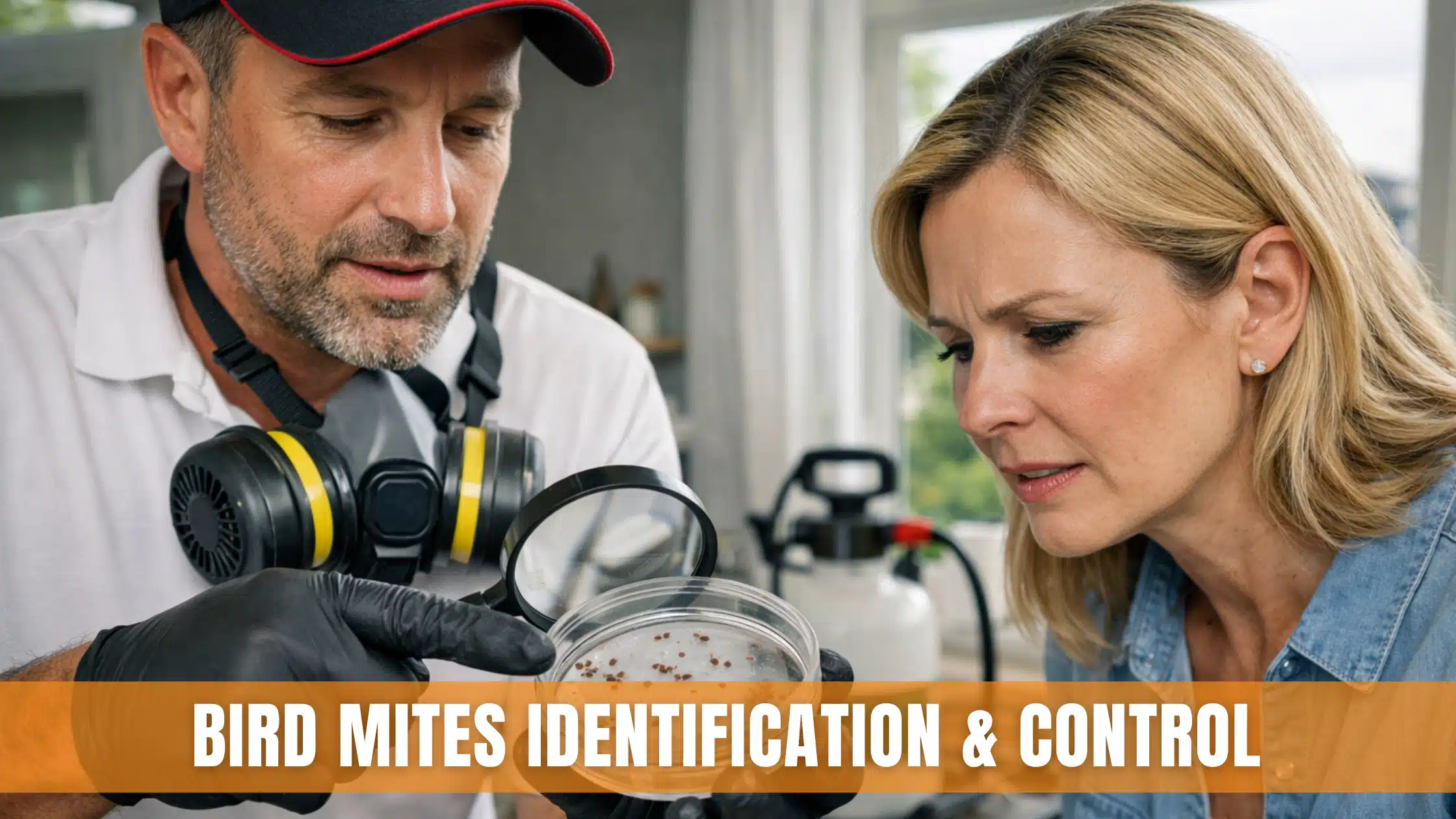
Bird mites are tiny parasitic pests that commonly live on birds and within their nests. When birds leave their nests or nesting sites are disturbed, bird mites may migrate indoors in search of a new host. Although humans are not their preferred host, bird mites can bite people, causing uncomfortable symptoms such as red skin marks, itching, irritation, and inflammation.
Several species of bird mites exist, but the most common are the northern fowl mite (Ornithonyssus sylviarum) and the chicken mite (Dermanyssus gallinae). These pests are typically found on wild birds, poultry, and around nesting areas located in roofs, attics, vents, and wall cavities.
Because bird mites are extremely small, they can be difficult to identify without professional assistance. If left untreated, infestations may spread throughout a property and cause ongoing discomfort for occupants. Common signs include persistent itching, unexplained bites, and increased mite activity near bird nests.
If you suspect a bird mite infestation, it is important to understand how to identify bird mites, recognize the symptoms of bird mite bites, and take the necessary steps to eliminate nesting sources. Early detection and professional bird control services can help prevent infestations from becoming a larger problem.
Read on to learn everything you need to know about identifying and eliminating bird mites.
What Are Bird Mites?
Bird mites are classified as nuisance mites , they don’t rely on humans as their primary host. However, several documented cases confirm that bird mite infestations in humans do occur. Recent research also suggests these mites are no longer strictly host-specific, making them a growing concern for a wide range of mammals.
How Small Are Bird Mites?
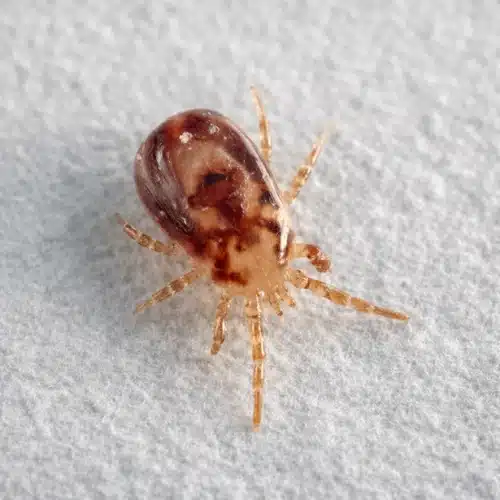
Bird mites are extremely tiny, making them difficult to detect with the naked eye. Adult bird mites typically measure less than 1 millimeter (mm) in size , small enough to be easily overlooked during a casual inspection.
How to Identify a Bird Mite
Despite their small size, bird mites have distinctive physical features:
- Body shape: Oval with a slightly flattened appearance
- Color: White or grayish when unfed
- Texture: A visibly hairy or bristled back
- Legs: Eight legs, classifying them as arachnids
- After feeding: Their bodies shift to a reddish or darker hue following a blood meal
Knowing how to identify bird mites early is key to preventing a full-scale infestation in your home.
Where are Bird Mites commonly found?
Bird mites are most commonly found in and around active bird nesting sites. Since they depend on birds for feeding, they tend to cluster wherever birds roost, nest, or frequently gather both in residential and commercial properties.
Top Locations Where Bird Mites Hide
If birds like pigeons, starlings, or sparrows are present near your property, watch for bird mites in these high-risk areas:
- Roof spaces and ceiling cavities – warm, undisturbed areas ideal for nesting
- Eaves and gutters – common entry points for nesting birds
- Chimneys – a frequent roosting spot for urban birds
- Wall voids and structural cavities – hidden spaces where mites go undetected
- Window ledges and balconies – exposed surfaces attractive to pigeons and sparrows
- Porches and external building features – often overlooked nesting zones
Why This Matters for Your Home
When a bird abandons its nest, bird mites are forced to seek a new host and that’s when they migrate indoors. Identifying where bird mites live early can help you act fast and prevent a costly infestation.
Bird Mites vs. Bed Bugs: What's the Difference?
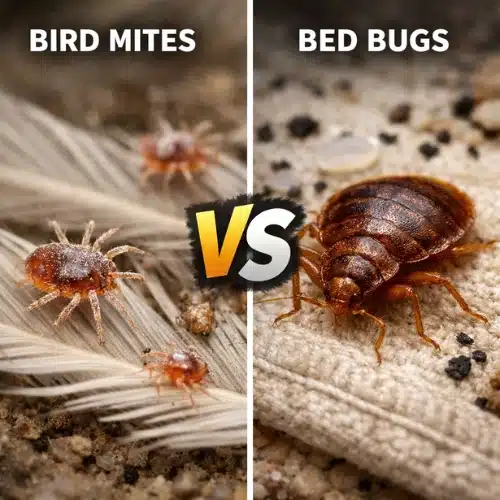
Bird mites and bed bugs are often confused due to their similar behaviors but they differ significantly in size, appearance, and lifecycle. Understanding the distinction is essential for accurate identification and effective treatment.
Bird Mites vs. Bed Bugs: Comparison Table
| Feature | Bird Mites | Bed Bugs |
|---|---|---|
| Size | Less than 1 mm | 4–7 mm |
| Color | White/gray; reddish after feeding | Brown or reddish-brown |
| Legs | 8 legs (arachnid) | 6 legs (insect) |
| Activity | Primarily nocturnal | Primarily nocturnal |
| Feeds on | Bird blood; occasionally humans | Human blood |
| Lifecycle | Up to 7 days | 5–6 weeks |
| Found in | Near bird nests, roof spaces, eaves | Mattresses, furniture, wall cracks |
Do Bird Mites Bite Humans?
While bird mites primarily depend on bird blood to complete their lifecycle, they will bite humans when their natural host is unavailable. However, human blood alone is not sufficient for their long-term survival , making prolonged infestation less likely but still deeply uncomfortable.
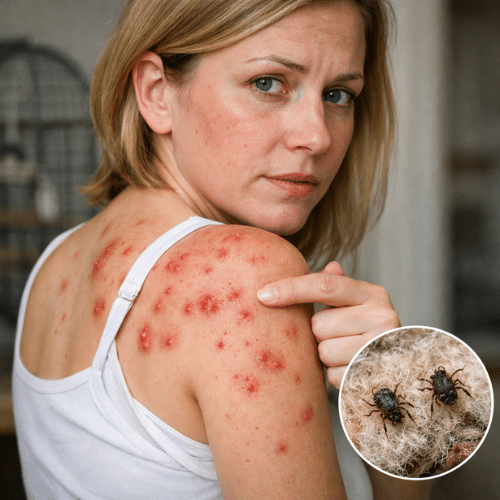
Common Bird Mite Bite Symptoms
Bird mite bite symptoms closely resemble those of other common insect and mite bites, which can make diagnosis tricky. Watch out for these key warning signs:
- Small red bumps appearing on exposed areas of skin
- Intense itching that may range from mild to severe
- A crawling sensation on the skin, even without a visible bite mark
- Skin irritation or inflammation in the affected area
When to Be Concerned
While bird mite bites are not known to transmit disease, persistent or severe itching from bird mite bites can lead to secondary skin infections from scratching. If symptoms worsen or spread, consulting a healthcare professional is strongly advised.
Identifying bird mite bite symptoms early allows for faster treatment and helps prevent further exposure.
Who’s at risk for a Bird Mite Bite?
Anyone who comes into close contact with an infected bird is potentially at risk of bird mite bites. However, certain individuals face a significantly higher risk due to their regular exposure to birds and poultry environments.
High-Risk Groups for Bird Mite Exposure
The following people are most vulnerable to bird mite infestations:
- Poultry farmers – frequent direct contact with chickens and fowl
- Zoo employees – regular handling of diverse bird species
- Pet store employees – daily exposure to caged birds
- Pet bird owners – close contact with potentially infected household birds
- People living near bird nests – proximity increases indoor migration risk
How Bird Mites Enter Your Home
Birds frequently build nests in attics, chimneys, and wall cracks. When a nearby nest becomes infested, bird mites can rapidly migrate indoors, putting household residents at direct risk of bites.
Additionally, purchasing secondhand furniture can unknowingly introduce bird mites into your home , making it essential to inspect used items carefully before bringing them inside.
Early awareness of these bird mite risk factors is the most effective first step toward prevention.
How Do You Treat Bird Mite Bites?
Bird mite bites can closely resemble bites from other insects and parasites including scabies , making accurate diagnosis essential. If you notice unusual bite marks or persistent skin irritation, consult a doctor promptly. A healthcare professional can evaluate your skin’s appearance and confirm whether bird mites are the cause.
Step-by-Step Bird Mite Bite Treatment
- Cleanse Your Skin Thoroughly
Shower immediately using an antibacterial body wash and shampoo your hair to remove any mites still present on your body. Thorough scrubbing helps eliminate mites and provides rapid symptom relief. - Soothe Irritated Skin
After bathing, apply a gentle moisturizer to calm itching and reduce skin inflammation caused by bird mite bites. - Use Medication if Needed
For more severe symptoms, consider:
- Topical steroids – reduce localized inflammation and itching
- Oral antihistamines – provide broader relief from allergic skin reactions
- Antibiotics – required if scratching leads to a secondary bacterial skin infection
When to See a Doctor
If symptoms worsen, spread, or show signs of infection, seek medical attention immediately. Early bird mite bite treatment prevents complications and speeds up recovery.
How To Get Rid Of Bird Mites Infestation
The good news is that bird mites die within 3 weeks without access to bird blood. Removing the host birds is the critical first step , but acting proactively limits damage and prevents the infestation from spreading further.
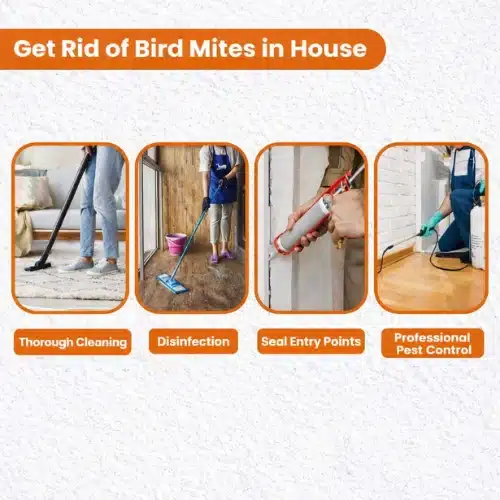
4 Effective Ways to Eliminate Bird Mites
- Apply Insecticide Spray or Powder
DIY insecticides are available at most hardware stores. For effective bird mite control, ensure the product contains pyrethrin — the active ingredient proven to kill bird mites on contact. - Use Diatomaceous Earth
Sprinkle diatomaceous earth in affected areas to naturally eliminate bird mites. It works by disrupting their waterproof outer coating, causing dehydration and death — a chemical-free alternative for sensitive environments. - Remove and Replace Heavily Infested Items
Discard items severely infested with bird mites, including carpets, rugs, furniture, bedding, linen, and clothing. Always wear protective gloves and clothing when handling infested belongings to avoid direct skin contact. - Call a Professional Pest Control Service
Some bird mite infestations require expert intervention, particularly when:
- The infestation is large or widespread
- Bird nests are in hard-to-reach locations
- Nests have been abandoned, increasing the risk of mite migration indoors
Professional pest control ensures complete eradication and minimizes the risk of re-infestation.
Conclusion
Bird mites are not human parasites, but their bites can cause intense itching, skin irritation, and secondary bacterial infections from excessive scratching.
Prevention is your best defence:
- Avoid direct contact with birds and bird nests
- Wear protective clothing around high-risk areas
- Wash exposed skin immediately after bird contact
If you develop persistent skin bumps or uncontrollable itching, consult a healthcare professional without delay.
Suspect a Bird Mite Infestation in Your Home?
Don’t wait ,bird mites multiply fast. Contact EMK Termite & Pest Control Sydney today for a professional inspection and fast, effective bird mite treatment you can trust.
Call EMK Termite & Pest Control Sydney now and take back control of your home!
What Our Customers Had To Say
 Posted on Google
 Rami Anwer
Trustindex verifies that the original source of the review is Google.
We had such a great experience with the pest control service. From start to finish, everything was quick, easy and completely hassle-free. The team were professional, friendly and made the whole process so simple. We’re really happy with the results and the quality of the service we received from Eevil. I would definitely recommend EMK to anyone looking for a reliable pest control company!Posted on Google Rena NajimReally happy with the service today. Professional, friendly and did a great job. Would definitely recommend!Posted on Google
 David DavidEMK provided excellent pest control service. He was professional, punctual, and knowledgeable, explained the process clearly, and ensured it was safe for our family and pets. We saw great results straight away. Friendly, reliable, and highly recommended.Posted on Google
 Ann TranWe highly recommend EMK Termite and Pest Control Sydney. Great service, great prices, friendly and very accommodating. They are very thorough and take pride in their work. Cannot rate them high enough. 5 stars 🌟Posted on Google
 Charlton DurieI had these guys come and sort a termite issue. They got the job done. Thanks again!Posted on Google
 David MarshSuper happy with EMK for getting rid of such a horrible termite infestation! Professional and very friendly.Posted on Google
 Michael ZammitJust had EMK come out to do a rodent control treatment. The service and professionalism was superb!Verified by TrustindexTrustindex verified badge is the Universal Symbol of Trust. Only the greatest companies can get the verified badge who has a review score above 4.5, based on customer reviews over the past 12 months. Read more
Frequently Asked Questions (FAQs) About Bird Mites
What are bird mites?
Can bird mites live on humans?
How do I know if I have a bird mite infestation?
How long do bird mites survive without a host?
Are bird mite bites dangerous?
What kills bird mites instantly?
When should I call a professional pest control service for bird mites?
About The Author

EMK Termite & Pest Control Team
EMK Termite & Pest Control Team is a licensed and experienced pest control service provider based in Sydney, Australia. Our team specialises in termite treatment, cockroach control, spider control, and general pest management for residential and commercial properties.
With years of hands-on experience, we follow Australian safety standards and use proven, eco-friendly pest control methods to deliver long-lasting results. All content published on this website is written and reviewed by trained pest control professionals to ensure accuracy, safety, and real-world expertise.