
Content Published : July 8, 2026
Finding And Identifying Fly Eggs
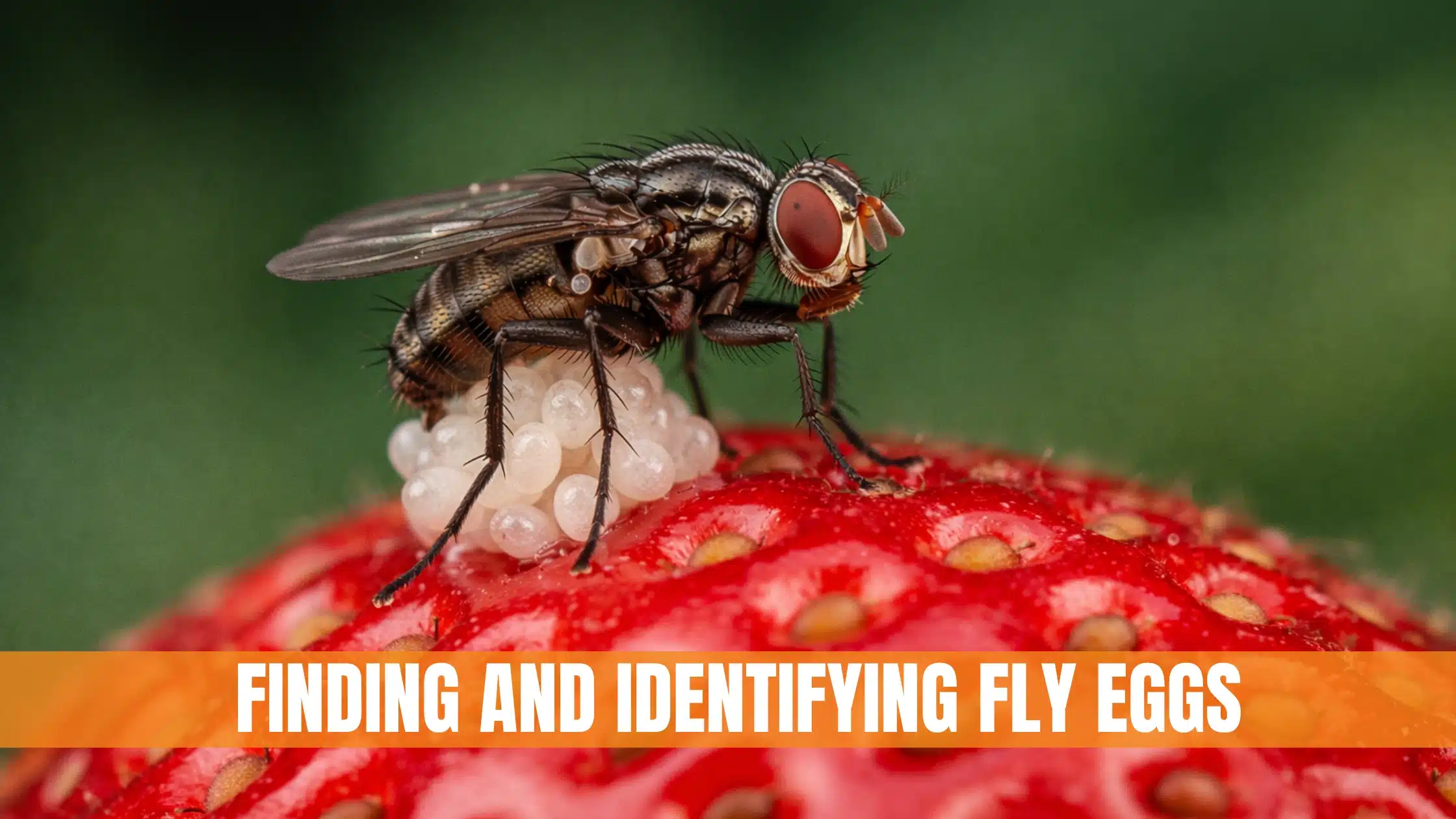
Fly eggs hatch rapidly and can develop into fly larvae (maggots) within 24 hours, making early detection essential to prevent a full-scale infestation. Flies undergo a complete metamorphosis, progressing through four distinct life stages: egg, larva (maggot), pupa, and adult fly. Each stage plays a vital role in the fly’s life cycle and contributes to rapid population growth.
Female flies typically lay their eggs on decaying organic matter, food waste, animal waste, garbage, or other moist breeding sites where newly hatched larvae have an immediate food source. Once the eggs hatch, the maggots feed continuously for several days before entering the pupal stage and eventually emerging as adult flies ready to reproduce.
Learning how to identify and destroy fly eggs early is one of the most effective ways to break the breeding cycle. Regular sanitation, proper waste disposal, and eliminating breeding areas can significantly reduce fly activity. If the infestation becomes severe, professional fly pest control provides targeted treatments to eliminate flies and prevent them from returning.
What Do Fly Eggs Look Like?
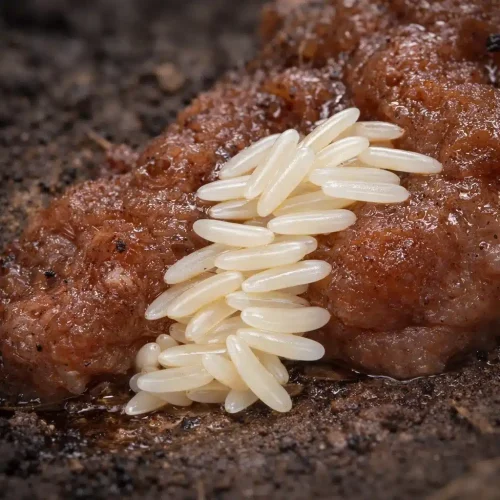
Fly eggs are tiny, white to creamy-yellow, measuring approximately 1–1.5 mm in length, making them about the size of a grain of short-grain rice. They are elongated, slightly curved, and are almost always laid in tight clusters rather than individually. A female house fly can lay 75 to 150 eggs at a time, creating small, raised masses that are commonly found on decaying food, garbage, animal waste, compost, or other moist organic matter.
The clustered appearance is one of the easiest ways to identify fly eggs. Unlike moth eggs, which are more rounded and neatly arranged, or beetle eggs, which are usually laid individually near food sources, fly eggs appear as compact groups. They are also often confused with ant pupae, but ant pupae are larger, oval-shaped, and found inside ant nests rather than on exposed organic material. If you notice clusters of tiny, white, rice-like eggs around damp waste or decaying matter, immediate cleaning and fly pest control measures are essential to prevent them from hatching into maggots and developing into a larger fly infestation.
Where Do Flies Lay Their Eggs Inside Homes?
Knowing where flies lay their eggs inside your home is essential for preventing a serious infestation. Many common household flies, including house flies, fruit flies, drain flies, blow flies, and fungus gnats, can complete their entire life cycle indoors if suitable breeding sites are available. Eliminating these breeding areas is one of the most effective ways to stop flies before they multiply.
House Flies
House flies typically lay their eggs in moist, decaying organic matter such as household rubbish, food scraps, compost, pet waste, animal manure, and grass clippings. Their eggs are tiny, white, elongated, and usually laid in clusters. Under warm conditions, they can hatch into maggots within 24 hours, making prompt cleanup essential.
Fruit Flies
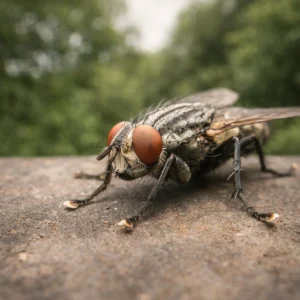
Fruit flies prefer fermenting fruits, vegetables, sugary spills, food waste, and organic residue. A single female can lay up to 500 eggs, often around overripe produce, recycling bins, compost containers, and kitchen drains where organic matter accumulates.
Drain Flies
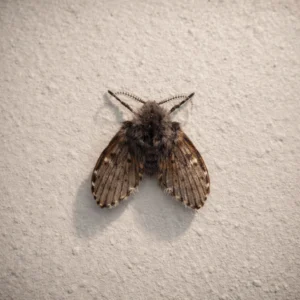
Drain flies breed inside the slimy organic film that develops inside kitchen and bathroom drains, garbage disposals, floor drains, and sewer pipes. Poor drainage and standing water create ideal conditions for these flies to lay eggs and reproduce rapidly.
Blow Flies
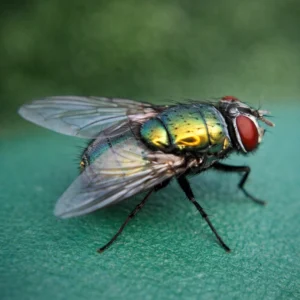
Blow flies are attracted to rotting meat, dead animals, animal waste, and decomposing organic material. If blow flies suddenly appear indoors, it may indicate the presence of a dead rodent, bird, or other animal hidden inside roof voids, wall cavities, or under flooring that requires immediate attention.
Fungus Gnats
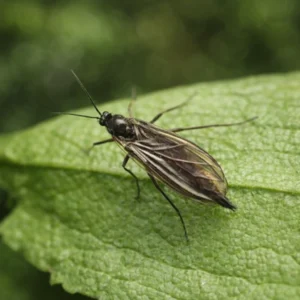
Fungus gnats lay their eggs in moist potting soil rich in organic matter. Overwatered indoor plants provide the perfect environment for eggs and larvae to develop. Allowing the soil to dry between watering and improving drainage can help reduce fungus gnat activity.
The best way to prevent flies from laying eggs indoors is to maintain good sanitation and remove potential breeding sites. Regularly dispose of rubbish, clean food spills immediately, keep bins tightly sealed, clean drains, remove standing water, store food properly, and avoid overwatering indoor plants.
Where Do Flies Lay Their Eggs Outdoors?
Many fly species breed outdoors before making their way into homes and commercial properties. Knowing where flies lay their eggs outdoors can help you eliminate breeding sites and reduce fly populations around your property. Species such as cluster flies and stable flies prefer outdoor environments where organic matter and moisture are readily available. Regular garden maintenance, proper waste management, and removing decaying organic material are essential for preventing outdoor fly infestations.
Cluster Flies
Unlike house flies, cluster flies lay their eggs in soil, where the larvae develop by feeding on earthworms. During autumn and winter, adult cluster flies often seek shelter inside homes, roof voids, wall cavities, and attics to overwinter. As temperatures rise in spring, they become active again and may emerge inside living areas, creating a nuisance for homeowners.
Stable Flies
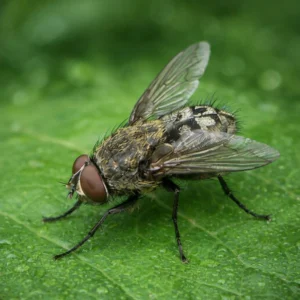
Stable flies lay their eggs in animal manure, compost, damp hay, rotting vegetation, grass clippings, and other decaying organic matter. Female stable flies require a blood meal before producing eggs, which is why they commonly bite livestock, pets, and even humans. Regularly removing animal waste, cleaning compost piles, and disposing of decaying vegetation can significantly reduce stable fly breeding around your property.
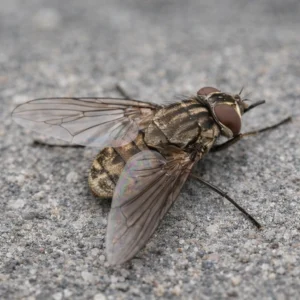
To minimise outdoor fly activity, keep gardens and yards clean, remove pet waste promptly, maintain compost bins properly, dispose of decaying organic matter, improve drainage to eliminate standing water, and trim overgrown vegetation.
Fly Eggs on Food
Flies are strongly attracted to exposed food, especially ripe fruit, vegetables, meat, seafood, sugary foods, and other perishable items. Female flies may lay their eggs on uncovered food if it is left outdoors or stored improperly. Although this is less common in clean, well-maintained homes, food left uncovered, overflowing rubbish bins, compost containers, and food preparation areas can quickly become breeding sites for flies.
Accidentally consuming fly eggs is generally not considered harmful because stomach acid usually destroys them. However, the greater concern is the harmful bacteria and pathogens that flies carry. After landing on garbage, animal waste, decaying organic matter, or sewage, flies can transfer bacteria such as Salmonella, E. coli, and other disease-causing microorganisms onto food surfaces. This contamination increases the risk of food poisoning and foodborne illnesses.
To reduce the risk, always keep food covered, refrigerate perishable items promptly, wash fresh fruits and vegetables thoroughly, clean kitchen surfaces regularly, and dispose of rubbish properly. Maintaining good kitchen hygiene and eliminating fly breeding sites are the most effective ways to prevent fly infestations and protect your family’s health.
How to Get Rid Of Fly Eggs
Removing visible fly eggs is only the first step. Tiny eggs can remain hidden in cracks, crevices, drains, and organic residue, allowing new flies to hatch within a day. For complete control, follow a three-step process: remove, clean, and disinfect. This approach helps eliminate eggs, destroy breeding sites, and reduce the risk of future infestations.
Step 1: Remove Visible Fly Eggs
Begin by safely removing all visible egg clusters.
- Wear disposable gloves to avoid contact with contaminated surfaces.
- Use a paper towel, scraper, or stiff brush to gently remove egg masses.
- Place all contaminated materials, including gloves and paper towels, into a sealed plastic bag.
- Dispose of the bag immediately in an outdoor rubbish bin, not an indoor bin, to prevent eggs from hatching inside your home.
Removing the eggs reduces the immediate infestation but may not eliminate hidden eggs or bacteria.
Step 2: Clean and Treat the Affected Area
After removing the eggs, thoroughly clean the surface to destroy any remaining eggs and organic residue.
Boiling Water
For heat-resistant, non-porous surfaces such as drains, tiles, and stainless steel, carefully pour boiling water over the affected area. The high temperature helps destroy fly eggs and larvae instantly. Avoid using boiling water on wood, laminate, or painted surfaces.
White Vinegar Solution
Mix equal parts white vinegar and water and use the solution to scrub contaminated surfaces. Vinegar helps clean organic residue while providing mild disinfecting properties, making it suitable for kitchen counters, food preparation areas, and other household surfaces.
Disinfect the Area
After cleaning, apply a suitable household disinfectant according to the manufacturer’s instructions to sanitise the surface and eliminate harmful bacteria that flies may have spread.
Step 3: Eliminate Hidden Breeding Sites
Fly eggs are commonly found in hidden areas where moisture and organic matter accumulate. Cleaning these locations helps prevent future infestations.
Clean Drains
Kitchen and bathroom drains often contain organic buildup where flies lay eggs.
- Flush drains with hot water regularly.
- Use an enzyme-based drain cleaner to break down organic residue inside drain pipes.
- Repeat cleaning weekly until fly activity disappears.
Clean Garbage Disposals
Food debris inside garbage disposals attracts flies.
- Remove food waste.
- Clean the disposal with ice cubes and coarse salt to remove residue.
- Flush with baking soda, white vinegar, and hot water to reduce organic buildup.
Inspect Behind Appliances
Move refrigerators, ovens, dishwashers, and washing machines to remove hidden food spills, grease, dust, and moisture. Clean these areas thoroughly with hot, soapy water followed by a disinfectant or vinegar solution.
Deep Clean Rubbish Bins
Empty rubbish bins regularly and wash both the inside and outside with hot water and detergent. Disinfect the bin thoroughly and allow it to dry completely before replacing the liner. Keeping bins clean and dry helps prevent flies from laying eggs.
Prevent Future Fly Infestations
Once all fly eggs have been removed, focus on eliminating conditions that attract flies.
- Dispose of rubbish regularly.
- Keep food covered and stored properly.
- Clean kitchen surfaces daily.
- Remove pet waste promptly.
- Empty compost bins frequently.
- Fix leaking taps and eliminate standing water.
- Keep drains clean.
- Seal cracks, gaps, and entry points around your home.
Maintaining good sanitation is the most effective way to stop flies from returning. If flies continue to breed despite regular cleaning, professional Fly Pest Control can identify hidden breeding sites and provide targeted treatments for long-term protection.
How to Prevent Fly Eggs from Coming Back
Removing fly eggs solves the immediate problem, but prevention is the key to stopping future infestations. Flies are attracted to food waste, moisture, and decaying organic matter, so maintaining a clean environment is essential. By adopting simple daily habits, regular maintenance, and long-term preventive measures, you can significantly reduce fly activity around your home.
Daily Habits to Prevent Fly Breeding
Small daily cleaning routines can make a big difference in preventing flies from laying eggs.
- Dispose of food scraps and kitchen waste immediately after meal preparation.
- Rinse food containers, cans, and bottles before placing them in recycling bins.
- Wipe kitchen benchtops, stovetops, and dining tables daily to remove food residue.
- Empty indoor rubbish bins regularly, especially during warm weather.
- Store pet food in sealed containers and remove uneaten food promptly.
- Keep fruits and vegetables refrigerated or covered whenever possible.
These simple habits eliminate food sources that attract flies and reduce breeding opportunities.
Weekly Cleaning and Maintenance
Regular deep cleaning helps remove hidden breeding sites that daily cleaning may miss.
- Flush kitchen and bathroom drains with hot water and use an enzyme-based drain cleaner to remove organic buildup.
- Wash rubbish bins thoroughly with hot soapy water and allow them to dry completely before replacing liners.
- Clean behind refrigerators, ovens, dishwashers, and other appliances where food debris can accumulate.
- Wash dishcloths, sponges, mop heads, and clean clothes frequently using hot water.
- Clean compost bins regularly and remove any organic residue from the interior.
Weekly maintenance prevents the buildup of organic matter where flies commonly lay their eggs.
Long-Term Fly Prevention Tips
Taking a few additional preventive measures can provide long-lasting protection against fly infestations.
Use Sealed Waste Bins
Choose rubbish and compost bins with tight-fitting lids to prevent flies from accessing food waste. Empty bins frequently and keep both indoor and outdoor bins clean.
Maintain Clean Drains
Install drain strainers to reduce food debris entering drains and continue using enzyme cleaners regularly to prevent organic buildup.
Install Fly Screens
Fit windows, doors, and ventilation openings with well-maintained flyscreens to prevent flies from entering your home. Repair any tears or gaps as soon as they appear.
Manage Outdoor Waste
Position outdoor rubbish bins away from doors and windows whenever possible. Clean outdoor bins regularly and remove pet waste, fallen fruit, grass clippings, and decaying vegetation promptly to reduce outdoor breeding sites.
Eliminate Standing Water
Repair leaking taps, improve drainage, and remove standing water around your property. Although most flies breed in organic waste, moist environments encourage fly activity and support other nuisance pests.
When to Call a Professional
Most fly egg problems can be eliminated with proper cleaning and sanitation. However, if flies keep returning, hidden breeding sites may be present inside wall cavities, roof voids, subfloors, or other hard-to-reach areas. Maggots appearing behind walls, ceilings, or under flooring may also indicate a dead animal or concealed moisture issue requiring professional treatment. Large fly populations despite good hygiene could originate from neighbouring properties or shared infrastructure. EMK Termite & Pest Control Sydney provides expert Fly Pest Control services to locate hidden breeding sources, eliminate infestations, and deliver long-lasting protection. Contact our team today for a professional inspection and reliable fly control across Sydney.
What Our Customers Had To Say
 Posted on Google
 Rami Anwer
Trustindex verifies that the original source of the review is Google.
We had such a great experience with the pest control service. From start to finish, everything was quick, easy and completely hassle-free. The team were professional, friendly and made the whole process so simple. We’re really happy with the results and the quality of the service we received from Eevil. I would definitely recommend EMK to anyone looking for a reliable pest control company!Posted on Google Rena NajimReally happy with the service today. Professional, friendly and did a great job. Would definitely recommend!Posted on Google
 David DavidEMK provided excellent pest control service. He was professional, punctual, and knowledgeable, explained the process clearly, and ensured it was safe for our family and pets. We saw great results straight away. Friendly, reliable, and highly recommended.Posted on Google
 Ann TranWe highly recommend EMK Termite and Pest Control Sydney. Great service, great prices, friendly and very accommodating. They are very thorough and take pride in their work. Cannot rate them high enough. 5 stars 🌟Posted on Google
 Charlton DurieI had these guys come and sort a termite issue. They got the job done. Thanks again!Posted on Google
 David MarshSuper happy with EMK for getting rid of such a horrible termite infestation! Professional and very friendly.Posted on Google
 Michael ZammitJust had EMK come out to do a rodent control treatment. The service and professionalism was superb!Verified by TrustindexTrustindex verified badge is the Universal Symbol of Trust. Only the greatest companies can get the verified badge who has a review score above 4.5, based on customer reviews over the past 12 months. Read more
Frequently Asked Questions (FAQ) About Fly Eggs
What do fly eggs look like?
How long does it take for fly eggs to hatch?
Where do flies usually lay their eggs?
Can fly eggs hatch inside my home?
How can I identify fly eggs in my home?
How do I destroy fly eggs?
Is it dangerous to eat food containing fly eggs?
How can EMK Termite & Pest Control Sydney help with fly infestations?
About The Author

EMK Termite & Pest Control Team
EMK Termite & Pest Control Team is a licensed and experienced pest control service provider based in Sydney, Australia. Our team specialises in termite treatment, cockroach control, spider control, and general pest management for residential and commercial properties.
With years of hands-on experience, we follow Australian safety standards and use proven, eco-friendly pest control methods to deliver long-lasting results. All content published on this website is written and reviewed by trained pest control professionals to ensure accuracy, safety, and real-world expertise.