
Content Published : September 25, 2026
Hornet vs. Wasp: Understanding the Key Differences
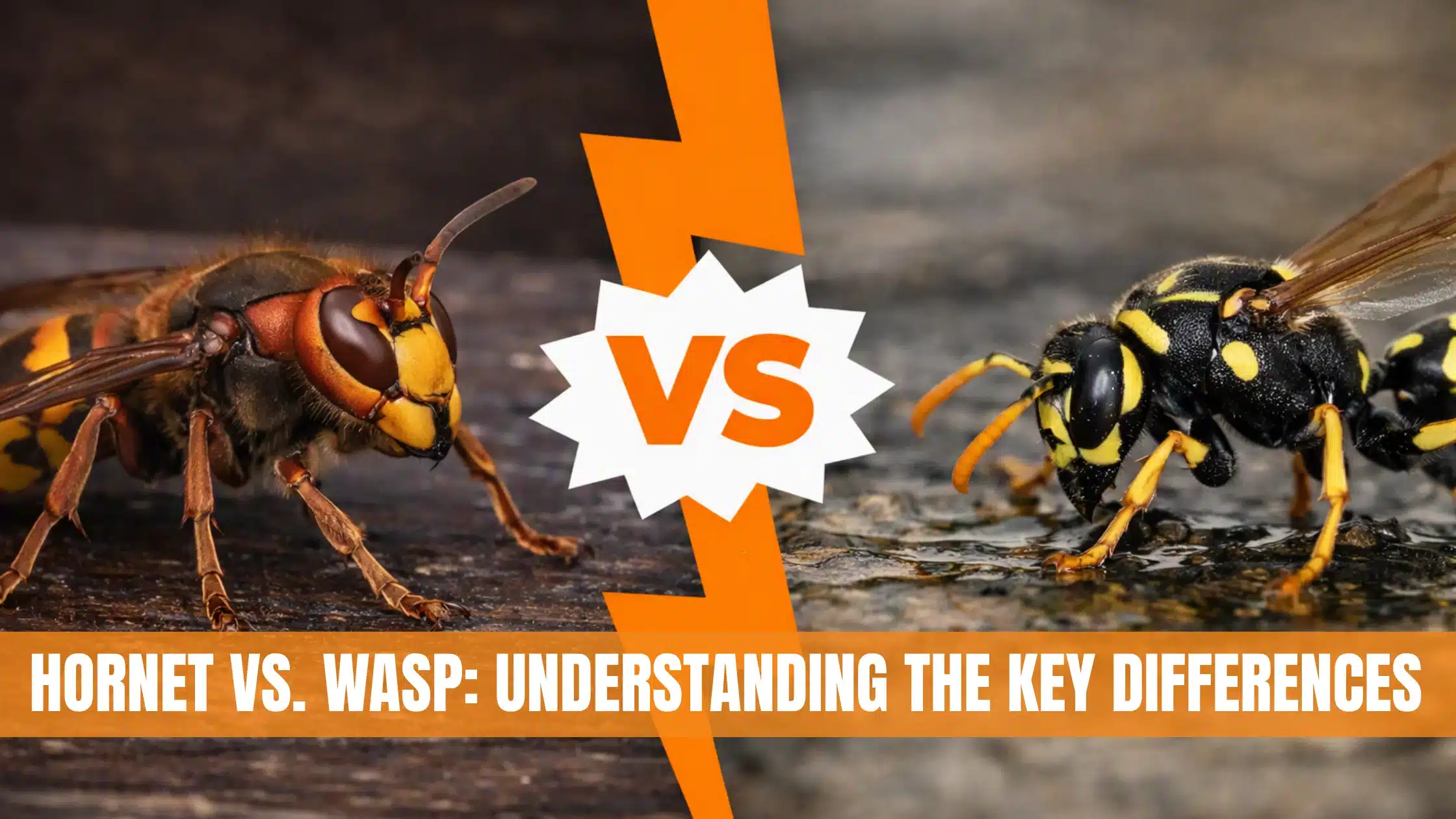
Seeing a large, buzzing insect flying around your patio can be unsettling. But is it a hornet or a wasp? Although these insects may look similar, they have noticeable differences in their size, appearance, nesting habits, behaviour, and sting patterns.
Understanding the difference between a hornet vs. wasp can help you identify what you are dealing with and decide how to respond safely. Hornets are generally larger and have broader bodies, while many wasps are slimmer and more brightly marked. Their nesting habits can also vary. Depending on the species, nests may be built in trees, roof spaces, wall cavities, sheds, gardens, or other sheltered areas.
Their behaviour is another useful clue. Some wasps can be highly active around food and rubbish, while hornets may aggressively defend their nests when disturbed. Both can sting, and repeated encounters around a nest should be treated with caution, particularly if someone in the household has a known insect-sting allergy.
This guide explores the key differences between hornets and wasps, including their physical features, behaviour, diet, nesting habits, ecological role, and potential sting risks. By learning how to recognise these insects, you can better understand when simple prevention may be enough and when professional wasp pest control may be the safer option.
Identifying Hornets vs. Wasps
Knowing the differences between hornets and wasps can make pest identification easier and help you respond safely if you discover a nest around your property.
Characteristics of Wasps
Wasps generally have slim, smooth bodies with narrow waists and may feature black, yellow, brown, or reddish markings, depending on the species. They can be predators or scavengers, feeding on insects, nectar, fruit, and other sugary substances. Some wasps live in organised colonies, while others are solitary.
Common examples include yellow jackets and paper wasps. Yellow jackets are social insects that can build nests underground, inside wall voids, or in sheltered outdoor areas. They may become defensive when their nest is disturbed. Paper wasps typically create open, paper-like nests from plant fibres and saliva and can sting when threatened.

Characteristics of Hornets
Hornets are actually a type of social wasp and are generally larger and more robust than many other wasp species. They often have broader bodies, larger heads, and distinctive markings that vary between species.
Hornets live in colonies containing queens, workers, and reproductive males. They usually defend their nests when they perceive a threat and may deliver painful stings. Their nests can be found in trees, cavities, buildings, or other protected locations.
When comparing hornets vs. wasps, appearance, nest location, behaviour, and body shape can provide useful clues. However, species identification can be difficult, so avoid disturbing an unfamiliar nest and consider professional pest control when necessary.

Hornet vs. Wasp: Yellowjacket, Paper Wasp and European Hornet Comparison
| Feature | Yellowjacket | Paper Wasp | European Hornet |
|---|---|---|---|
| Species Type | Wasp | Wasp | Hornet |
| Size | 1/2 inch to 1 inch in length | 1/2 inch to 3/4 inch in length | 1 inch to 1.5 inches in length |
| Nest Location | Nests are typically built underground or in other protected cavities, such as hollow trees, wall voids, and ceilings. | Nests are typically found on the underside of eaves and overhangs and in attic and wall voids. | Seek dark, sheltered cavities such as hollow trees, wall voids, attics, barns, and sometimes underground burrows. |
| Risk | Aggressive, especially if threatened | Aggressive when protecting their nest or themselves | Aggressive when protecting their nest or themselves |
Hornets and Wasps vs. Bees
Hornets, wasps, and bees may look similar at first glance, but there are several important differences between these stinging insects. All three belong to the insect order Hymenoptera, although they are classified into different families and have distinct behaviours, body shapes, and roles in the environment.
Bees are best known for their role as pollinators. They help transfer pollen between flowers, supporting plant reproduction and agricultural production. Honey bees also produce honey and live in organised colonies that build wax combs inside hives. Compared with wasps and hornets, bees generally have rounder, hairier bodies covered with fine or dense hairs that help collect pollen.
Wasps typically have slimmer, smooth bodies with a noticeably narrow waist. Their colouring can include yellow, black, brown, or reddish patterns, depending on the species. Hornets are a type of social wasp and are generally larger and more robust than many common wasps. Both may become defensive when their nests are disturbed.
Another key difference is their diet and behaviour. Bees primarily feed on nectar and pollen, while many wasps and hornets hunt insects or consume sugary foods.

Nesting Habits: Where They Live and How They Build
When comparing a hornet vs. wasp, the location and appearance of their nests can provide useful clues. Since different species prefer different nesting sites, observing the nest from a safe distance can help with identification.
Hornet Nests
Hornets usually build enclosed nests using plant or wood fibres mixed with saliva. These papery structures are often rounded, oval, or teardrop-shaped and may have a small entrance. Depending on the species, hornet nests can be found in hollow trees, wall cavities, attics, sheds, barns, or sheltered outdoor areas. Some species also build nests on branches or under roof overhangs. Because hornets can become defensive near their nest, disturbing or approaching one is best avoided.

Wasp Nests
Wasp nests vary considerably between species. Paper wasps commonly create open, umbrella-shaped nests beneath eaves, porch ceilings, railings, and other sheltered surfaces. The individual cells are usually visible from outside. Yellowjackets may build nests underground, inside wall cavities, or in other protected spaces. Mud daubers create smaller mud structures, often attached to walls or sheltered areas.
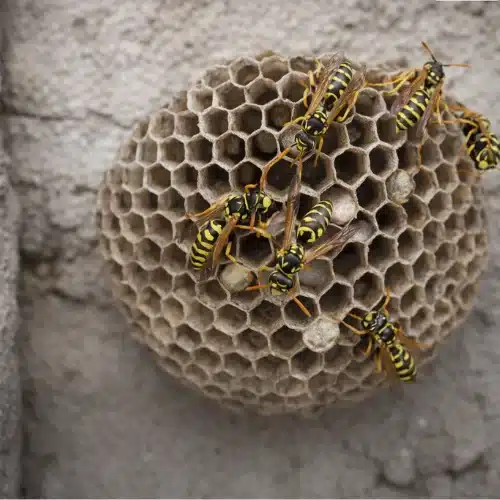
As a general identification clue, an open nest with clearly visible cells may indicate paper wasps, while an enclosed papery nest may suggest certain hornet species. However, nest appearance alone cannot always confirm the species, so professional pest identification is recommended when a nest is close to your home.
Hornet vs. Wasp Diet and Feeding Habits
Hornets and wasps have varied diets that change throughout their life cycle. Adult insects often consume sugary foods such as flower nectar, tree sap, and ripe or fallen fruit. This is why you may notice them around fruit trees, outdoor meals, rubbish bins, or sugary drinks during warmer months.
Their young have different nutritional needs. Adult workers commonly hunt insects and other small prey, which they bring back to the nest as a source of protein for developing larvae.
Hornets are generally effective predators and may feed on flies, caterpillars, grasshoppers, cicadas, and other insects. Some species may also prey on other wasps or bees. Their hunting behaviour can help control populations of other insects in the environment, although certain hornet species can pose concerns for managed honeybee colonies.
Wasps also hunt a variety of insects, including caterpillars, flies, and spiders. Some species are predators, while others are scavengers. Yellowjackets are particularly well known for scavenging around outdoor food, rubbish bins, picnics, and barbecues.
Understanding these feeding habits can help explain why hornets and wasps appear around homes and gardens
Are Wasps or Hornets More Aggressive?
The level of aggression in hornets and wasps can vary depending on the species and situation. In general, both insects may become defensive when they feel their nest or colony is threatened. Hornets can be particularly protective of their nests and may respond quickly to nearby disturbances.
Hornets and many wasp species can sting repeatedly because their stingers are not typically left behind after a sting. However, the severity of a sting can vary depending on the species, the amount of venom delivered, and the person’s individual reaction. It is not accurate to assume that every hornet is more aggressive or has stronger venom than every wasp.
Wasps may also become defensive, especially social species such as yellowjackets when their nest is disturbed. Away from their nests, many wasps generally have little reason to interact with people.
If you notice frequent wasp or hornet activity around your home, avoid swatting at the insects or approaching a nest. Keeping a safe distance and seeking professional pest control can help reduce the risk of stings and ensure the nest is handled appropriately.
Hornet vs. Wasp Sting
Wasp Stings
Wasp stings can cause immediate pain, burning, redness, itching, and swelling around the affected area. The severity varies depending on the wasp species and the person’s sensitivity to the venom. Yellowjackets, for example, can deliver particularly painful stings. Wasps can sting repeatedly because their stingers generally do not remain in the skin. Most reactions are local and improve with time, but people with allergies may experience a serious reaction requiring urgent medical attention.

Hornet Stings
Hornet stings can also be painful and may cause redness, swelling, burning, and tenderness at the sting site. Hornets are generally larger than many common wasps, and some species can deliver a substantial amount of venom. They may sting repeatedly when defending their nest. As with wasps, the severity of a hornet sting varies between species and individuals. People who develop breathing difficulties, facial or throat swelling, dizziness, or fainting after a hornet sting should seek emergency medical attention immediately.
For most people, a sting causes a local reaction that gradually improves. However, some individuals can experience a serious allergic reaction, known as anaphylaxis. Symptoms such as difficulty breathing, swelling of the throat or face, dizziness, or fainting require urgent medical attention.

Ecological Importance of Hornets and Wasps
Hornets and wasps are important parts of many ecosystems because they help regulate populations of other insects. As natural predators, they feed on insects that can become pests in gardens, farms, and natural environments. This makes them valuable contributors to natural pest control.
Hornets
Hornets generally hunt a range of insects and may target larger prey, including flies, caterpillars, grasshoppers, beetles, and other insects. The prey is often taken back to the nest as food for developing larvae. Some hornet species may also prey on bees, particularly where colonies overlap.
Wasps
Many wasp species also provide natural pest control by feeding on insects such as caterpillars, flies, aphids, and other small pests. Some species are predators, while others may act as scavengers or feed on sugary substances as adults.
Interaction with Honey Bees
Certain hornets and wasps can prey on honey bees, which may create problems for managed bee colonies. However, their ecological role extends well beyond this interaction. They help control insect populations and contribute to food-web balance.
Although hornets and wasps can become defensive around their nests, they should not be viewed only as pests. Their ecological importance makes them valuable members of the natural environment.
Common Hornets and wasps Species Overview
Hornets and wasps include many different species, each with distinct appearances, nesting habits, and behaviours. Understanding common species can make identification easier and help you respond appropriately.
Hornet Species
European hornet (Vespa crabro) : The European hornet (Vespa crabro) is a large social wasp native to parts of Europe and introduced to North America. It commonly nests in hollow trees, wall cavities, attics, and other sheltered locations. Its diet includes various insects, making it an important predator.
Asian giant hornet (Vespa mandarinia) : The Asian giant hornet (Vespa mandarinia) is one of the world’s largest hornets. It is known for its powerful sting and ability to prey on honey bees and other insects. Its presence varies by region, so local identification is important.
Common Wasp Species
Yellowjackets : Yellowjackets are social wasps that may build nests underground or in protected cavities. They are attracted to sugary foods and can become defensive around their nests.
Paper wasps : Paper wasps usually build open, umbrella-shaped nests beneath eaves and other sheltered areas. They generally avoid people unless disturbed.
Mud daubers : Mud daubers are solitary wasps that construct small mud nests on walls and protected surfaces. They are usually less defensive and rarely sting unless handled.
Final Thoughts on Hornet vs. Wasp
Understanding the differences between a hornet vs. wasp can make identification easier and help you respond safely. Size, body shape, nest design, feeding habits, and behaviour can all provide useful clues. Hornets are generally larger, sturdier members of the wasp family, while other wasps vary widely in appearance and nesting habits. Both can sting and should be treated with caution, especially around active nests. Avoid disturbing nests, keep outdoor food covered, and reduce potential attractants around your property. If you discover a nest in a risky location, contact EMK Termite & Pest Control Sydney for professional pest management and safer hornet and wasp control solutions.
What Our Customers Had To Say
Posted on Google![]()
Rami AnwerTrustindex verifies that the original source of the review is Google.
We had such a great experience with the pest control service. From start to finish, everything was quick, easy and completely hassle-free. The team were professional, friendly and made the whole process so simple. We’re really happy with the results and the quality of the service we received from Eevil. I would definitely recommend EMK to anyone looking for a reliable pest control company!Posted on Google![]()
Rena NajimTrustindex verifies that the original source of the review is Google.
Really happy with the service today. Professional, friendly and did a great job. Would definitely recommend!Posted on Google![]()
David DavidTrustindex verifies that the original source of the review is Google.
EMK provided excellent pest control service. He was professional, punctual, and knowledgeable, explained the process clearly, and ensured it was safe for our family and pets. We saw great results straight away. Friendly, reliable, and highly recommended.Posted on Google![]()
Ann TranTrustindex verifies that the original source of the review is Google.
We highly recommend EMK Termite and Pest Control Sydney. Great service, great prices, friendly and very accommodating. They are very thorough and take pride in their work. Cannot rate them high enough. 5 stars 🌟Posted on Google![]()
Charlton DurieTrustindex verifies that the original source of the review is Google.
I had these guys come and sort a termite issue. They got the job done. Thanks again!Posted on Google![]()
David MarshTrustindex verifies that the original source of the review is Google.
Super happy with EMK for getting rid of such a horrible termite infestation! Professional and very friendly.Posted on Google![]()
Michael ZammitTrustindex verifies that the original source of the review is Google.
Just had EMK come out to do a rodent control treatment. The service and professionalism was superb!Verified by TrustindexTrustindex verified badge is the Universal Symbol of Trust. Only the greatest companies can get the verified badge who has a review score above 4.5, based on customer reviews over the past 12 months. Read more
Frequently Asked Questions About Hornet vs. Wasp
Are hornets and wasps the same thing?
Which one is more dangerous?
How can I tell them apart quickly?
Can hornets and wasps sting more than once?
Are hornets more aggressive than wasps?
Should I remove a nest myself?
What should I do right after a sting?
Are hornets and wasps good for anything?
About The Author
EMK Termite & Pest Control Team
EMK Termite & Pest Control Team is a licensed and experienced pest control service provider based in Sydney, Australia. Our team specialises in termite treatment, cockroach control, spider control, and general pest management for residential and commercial properties.
With years of hands-on experience, we follow Australian safety standards and use proven, eco-friendly pest control methods to deliver long-lasting results. All content published on this website is written and reviewed by trained pest control professionals to ensure accuracy, safety, and real-world expertise.