
Content Published : September 7, 2026
How to Get Rid of Fish Moths: Protect Your Home from Silent Damage
Fish moths, commonly known as silverfish, are small pests that can cause gradual damage inside Australian homes. They are mainly active at night and prefer dark, quiet places, so an infestation can remain unnoticed for months. By the time you spot them, they may already have affected books, clothing, wallpaper, cardboard, and stored belongings.
If you are wondering how to get rid of fish moths, understanding what attracts them is the first step. These pests thrive in warm, humid environments and are particularly comfortable in areas with high moisture levels. Wardrobes, cupboards, bathrooms, bookshelves, and storage spaces can provide ideal hiding conditions.
Although fish moths do not normally pose a direct health risk to people, they can damage household possessions over time. Their feeding activity may leave holes, scratches, stains, or other signs of deterioration on susceptible materials.
To get rid of fish moths, focus on reducing humidity, improving ventilation, removing clutter, and keeping storage areas clean and dry. Regularly inspect dark corners and rarely disturbed items for signs of activity.
If the infestation continues despite these preventive measures, professional pest control can help identify the source and provide an appropriate treatment plan to protect your home and belongings.
What Exactly Are Fish Moths?
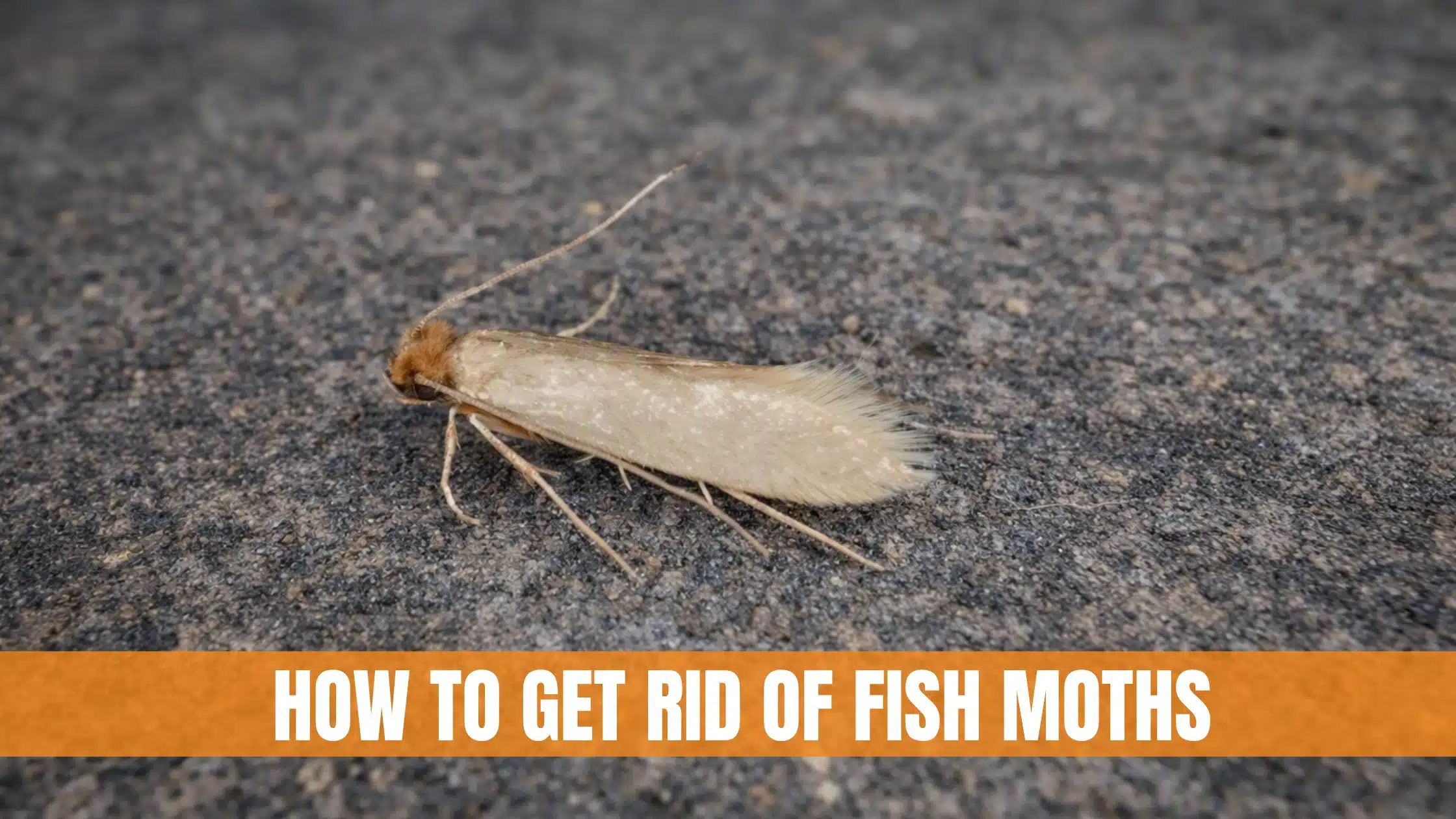
Fish moths, commonly known as silverfish, are small, wingless insects recognised by their silvery appearance and quick, wriggling movement. Their unusual shape and swimming-like motion are the reason behind the name “fish moth.” They have a long, tapered body that is covered with tiny scales and becomes narrower towards the rear.
An adult fish moth generally measures around 12 to 20 mm long, although some can grow larger. Their distinctive appearance makes them relatively easy to identify when they are spotted.
Key identifying features include:
- Colour: Usually silver or grey, sometimes with a slightly brownish appearance.
- Size: Adults commonly measure between 12 and 20 mm in length.
- Body shape: Long and tapered, with a broader front and narrower rear.
- Movement: They move quickly and erratically when exposed to light or disturbed.
- Tail bristles: Three noticeable appendages extend from the rear of the body.
- Antennae: Two long antennae extend from the head.
Fish moths can live in various climates but prefer dark, humid, and sheltered environments. In Australian homes, they are often found in bathrooms, kitchens, wardrobes, roof spaces, subfloors, cupboards, and storage areas containing books, paper, clothing, or fabrics.

What Fish Moths Eat – and What They Damage
Understanding what fish moths eat can help you identify where they may be hiding and which belongings could be at risk. These pests are attracted to materials containing starches, sugars, and other substances that provide a food source.
Fish moths commonly feed on:
- Books and paper: They can gradually scrape and damage paper surfaces, leaving irregular or worn areas. Older books may be particularly vulnerable because their binding adhesives can contain natural starches and sugars.
- Clothing and fabrics: Cotton, linen, silk, and other fabrics containing starch or sizing can attract fish moths. Their feeding may leave small, uneven holes in clothing and stored textiles.
- Wallpaper: Fish moths may feed on the starch-based paste behind wallpaper. Over time, this activity can contribute to bubbling, lifting, or surface deterioration.
- Dry food products: Flour, cereals, pasta, oats, and similar stored foods can be vulnerable, particularly when kept in cardboard or thin packaging that pests can penetrate.
- Photographs and documents: Paper and the gelatin used in some photographs can provide food sources. Important documents stored for long periods may also suffer gradual damage.
Regularly checking cupboards, wardrobes, bookshelves, and storage areas can help you detect fish moth activity early. If you are learning how to get rid of fish moths, protecting vulnerable items and reducing suitable hiding places are important first steps.

Signs You Have Fish Moths in Your Home
Fish moths, also known as silverfish, are nocturnal pests, so they are most active during the night. You may spot them quickly running across bathroom floors, cupboards, or pantry areas when a light is switched on. However, seeing a live fish moth is not always the first sign of an infestation. They often remain hidden, so look for other clues around your home.
Common signs include:
- Yellow staining: Fine yellowish residue from shed skins may appear on books, paper, cardboard boxes, clothing, or other stored belongings.
- Irregular holes and surface damage: Fish moths can leave small, uneven holes in cotton, linen, and silk fabrics. You may also notice scratched or worn areas on books, paper, and other surfaces.
- Small dark droppings: Their tiny pellet-like droppings, known as frass, may resemble small dark specks and can be found beneath stored items or along surfaces.
- Shed skins: Fish moths moult throughout their lives. Finding pale, translucent skins inside wardrobes, behind furniture, on bookshelves, or in storage areas can indicate ongoing activity.
If you notice several of these signs, inspect dark, quiet, and humid areas of your home carefully. Identifying an infestation early can make it easier to determine how to get rid of fish moths before they cause further damage to your belongings.

What Attracts Fish Moths to Your Home?
Fish moths, commonly known as silverfish, are drawn to dark, humid, and undisturbed areas where they can easily find food and shelter. Homes with excess moisture, poor ventilation, leaks, and clutter can provide ideal conditions for these pests to survive and multiply.
Some of the most common factors that attract fish moths include:
- High humidity: Bathrooms, kitchens, laundries, roof spaces, and subfloor areas with limited airflow can create favourable conditions. Using exhaust fans, improving ventilation, and controlling moisture with air conditioning or dehumidifiers can help make these areas less attractive.
- Clutter and quiet spaces: Overfilled wardrobes, rarely used bookshelves, and dark storage areas provide safe hiding places. Regularly moving and organising stored items can reduce potential harm.
- Cardboard boxes: Cardboard can provide both food and shelter. Bringing boxes, books, or paper items from an infested location may unintentionally introduce fish moths into your home.
- Old books and paper: Stored books, newspapers, documents, and older publications can provide a long-term food source, particularly when natural adhesives or starch-based materials are present.
Keeping your home dry, well ventilated, and organised can help reduce the conditions fish moths prefer. Regularly inspecting storage areas can also help you spot early signs and take action before an infestation becomes established.
What Is the Difference Between Fish Moths and Cloth Moths?
Fish moths and clothes moths are often confused because both can damage clothing and household belongings. However, they are different insects with different appearances, behaviours, and feeding habits. Knowing the difference can help you identify the problem and choose the right control method.
Fish Moths
Fish moths, commonly called silverfish, are small, wingless insects with a silvery-grey, tapered body. They move quickly and are usually active at night. They prefer dark, humid, and undisturbed areas such as bathrooms, wardrobes, cupboards, bookshelves, and storage spaces.
Fish moths feed on materials containing starches and carbohydrates. Their food sources can include paper, books, cardboard, wallpaper adhesive, and some natural fabrics. Damage may appear as irregular holes, scraped surfaces, or yellowish marks.
Cloth Moths
Cloth moths are small, winged insects that are usually beige, brown, or golden in colour. Unlike fish moths, it is mainly the larvae that cause damage. Clothes moth larvae feed on natural animal-based fibres such as wool, silk, fur, and feathers. They can also be attracted to clothing containing sweat, food stains, or other organic residues.
Fish Moths vs Clothes Moths
| Feature | Fish Moths (Silverfish) | Clothes Moths |
|---|---|---|
| Appearance | Silvery-grey, wingless, tapered body | Small, winged, usually beige, brown, or golden |
| Movement | Fast-moving and usually scurry when disturbed | Adults can fly; larvae crawl around fabrics |
| Preferred Environment | Dark, humid, and undisturbed areas | Dark, quiet wardrobes, closets, and storage areas |
| Common Locations | Bathrooms, cupboards, wardrobes, bookshelves, and storage spaces | Wardrobes, closets, carpets, drawers, and fabric storage areas |
| Food Source | Paper, books, cardboard, wallpaper adhesive, and some fabrics | Natural fibres such as wool, silk, fur, and feathers |
| Damage | Irregular holes, surface grazing, and yellowish marks | Holes or damaged patches in natural-fibre clothing and fabrics |
| Main Culprit | Adult fish moths (silverfish) | Clothes moth larvae |

Effective DIY Methods to Control Fish Moths at Home
DIY methods can help reduce fish moth activity and make your home less attractive to these pests. However, they may not completely remove an established infestation, especially when fish moths are hiding in multiple areas.
- Reduce humidity: Fix leaking pipes and improve ventilation in bathrooms, kitchens, laundries, and storage areas. Exhaust fans, air conditioning, or a dehumidifier can help control excess moisture.
- Use diatomaceous earth: Food-grade diatomaceous earth can be applied carefully around areas where fish moths are active, such as along bookshelves and baseboards. Keep it away from children and pets and follow the product label.
- Try cedar products: Cedar-based products may help deter fish moths from wardrobes and storage areas. Use essential oils and cedar products according to their directions.
- Seal gaps: Check windows, doors, skirting boards, and other potential entry points. Sealing cracks and gaps can reduce opportunities for pests to enter.
- Protect stored items: Keep rarely used clothing in sealed plastic containers or vacuum bags. Store books and important documents in suitable sealed containers rather than cardboard boxes.
- Treat small items carefully: For heat-sensitive belongings, avoid exposing them to excessive heat. If using sunlight as a treatment method, ensure the material can safely tolerate the temperature and follow a suitable pest-control approach.
If DIY methods do not control the problem, professional pest treatment can help identify the infestation and determine the most appropriate solution.

When Professional Treatment Is Needed
DIY methods can help prevent fish moths and manage minor activity, but established infestations may require professional attention. Professional fish moth treatment can reach hidden areas that household sprays often miss, including roof spaces, cupboards, subfloors, and other pest harbourage points.
At EMK Termite & Pest Control Sydney, trained technicians can assess fish moth activity and apply an appropriate treatment to affected areas. Their general pest services can also address common household pests such as cockroaches, ants, and spiders. Professional treatment is particularly useful when fish moths continue appearing or have already caused visible damage to books, clothing, or stored belongings.
For a standard Australian residential property, professional pest treatment is available from $89, depending on the property, pest activity, and treatment requirements.
What Our Customers Had To Say
 Posted on Google
 Rami Anwer
Trustindex verifies that the original source of the review is Google.
We had such a great experience with the pest control service. From start to finish, everything was quick, easy and completely hassle-free. The team were professional, friendly and made the whole process so simple. We’re really happy with the results and the quality of the service we received from Eevil. I would definitely recommend EMK to anyone looking for a reliable pest control company!Posted on Google Rena NajimReally happy with the service today. Professional, friendly and did a great job. Would definitely recommend!Posted on Google
 David DavidEMK provided excellent pest control service. He was professional, punctual, and knowledgeable, explained the process clearly, and ensured it was safe for our family and pets. We saw great results straight away. Friendly, reliable, and highly recommended.Posted on Google
 Ann TranWe highly recommend EMK Termite and Pest Control Sydney. Great service, great prices, friendly and very accommodating. They are very thorough and take pride in their work. Cannot rate them high enough. 5 stars 🌟Posted on Google
 Charlton DurieI had these guys come and sort a termite issue. They got the job done. Thanks again!Posted on Google
 David MarshSuper happy with EMK for getting rid of such a horrible termite infestation! Professional and very friendly.Posted on Google
 Michael ZammitJust had EMK come out to do a rodent control treatment. The service and professionalism was superb!Verified by TrustindexTrustindex verified badge is the Universal Symbol of Trust. Only the greatest companies can get the verified badge who has a review score above 4.5, based on customer reviews over the past 12 months. Read more
Frequently Asked Questions About Fish Moths
Why do I have fish moths?
How can I naturally get rid of fish moths?
Vacuum regularly, especially in cracks, closets, and behind furniture
Declutter cardboard boxes, old papers, and stacks of fabric — their favorite food sources
Sprinkle diatomaceous earth (food-grade) in cracks, crevices, and along baseboards; it dehydrates them on contact
Use cedar blocks or cedar oil in closets and drawers as a natural deterrent
Seal cracks and gaps around pipes, baseboards, and windows to cut off entry points
What kills fish moths?
Boric acid powder placed in cracks and crevices
Commercial silverfish baits and sprays containing pyrethrins
Extreme dryness — fish moths can't survive without humidity for long
What is a good repellent for fish moths?
Citrus peels or citrus essential oil
Lavender essential oil
Dried bay leaves tucked into cupboards, drawers, and bookshelves
Cinnamon sticks or clove-based sachets
How can I make a DIY fish moth repellent?
How do I eradicate fish moths?
Remove food sources — old papers, cardboard, glue-bound books, natural fiber fabrics in storage
Apply diatomaceous earth or boric acid in cracks, skirting boards, and entry points
Set out sticky traps to monitor and reduce numbers
Seal entry points (cracks, gaps around pipes/windows)
For persistent infestations, use a residual insecticide spray or call pest control, since fish moths can survive months without eating and breed slowly but steadily
Are fish moths dangerous to humans or pets?
How long do fish moths live?
Which essential oils work best against fish moths?
How do I stop fish moths from coming back after treatment?
Store books, papers, and fabrics in sealed plastic containers rather than cardboard
Regularly inspect and clean neglected areas like basements, attics, and behind furniture
Reapply natural repellents (cedar, diatomaceous earth) periodically
Fix any new leaks or damp patches promptly
About The Author

EMK Termite & Pest Control Team
EMK Termite & Pest Control Team is a licensed and experienced pest control service provider based in Sydney, Australia. Our team specialises in termite treatment, cockroach control, spider control, and general pest management for residential and commercial properties.
With years of hands-on experience, we follow Australian safety standards and use proven, eco-friendly pest control methods to deliver long-lasting results. All content published on this website is written and reviewed by trained pest control professionals to ensure accuracy, safety, and real-world expertise.