
Content Published : August 31, 2026
What Are Carpet Moths and How to Get Rid of Them
When people notice carpet damage, they often blame spills, everyday wear, furniture marks, or pets. However, another culprit can quietly damage your flooring without being noticed: carpet moths. These small pests are found in homes across Australia and can cause serious damage, particularly to carpets made from natural fibres.
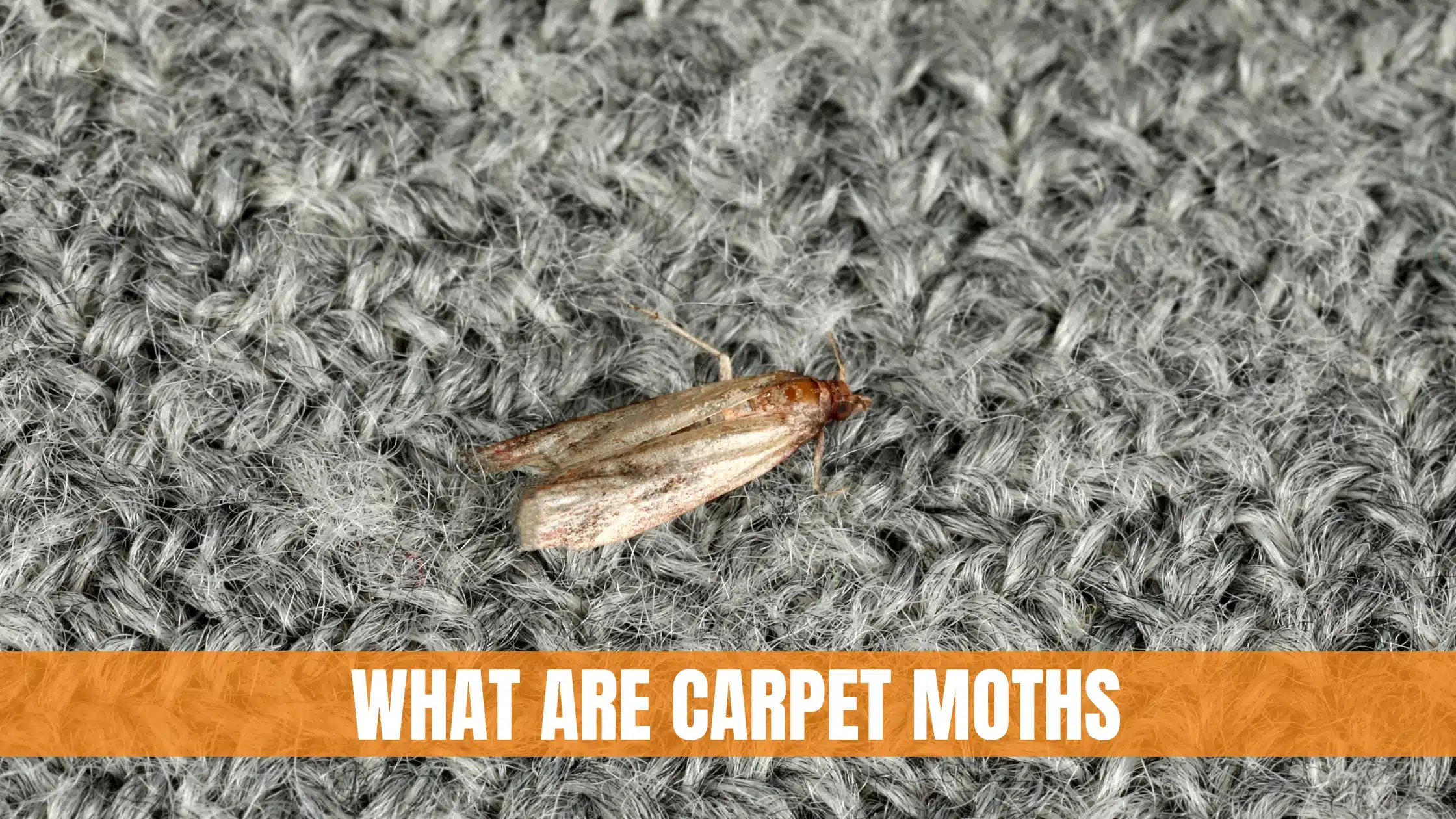
Carpet moths are also commonly referred to as clothes moths or textile moths. Adult moths are usually small and have a pale beige or light brown appearance. One species commonly associated with textile damage is the webbing clothes moth, scientifically known as Tineola bisselliella.
The adult moths themselves are not responsible for most of the damage. Their larvae feed on natural fibres and can remain hidden beneath furniture, along carpet edges, or in undisturbed areas while gradually weakening the material.
Early detection is important because an unnoticed infestation can spread and become harder to manage.
In this guide, we’ll explore what carpet moths are, how to recognise the warning signs, what attracts them, and the most effective ways to control an infestation and protect your carpets.
What Do Carpet Moths Look Like?
Adult carpet moths are tiny insects, so they can be difficult to notice despite the damage they may cause. They are usually around 5 mm long, with a wingspan of approximately 15 mm. Their colour is generally grey, beige, or buff, and they often move by hopping or crawling rather than flying long distances.
A female can lay around 200–300 eggs during her lifetime. These eggs are extremely small and pale, making them difficult to spot on carpets, beneath furniture, or in other quiet areas. Under suitable conditions, the complete life cycle can take about a year.
The larval stage causes most of the damage. These small, hungry grubs feed on natural fibres and tend to hide in dark, undisturbed locations. They may carry a protective silken case while moving across the material.
As the larvae mature, they form a woven cocoon for pupation. These small cocoons can resemble grains of rice and are often easier to notice than the eggs or adult insects.
Because carpet moth infestations can remain hidden, unexplained holes, thinning fibres, larvae, or rice-like cocoons should be investigated early. Prompt identification can help prevent further damage and make treatment more manageable.
The Life Cycle of Carpet Moths
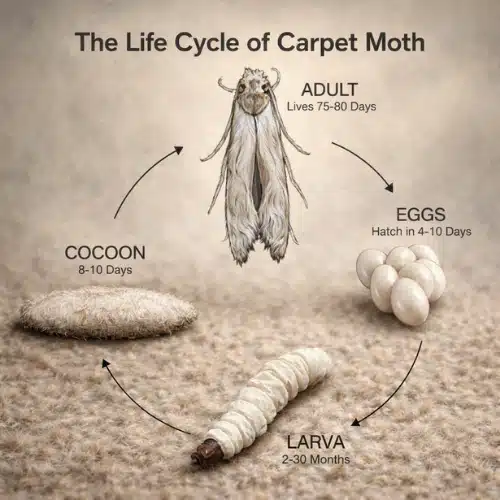
Understanding the life cycle of carpet moths can make pest prevention and treatment more effective. Like many moth species, they develop through four distinct stages: egg, larva, pupa, and adult. Each stage plays a different role, but the larval stage is responsible for most textile damage.
1.Egg Stage
Female moths lay eggs in quiet, hidden areas such as carpet edges, rugs, wardrobes, or beneath furniture. Depending on the species, dozens or even hundreds of eggs may be produced. Because the eggs are extremely small, they can be difficult to notice.
2.Larval Stage
This is the main damaging stage. After hatching, larvae begin feeding on natural fibres such as wool, silk, fur, and other animal-based materials. They may remain active for several months, gradually creating holes, thinning fibres, and other visible damage.
3.Pupal Stage
Once the larvae have developed sufficiently, they form a protective silk cocoon in cracks, carpet edges, or other sheltered locations. Inside the cocoon, they transform into adult moths.
4.Adult Stage
Adult moths emerge from the cocoons primarily to reproduce. They generally do not cause the same type of fibre damage as larvae. Their presence, however, indicates that the life cycle is continuing and new eggs may soon be laid.
Breaking this cycle early is essential for effective carpet moth management and long-term protection.
Signs of a Carpet Moth Infestation
Carpet moths can be surprisingly difficult to spot because they often hide in dark, quiet areas of the home. Instead of looking only for adult insects, pay attention to changes in your carpet and other natural-fibre materials. Early detection can help prevent the damage from spreading.
Common signs to watch for:
- Thinning or Missing Carpet Fibres
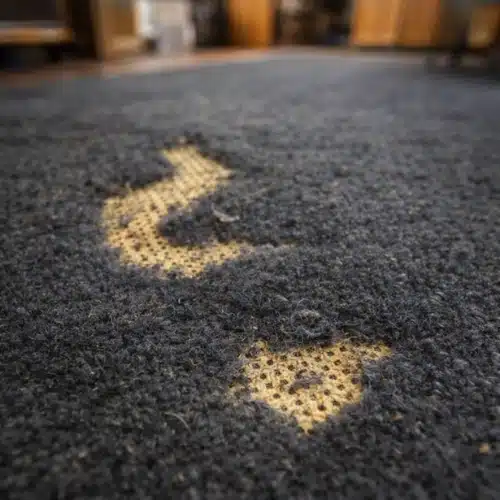
Noticeable bald patches, holes, or thinning areas may appear, particularly beneath furniture, along skirting boards, in corners, and inside wardrobes where the carpet receives little disturbance. - Larvae and Silken Cases
Small, pale larvae may be found around carpet edges or hidden underneath furniture. You may also notice tiny silken tubes or cases left behind as the larvae develop. - Small Adult Moths
Adult moths are usually tiny and may be seen resting on walls, curtains, cupboards, or other quiet surfaces. Seeing them regularly can indicate that an infestation is established. - Webbing or Silky Trails
Fine webbing, silk-like trails, or small woven patches around carpet fibres can indicate larval activity. These signs are particularly worth checking in undisturbed areas.
Regularly vacuuming hidden spaces and inspecting carpet edges can help you spot these warning signs before significant damage occurs.
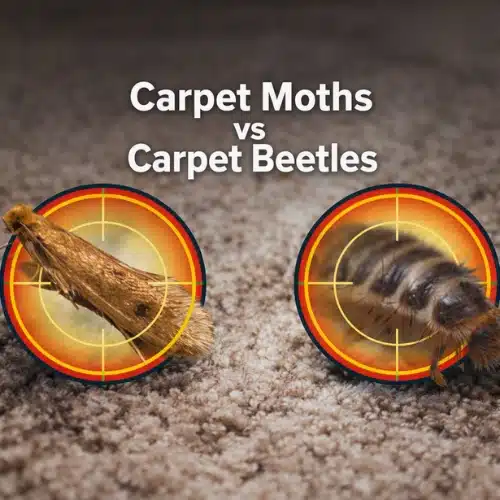
Carpet Moths vs Carpet Beetles: What's the Difference?
Carpet moths and carpet beetles are different pests, although both can damage carpets and textiles. Let’s understand the clear difference between these two pests.
| Feature | Carpet Moth | Carpet Beetle |
|---|---|---|
| Type | Moth | Beetle |
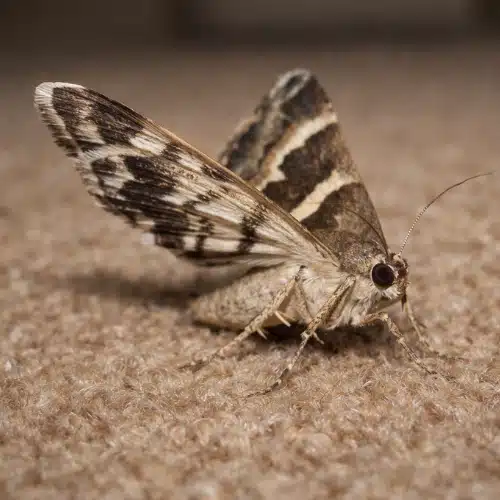
| Adult Appearance | Small, pale beige or buff-coloured moth | Small, rounded beetle, often with a patterned appearance |
| Main Damaging Stage | Larvae | Larvae |
| Damage | Feeds on natural fibres such as wool | Feeds on wool, fur, feathers, and other natural materials |
| Typical Signs | Holes, thinning carpet, larvae, and silken cases | Irregular holes, shed larval skins, and small beetles |
| Flying Ability | Adults generally fly poorly | Adults can fly |
Carpet moths are not the same as carpet beetles, although both pests can damage natural-fibre carpets, rugs and textiles. Carpet moth larvae and carpet beetle larvae have different appearances and behaviours, so identifying the pest correctly is important when choosing a control method. Learn more about carpet beetles, their warning signs and how to control them in our guide to Carpet Beetle Control.
What Causes Carpet Moth Infestations?
Carpet moths are more likely to settle in homes where they can find natural fibres, food sources, shelter, and quiet places to develop. They often remain hidden beneath furniture, along carpet edges, or in areas that are rarely disturbed. Understanding what attracts them can make prevention much easier.
Common factors that encourage infestations include:
- Natural-fibre carpets: Wool, wool blends, and other natural materials can provide a suitable food source for larvae.
- Infrequent cleaning: Dust, hair, skin particles, and other organic debris can accumulate in areas that are difficult to reach, creating favourable conditions.
- Dark and undisturbed spaces: Areas underneath heavy furniture, wardrobes, beds, and rarely used rooms can provide shelter where larvae can develop unnoticed.
- Humidity and moisture: Damp indoor conditions may contribute to an environment that supports pest activity, particularly where ventilation is poor.
- Stored rugs and furnishings: Rugs, carpets, blankets, and upholstered furniture that remain untouched for long periods may be more vulnerable to infestation.
- Outdoor entry: Adult moths can enter through open doors, windows, and other openings before finding suitable materials indoors.
Regular vacuuming, moving furniture, improving ventilation, and inspecting natural-fibre materials can help reduce the conditions that encourage carpet moth activity. Early prevention can also minimise the risk of costly carpet damage.
How to Get Rid of Carpet Moths
Getting rid of carpet moths usually requires more than one method. Because eggs and larvae can remain hidden beneath furniture, along carpet edges, and inside rugs, consistent cleaning and targeted treatment are important for breaking the infestation cycle.
Effective ways to manage an infestation include:
- Vacuum Regularly and Thoroughly
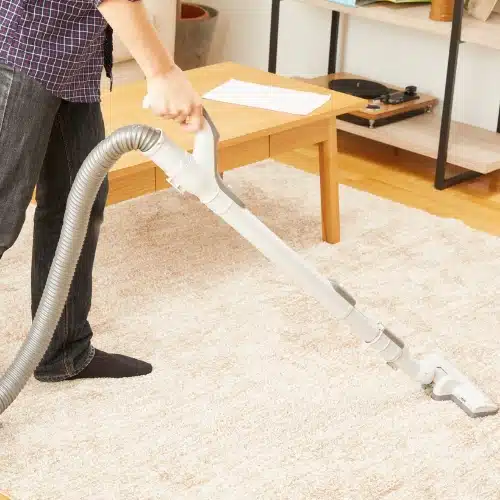
Vacuum carpets at least once a week, paying extra attention to corners, skirting boards, carpet edges, and areas beneath furniture. Use suitable attachments to reach difficult spaces. - Consider Steam Cleaning
Professional or appropriate high-temperature steam cleaning may help remove or kill pests and their eggs, depending on the carpet material and cleaning method. - Use Suitable Pest Treatments
Products labelled for textile or carpet pests may help control an infestation. Always follow the manufacturer’s directions and keep children and pets away from treated areas as instructed. - Use Pheromone Traps
Sticky moth traps can help monitor adult activity and indicate whether moths are still present. - Clean Rugs and Fabrics
Wash, heat-treat, or professionally clean affected rugs and washable fabrics according to their care instructions. - Seek Professional Pest Control
Persistent or widespread infestations may require professional assessment and treatment. Experts can identify affected areas and recommend an appropriate control strategy.
Early action can help limit carpet damage and prevent the infestation from spreading to other textiles.
When to Seek Professional Pest Control for Carpet Moths
A small number of moths may not seem like a serious concern, but carpet moth infestations can be difficult to manage because eggs and larvae often remain hidden in carpets, rugs, and other natural-fibre materials. Getting professional help early can prevent the damage from spreading.
Consider contacting a pest control expert if:
- Carpet damage is increasing: New holes, thinning patches, or missing fibres continue to appear despite regular cleaning.
- Larvae or cocoons are visible: Finding larvae, silken cases, or rice-like cocoons can indicate an active infestation.
- Moths keep appearing: Repeated sightings of adult moths may suggest that the breeding cycle is continuing.
- DIY methods haven’t worked: Vacuuming, cleaning, and traps may reduce activity but may not eliminate hidden eggs and larvae.
- Multiple areas are affected: Damage across carpets, rugs, wardrobes, or upholstered furniture may indicate that the infestation has spread.
- You can’t identify the pest: Carpet moths can be confused with other textile pests, including carpet beetles.
A professional inspection can identify affected areas, assess the extent of the infestation, and recommend an appropriate treatment to help protect your carpets and furnishings.
What Steps Should You Follow After Carpet Moths Have Been Eliminated?
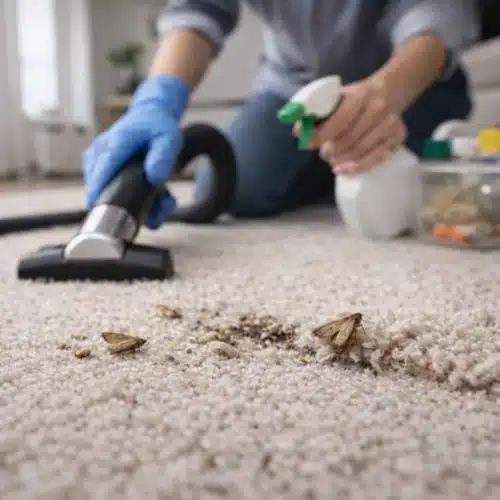
Getting rid of an infestation is an important first step, but ongoing care can help reduce the chance of carpet moths returning. Eggs or larvae may remain hidden in hard-to-reach areas, so regular monitoring is worthwhile after treatment.
Follow these simple steps:
- Vacuum regularly: Clean carpets thoroughly, especially along skirting boards, underneath furniture, corners, and other quiet areas where debris can accumulate.
- Monitor for larvae: Check carpet edges, rugs, wardrobes, and natural-fibre materials for new larvae, cases, or unexplained damage.
- Keep moth traps in place: Pheromone traps can help monitor adult activity and alert you to potential new infestations.
- Clean affected items: Regularly inspect and clean rugs, blankets, and other susceptible textiles according to their care instructions.
- Act quickly if signs return: Don’t wait for significant damage before seeking professional advice.
Carpet moths can be persistent, and early action makes recurring problems easier to manage. If you notice new moths, larvae, or carpet damage after treatment, contact a qualified pest control professional for further inspection and advice.
Conclusion
Carpet moths can quietly cause significant damage to carpets, rugs, and other natural-fibre materials if an infestation is left untreated. Regularly check darker, undisturbed areas, especially beneath furniture, along carpet edges, and inside wardrobes. Watch for thinning fibres, holes, larvae, silken cases, or adult moths, as these may indicate an active problem.
Early detection makes it easier to control the infestation and minimise further damage. Regular vacuuming, proper cleaning, and ongoing monitoring can also help prevent the pests from returning.
If you notice signs of carpet moth activity or need professional assistance, contact EMK Termite & Pest Control Sydney for reliable advice and effective pest management solutions.
What Our Customers Had To Say
 Posted on Google
 Rami Anwer
Trustindex verifies that the original source of the review is Google.
We had such a great experience with the pest control service. From start to finish, everything was quick, easy and completely hassle-free. The team were professional, friendly and made the whole process so simple. We’re really happy with the results and the quality of the service we received from Eevil. I would definitely recommend EMK to anyone looking for a reliable pest control company!Posted on Google Rena NajimReally happy with the service today. Professional, friendly and did a great job. Would definitely recommend!Posted on Google
 David DavidEMK provided excellent pest control service. He was professional, punctual, and knowledgeable, explained the process clearly, and ensured it was safe for our family and pets. We saw great results straight away. Friendly, reliable, and highly recommended.Posted on Google
 Ann TranWe highly recommend EMK Termite and Pest Control Sydney. Great service, great prices, friendly and very accommodating. They are very thorough and take pride in their work. Cannot rate them high enough. 5 stars 🌟Posted on Google
 Charlton DurieI had these guys come and sort a termite issue. They got the job done. Thanks again!Posted on Google
 David MarshSuper happy with EMK for getting rid of such a horrible termite infestation! Professional and very friendly.Posted on Google
 Michael ZammitJust had EMK come out to do a rodent control treatment. The service and professionalism was superb!Verified by TrustindexTrustindex verified badge is the Universal Symbol of Trust. Only the greatest companies can get the verified badge who has a review score above 4.5, based on customer reviews over the past 12 months. Read more
Frequently Asked Questions About Carpet Moths
How do I get rid of carpet moths in Australia?
How serious are carpet moths?
What causes carpet moth infestations?
Will vacuuming get rid of carpet moths?
How long do carpet moths last?
What time of year do carpet moths appear?
Do carpet moths spread from room to room?
Where do carpet moths lay eggs?
What are the signs that my carpet has carpet moths?
How can I naturally get rid of carpet moths?
How can I prevent carpet moths from returning?
About The Author

EMK Termite & Pest Control Team
EMK Termite & Pest Control Team is a licensed and experienced pest control service provider based in Sydney, Australia. Our team specialises in termite treatment, cockroach control, spider control, and general pest management for residential and commercial properties.
With years of hands-on experience, we follow Australian safety standards and use proven, eco-friendly pest control methods to deliver long-lasting results. All content published on this website is written and reviewed by trained pest control professionals to ensure accuracy, safety, and real-world expertise.