
Content Updated: February 24, 2026
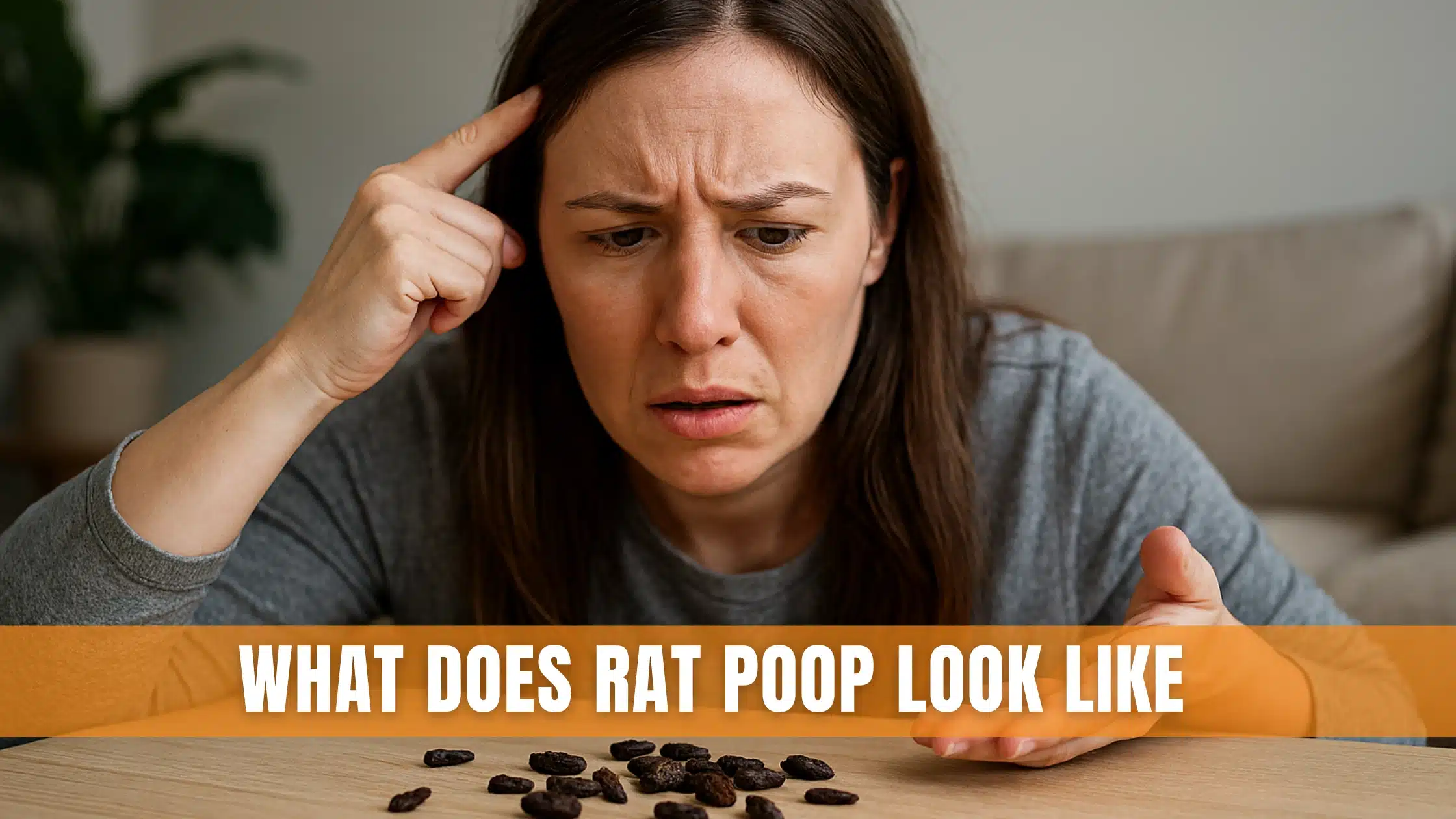
What Does Rat Poop Look Like And How to Identify It
Rats rarely announce their arrival, but they always leave evidence behind. One of the clearest and most unpleasant warning signs of an infestation is discovering rat droppings in unexpected places like under sinks, inside cupboards, behind appliances, or near stored food. Identifying rat droppings early helps prevent contamination and property damage.
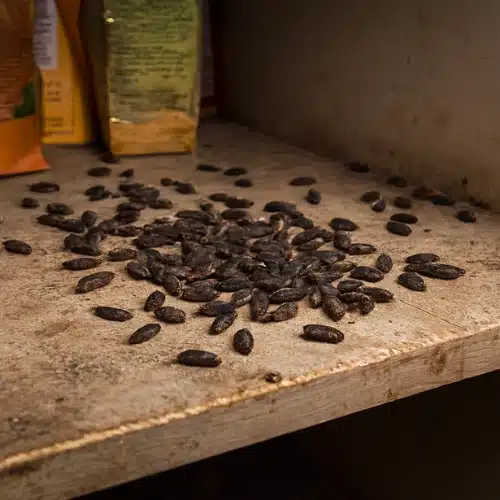
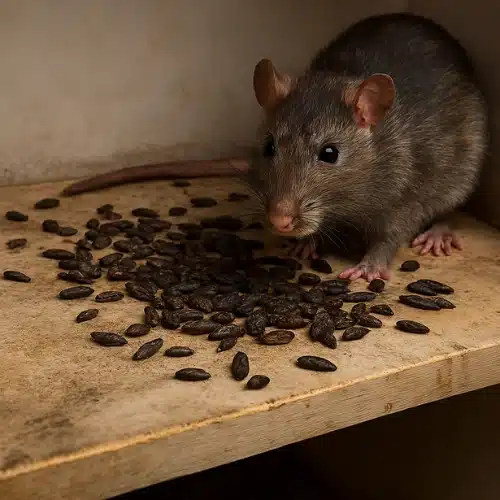
Rat poop vary slightly depending on species, diet, and freshness, but they generally share common features. They are typically around 12–18 mm long, about the size of a grain of rice, spindle-shaped with rounded or slightly pointed ends, and dark brown to black in colour. A single rat can produce 30–50 pellets per day, so infestations quickly become noticeable.
In many homes, the two most common species are the Norway rat and the roof rat. Norway rat droppings appear more blunt at the ends, while roof rat droppings are narrower and more tapered.
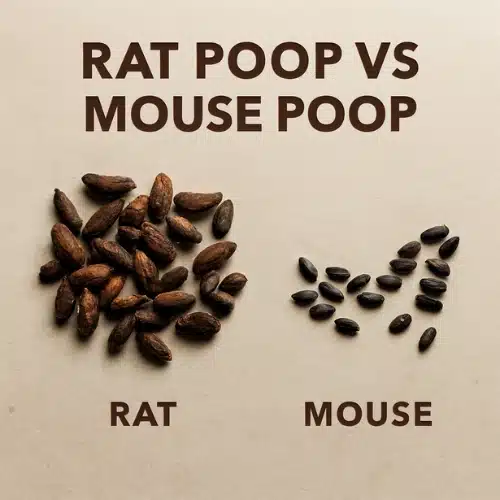
People often confuse rat poop with other pests. Possum droppings may be similar in size but are usually clumped together and less pointed. Mouse droppings are much smaller, typically 3–7 mm long, and sharply pointed at both ends. Recognising these differences helps determine the right treatment quickly.
Does Rat Poop Smell?
Yes, rat poop smells, and the smell is hard to ignore. Rat droppings and urine release a strong, musky odour that becomes more noticeable when fresh waste accumulates. In enclosed areas such as cupboards, roof voids, wall cavities, or storage rooms, the scent can linger for days and is often the first warning sign that rats are nesting nearby.
Beyond being unpleasant, the odour usually indicates a larger hidden problem. Rats rarely stay in one spot, so where you notice the smell, there are often more droppings and nesting materials close by.
More importantly, rat poop is not just a nuisance , it can affect health. Droppings and urine may contain harmful bacteria and pathogens that contaminate surfaces and circulate through the air as particles dry and break down. This can contribute to poor indoor air quality and increase the risk of respiratory irritation, allergies, and illness, especially for children, elderly occupants, or anyone with asthma.
Because of these risks, any persistent musky smell inside a home should be taken seriously and investigated promptly before the infestation grows.
Health Risks of Rat Poop in Indoor Spaces And What You Need to Know
Rat droppings are not just unpleasant, they can expose your home to serious health hazards. Rat poop often contains bacteria, viruses, and parasites that may affect both people and pets, especially when particles become airborne or contaminate food and surfaces. Public health authorities warn that even small amounts of exposure should be handled with caution.
Common risks linked to rat faeces include:
- Rat bite fever – bacterial infection causing fever, vomiting, rash, and muscle pain
- Leptospirosis – spread through urine-contaminated areas, potentially damaging the liver or kidneys
- Salmonellosis – food contamination leading to diarrhoea, cramps, and fever
- LCMV (Lymphocytic choriomeningitis virus) – may trigger neurological symptoms and pregnancy complications
- Hantavirus-related illnesses – rare but possible where rodent activity increases
- Historic plague transmission – associated with fleas carried by rats
Beyond infections, droppings can also:
- Trigger allergies and breathing irritation
- Worsen asthma symptoms, particularly in children
- Reduce indoor air quality through contaminated dust
Because the risks are invisible, even old droppings should never be ignored. Prompt cleaning and professional pest management are essential to keep your living environment hygienic and safe.

How to Identify Rat Poop in Your Home
Knowing how to identify rat poop in your home early can help you respond before the infestation spreads. Rats leave clear evidence of their activity, and understanding these signs makes detection much easier. Pay attention to where, how much, and what the droppings look like — each detail reveals how active the rodents are.
Here’s what to check:
- Quantity: Rats produce droppings constantly. Large numbers in one spot usually indicate a nesting or feeding area nearby.
- Location: Common places include near food storage, along walls, inside cupboards, roof voids, and beneath appliances or furniture where rodents feel safe.
- Fresh vs old droppings:
- Fresh droppings — dark, shiny, and soft (active infestation)
- Old droppings — grey, dry, and crumbly (past activity)
- Fresh droppings — dark, shiny, and soft (active infestation)
- Size of droppings:
- Larger pellets often belong to adult rats
- Smaller pellets may indicate juvenile rats or even mice
- Larger pellets often belong to adult rats
You may also notice smear marks, gnaw damage, or scratching sounds around these areas. Identifying these clues early allows quicker control measures and prevents contamination of food and surfaces.
Immediate Actions to Take When You Spot Rat Droppings
Rat droppings are more than just unpleasant , they can spread bacteria and allergens, so safe handling is essential. Follow these steps to clean them properly while protecting your health:
- Step 1: Wear protective gear
Put on rubber or disposable gloves and a dust mask before touching anything. This prevents direct contact and stops you from inhaling contaminated particles. - Step 2: Ventilate the area
Open doors and windows for at least 30 minutes. Fresh air helps disperse airborne contaminants, especially in closed rooms, cupboards, or roof spaces. - Step 3: Never sweep or vacuum
Dry sweeping spreads harmful particles into the air. Instead, spray the droppings with a disinfectant or a bleach solution (1:10 ratio of bleach to water) and allow it to soak for about 5 minutes. - Step 4: Wipe and dispose safely
Use paper towels to pick up the droppings. Place them in a sealed plastic bag and discard them in a covered outdoor bin. - Step 5: Disinfect thoroughly
Clean the surrounding surfaces again with disinfectant and wash your hands carefully with soap and warm water , even if gloves were worn.
Taking these precautions reduces contamination risk and helps keep your home safe and hygienic.
Rat droppings are a clear warning of a rat infestation
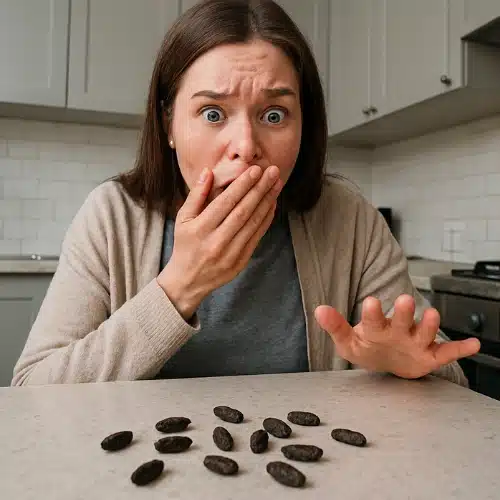
A single dropping might suggest a wandering rodent passing through, but multiple pellets in the same area usually point to an established and growing rat infestation. When you notice clusters, it’s important not to ignore them because rodents reproduce quickly and the problem can escalate within weeks.
Watch for other warning signs as well:
- Gnaw marks on furniture, wires, or packaging
- A strong musky odour in cupboards or roof spaces
- Scratching or running noises at night
- Urine stains along walls or corners
- Sightings of live or dead rodents
Rats and mice are nocturnal, so activity is often heard rather than seen. They prefer warm, sheltered places close to food sources such as kitchens, storage rooms, garages, and roof voids. Pet food bowls, grains, and even tiny crumbs can attract them.
To reduce the risk, store food in sealed containers, clean spills quickly, and avoid leaving food out overnight. Early action is key , spotting signs early can prevent a small rodent visit from becoming a serious infestation that affects hygiene and property safety.
Difference Between Rat Poop and Mouse Poop Explained
Both rats and mice leave behind droppings, but their size and shape make identification easier if you know what to look for. Recognising the difference helps determine the severity of the infestation and the right treatment approach.
Key differences to notice:
- Rat Poop:
- Around 12–18 mm (about ½ inch) long
- Thicker and capsule-shaped
- Ends appear blunt or slightly rounded
- Usually found in smaller clusters but larger in volume
- Around 12–18 mm (about ½ inch) long
- Mouse Poop:
- Around 3–7 mm (about ⅛ inch) long
- Thin and narrow
- Sharply pointed at both ends
- Often scattered in many areas because mice move frequently
- Around 3–7 mm (about ⅛ inch) long
A simple visual trick helps — rat droppings resemble dark raisins, while mouse droppings look more like small grains of rice.
You may also notice behavioural clues. Rat poops are commonly found along walls, behind appliances, or near food storage, as rats follow consistent travel routes. Mouse droppings appear in cupboards, drawers, and pantries since mice explore more randomly.
Correct identification is important because rats typically cause structural damage and health risks, while mice multiply faster and spread contamination quickly. Spotting the difference early helps you act faster and prevents a small problem from becoming a serious infestation.
How to Get Rid of Rat Droppings and Control Infestations
Getting rid of rat droppings solves the mess , but not the real problem. The source of the contamination is the rodents themselves, and unless they’re removed properly, the droppings will keep coming back.
At EMK Termite & Pest Control Sydney, we help homes and businesses eliminate infestations safely, quickly, and with long-term prevention in mind. Our specialists focus on removing rodents and stopping future activity, not just temporary fixes.
Our rodent control approach includes:
- Safe poison baiting (used carefully where suitable)
- Sealing cracks, gaps, and entry points
- Removing food sources and nesting attractants
- Ongoing monitoring and rodent droppings inspections
Rats breed rapidly, so delays can turn a minor issue into a major hygiene risk. Professional treatment ensures the infestation is handled correctly and reduces the chance of recurrence.
Need rat or mice removal in Sydney? We’re available 24/7 for urgent situations , because rodents definitely don’t follow business hours.
About The Author

EMK Termite & Pest Control Team
EMK Termite & Pest Control Team is a licensed and experienced pest control service provider based in Sydney, Australia. Our team specialises in termite treatment, cockroach control, spider control, and general pest management for residential and commercial properties.
With years of hands-on experience, we follow Australian safety standards and use proven, eco-friendly pest control methods to deliver long-lasting results. All content published on this website is written and reviewed by trained pest control professionals to ensure accuracy, safety, and real-world expertise.