
Content Updated: May 26, 2026
Rat Vs Mouse - Key Differences Explained
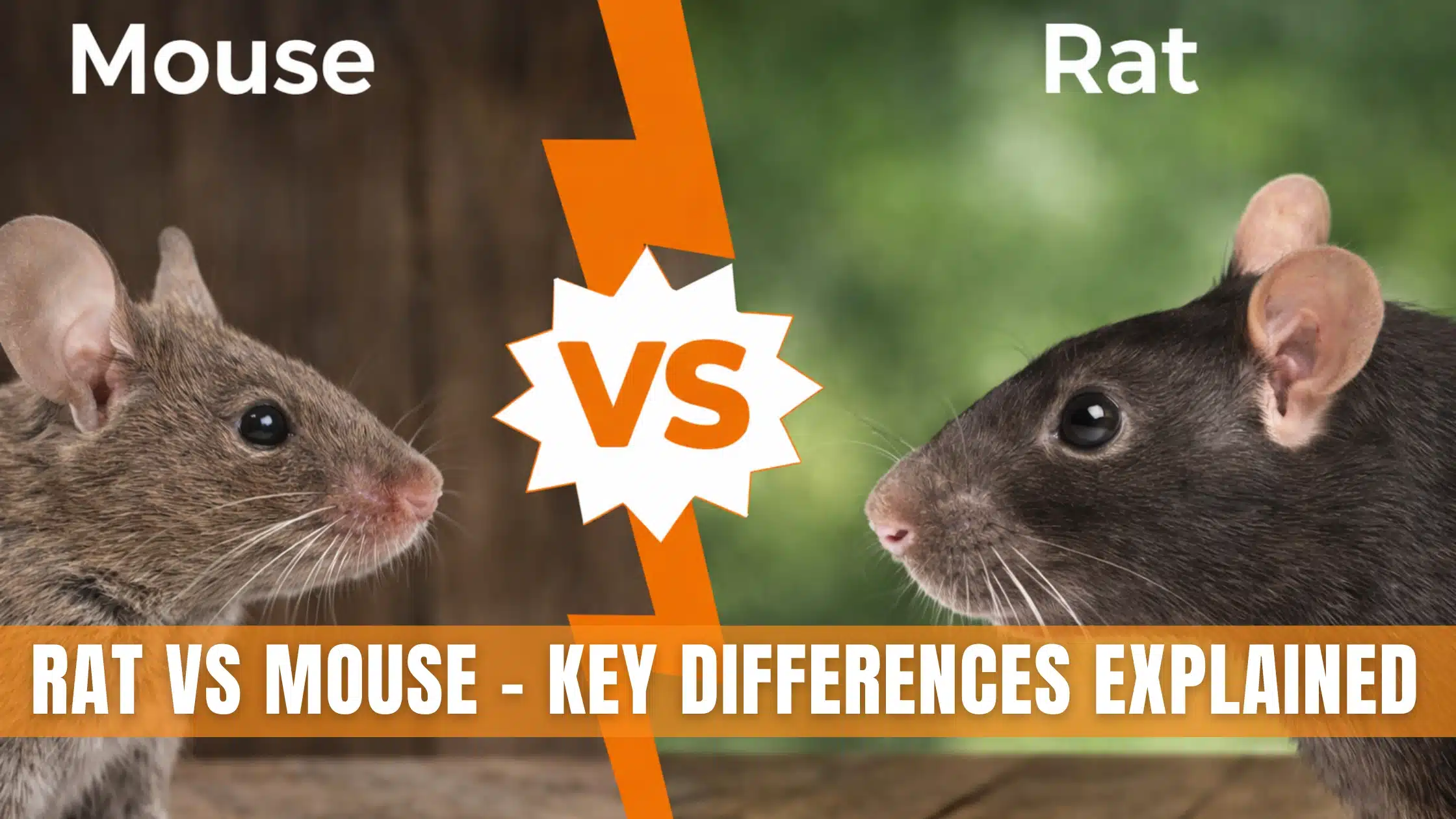
When comparing rat vs mouse infestations, understanding the differences between these rodents is important for choosing the right control method. Rats are generally larger, with thick bodies, smaller ears, and heavy tails, while mice are much smaller with larger ears and thinner tails relative to their body size. Identifying whether you have rats or mice can help determine the most effective rodent treatment solution for your home or business.
The three most common rodent pests found worldwide are the Brown Rat (Rattus norvegicus), Black Rat (Rattus rattus), and House Mouse (Mus domesticus). Brown rats, also known as Norway rats, are commonly found around drains, basements, and rubbish areas. Black rats, also called roof rats or ship rats, are often associated with roof spaces and port areas. House mice are highly adaptable indoor pests commonly found inside kitchens, storage rooms, and wall cavities.
In any rat vs mouse problem, both rodents pose serious health and hygiene risks because they contaminate food, spread diseases, and damage property. All rodents share a pair of constantly growing incisor teeth, but their behaviour, nesting habits, and physical characteristics differ significantly, making proper identification essential for effective rodent control.
Physical Appearance
To an untrained eye, rats and mice may appear very similar in body shape, tail, ears, legs, and nose. However, a closer inspection reveals several noticeable differences in their size, physical features, and behaviour. These characteristics help distinguish rats from mice and make accurate identification easier for effective rodent control.
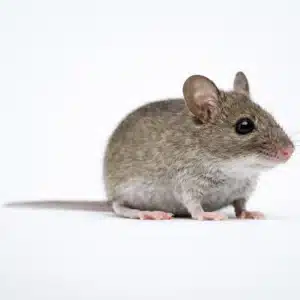
What do mouse look like?
Understanding mouse characteristics can help identify infestations early and choose the right rodent control solution. Mice have several distinct physical and behavioural features that separate them from rats.
Physical Appearance
- Slender and lightweight body structure
- Usually weigh up to 25 grams
- Body length ranges from 30–100mm with a tail of similar length
- Large ears and pointed nose
- Long thin tail compared to body size
- Light grey or brown colour with a lighter underside
Eating Habits
- Prefer grains, cereals, seeds, and food crumbs
- Commonly feed near kitchens and storage areas
- Can survive on very small amounts of food
Where Mice Live
- Inside wall cavities
- Roof voids and ceilings
- Kitchens and cupboards
- Storage rooms and garages
Footprints and Trails
- Leave small greasy rub marks along walls
- Often travel the same pathways repeatedly
Droppings
- Small dark droppings shaped like rice grains
- Usually found near food sources and nesting areas
Breeding Behaviour
- Breed rapidly in warm indoor environments
- A single mouse infestation can spread quickly if untreated
A house mouse is sometimes confused with a young brown rat, but mice have noticeably larger ears and longer tails relative to their body size.
What do rats look like?
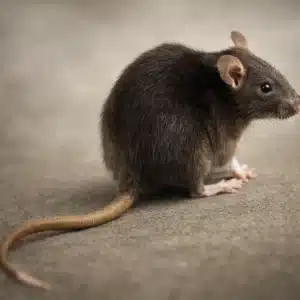
Brown Rat Appearance
The brown rat is larger and heavier than the black rat and has several distinct physical characteristics that help with identification.
Brown Rat Features
- Thick and heavy body structure
- Adults can weigh up to 500 grams
- Body length reaches up to 220mm with a tail around 170mm long
- Tail is shorter than the combined head and body length
- Pale underside on the tail
- Small hairy ears
- Blunt and rounded nose
Young brown rats are sometimes mistaken for mice, but they usually have noticeably larger feet and a bigger head compared to their body size.
Black Rat Appearance
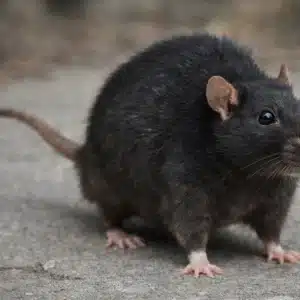
The black rat, also known as the roof rat or ship rat, has a slimmer body and different physical features compared to the brown rat.
Black Rat Features
- Slender and lightweight body
- Adults weigh up to 300 grams
- Body length up to 200mm with a tail around 220mm long
- Tail is longer than the combined head and body length
- Large thin ears
- Pointed nose and narrow face
Black rats are excellent climbers and are commonly found in roof spaces, ceilings, and elevated areas of buildings
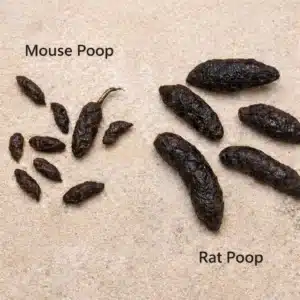
How To Distinguish Mouse and Rat Droppings
Rodent droppings are often one of the earliest signs of a rat or mouse infestation. The size, shape, and location of droppings can help identify whether the problem involves rats or mice.
Mouse Droppings
- Small and shaped like a grain of rice
- Usually around ¼ inch long
- Pointed at both ends
- Commonly found in large numbers
- Often located near food sources, cupboards, nesting areas, and along travel routes
Rat Droppings
- Larger than mouse droppings
- Usually ½ to ¾ inch long
- Blunt, capsule-shaped, or football-like appearance
- Roof rat droppings may have pointed ends with a slight curve
- Typically found in smaller numbers compared to mice
- Commonly discovered near feeding areas, roof spaces, basements, and hidden corners
Whether dealing with rats or mice, rodent droppings should always be handled carefully. Rodent waste can carry harmful bacteria and diseases that may affect human health. Always wear gloves and a protective mask when cleaning droppings, and disinfect the affected area using a suitable disinfectant spray to reduce contamination risks safely.
Rat Vs Mouse Eating Habits
Rats and mice are omnivorous rodents, but each species has different feeding preferences and behaviours that can help with identification and control.
Brown Rat
- Mainly prefers cereals and grains
- Cuts grain while eating, making it appear chopped
- Drinks around 60ml of water daily
- Usually feeds in the same locations repeatedly, making bait placement easier
- Shows neophobia, meaning it is cautious of new foods, traps, or environmental changes and may avoid new bait initially
Black Rat
- Prefers moist foods such as fruits and vegetables
- Also cuts grain when feeding
- Drinks approximately 30ml of water per day
- Rarely feeds in the same spot on consecutive nights, making control more challenging
- Requires several small bait stations with fresh moist food that must be replaced regularly
- Displays neophobia and may avoid unfamiliar traps or bait
Mouse
- Primarily feeds on cereals and grains
- Nibbles grain by removing the outer husk to eat the soft inner part
- Often searches for food in the same locations
- Can survive with little water, drinking only about 3ml daily if available
- Highly curious and more willing to try new foods and bait
- May visit multiple food sources in one night and feed many times in small amounts throughout the night

Where Do Rats and Mice live?
Different rodent species prefer different nesting and shelter locations depending on their behaviour and environment.
Brown Rat
Brown rats usually live at ground level and commonly build burrows in soil, especially near water sources, gardens, drains, and building foundations. They are frequently found in sewers and underground areas where their burrowing can cause structural damage. Inside buildings, brown rats may nest in lofts, wall cavities, basements, and storage areas, using shredded paper, fabric, and other soft materials to build nests.
Black Rat
Black rats, also known as roof rats or ship rats, are excellent climbers and prefer elevated nesting areas. They are commonly found in roof voids, ceilings, attics, warehouses, and buildings near ports. In tropical regions, black rats often live in trees, orchards, and wooded areas. Their climbing ability allows them to move easily through roofs, cables, and branches.
House Mouse
House mice usually live close to food and shelter sources. Outdoors, they create burrows in soil, while indoors they nest in hidden undisturbed spaces such as cupboards, furniture, roof voids, boxes, wall cavities, and beneath floorboards. Mice use shredded paper, cardboard, insulation, and fabric as nesting materials and can easily climb walls and pipes to access safe hiding areas.
Rat vs. Mouse Lifespans And Litters
The life cycle of rats and mice plays a major role in how quickly infestations spread inside homes and commercial properties. Both rodents reproduce rapidly, making early rodent control important.
Lifespan
- Rats typically live for about one year in outdoor environments due to predators and harsh conditions
- Indoors, rats may survive for up to three years where food, water, and shelter are easily available
- Mice usually live around one year outdoors but can survive two to three years inside buildings with fewer threats
Reproduction and Litter Sizes
- Mice are extremely fast breeders
- A female mouse can produce 5–10 litters annually with around 5–12 pups per litter
- Rats generally produce 4–6 litters each year with approximately 6–10 pups per litter
- Mice reach sexual maturity in about 6 weeks, while rats take around 12 weeks
Breeding Behaviour
- House mice often breed throughout the year indoors where conditions remain warm and safe
- Outdoor breeding usually increases during spring, summer, and autumn
- Rats follow a similar seasonal breeding pattern influenced by food, water availability, and shelter conditions
Because rats and mice reproduce quickly, even a small infestation can rapidly become a serious rodent problem if left untreated.
Diseases Transmitted By Rats vs. Mouse
Rats and mouse infestations can spread a range of diseases that pose serious health risks to humans. Both rodents contaminate food, surfaces, and storage areas through their urine, saliva, and droppings, increasing the risk of infection inside homes and businesses.
Diseases Spread by Rats
Rats are known carriers of several dangerous diseases, including:
- Leptospirosis
- Salmonellosis
- Hantavirus
- Rat-bite fever
Leptospirosis may cause flu-like symptoms and, in severe cases, kidney or liver damage. Rat-bite fever, spread through rat saliva or droppings, can lead to fever, vomiting, headaches, and muscle pain. Historically, rats and their fleas were also associated with the spread of plague outbreaks.
Diseases Spread by Mouse
Mouse infestations are commonly linked to hantavirus, a serious respiratory illness caused by inhaling particles from mouse droppings, urine, or nesting materials. Mouse activity can also spread salmonellosis and lymphocytic choriomeningitis (LCMV), a viral infection that may lead to neurological complications in severe cases.
Because rodents can spread harmful bacteria and diseases, professional rodent control is important for maintaining a safe and hygienic environment.
Tips To Help Prevent And Remove Mice And Rats
Preventing rodent infestations requires regular maintenance and proactive pest prevention measures. These simple steps can help keep rats and mice away from your home or business.
Seal Entry Points: Inspect your property for cracks, holes, and gaps larger than a quarter inch. Seal openings around doors, windows, vents, pipes, and utility entry points using steel wool, mesh, or caulking materials to block rodent access.
Store Food Properly: Keep food stored in airtight containers and clean up crumbs, spills, and food waste quickly. Avoid leaving pet food exposed overnight, as it can attract rodents.
Reduce Clutter : Remove unnecessary cardboard boxes, paper piles, and clutter that may provide hiding or nesting areas for rats and mice.
Maintain Outdoor Areas : Keep firewood stored away from the building, trim overgrown vegetation, and clear leaves or debris near walls and foundations to reduce outdoor rodent shelter areas.
Use Traps Correctly : Place traps near walls, corners, and areas with signs of rodent activity. Peanut butter, grains, or seeds are commonly used as effective bait.
Remove Water Sources : Fix leaking taps, repair plumbing issues, improve drainage, and dry damp areas to make your property less attractive to rodents seeking water and shelter.
Professional Rodent Control Solutions
Whether you are dealing with rats or mice, acting quickly is essential to prevent serious property damage, food contamination, and health risks. Rodents reproduce rapidly and can spread harmful bacteria throughout your home or business if left untreated. At EMK Termite & Pest Control Sydney, our professional rodent control specialists accurately identify the rodent species, locate nesting and entry points, and provide customised treatment solutions designed for long-term protection.
Don’t wait until the infestation becomes worse. Protect your family, property, and business today with fast, safe, and effective rodent control services from EMK Termite & Pest Control Sydney. Call our expert team now to book your inspection and take the first step toward a completely rodent-free environment.
What Our Customers Had To Say
 Posted on Google
 Rami Anwer
Trustindex verifies that the original source of the review is Google.
We had such a great experience with the pest control service. From start to finish, everything was quick, easy and completely hassle-free. The team were professional, friendly and made the whole process so simple. We’re really happy with the results and the quality of the service we received from Eevil. I would definitely recommend EMK to anyone looking for a reliable pest control company!Posted on Google Rena NajimReally happy with the service today. Professional, friendly and did a great job. Would definitely recommend!Posted on Google
 David DavidEMK provided excellent pest control service. He was professional, punctual, and knowledgeable, explained the process clearly, and ensured it was safe for our family and pets. We saw great results straight away. Friendly, reliable, and highly recommended.Posted on Google
 Ann TranWe highly recommend EMK Termite and Pest Control Sydney. Great service, great prices, friendly and very accommodating. They are very thorough and take pride in their work. Cannot rate them high enough. 5 stars 🌟Posted on Google
 Charlton DurieI had these guys come and sort a termite issue. They got the job done. Thanks again!Posted on Google
 David MarshSuper happy with EMK for getting rid of such a horrible termite infestation! Professional and very friendly.Posted on Google
 Michael ZammitJust had EMK come out to do a rodent control treatment. The service and professionalism was superb!Verified by TrustindexTrustindex verified badge is the Universal Symbol of Trust. Only the greatest companies can get the verified badge who has a review score above 4.5, based on customer reviews over the past 12 months. Read more
About The Author

EMK Termite & Pest Control Team
EMK Termite & Pest Control Team is a licensed and experienced pest control service provider based in Sydney, Australia. Our team specialises in termite treatment, cockroach control, spider control, and general pest management for residential and commercial properties.
With years of hands-on experience, we follow Australian safety standards and use proven, eco-friendly pest control methods to deliver long-lasting results. All content published on this website is written and reviewed by trained pest control professionals to ensure accuracy, safety, and real-world expertise.