
Content Updated: May 27, 2026
Common Types of Spiders in Australia
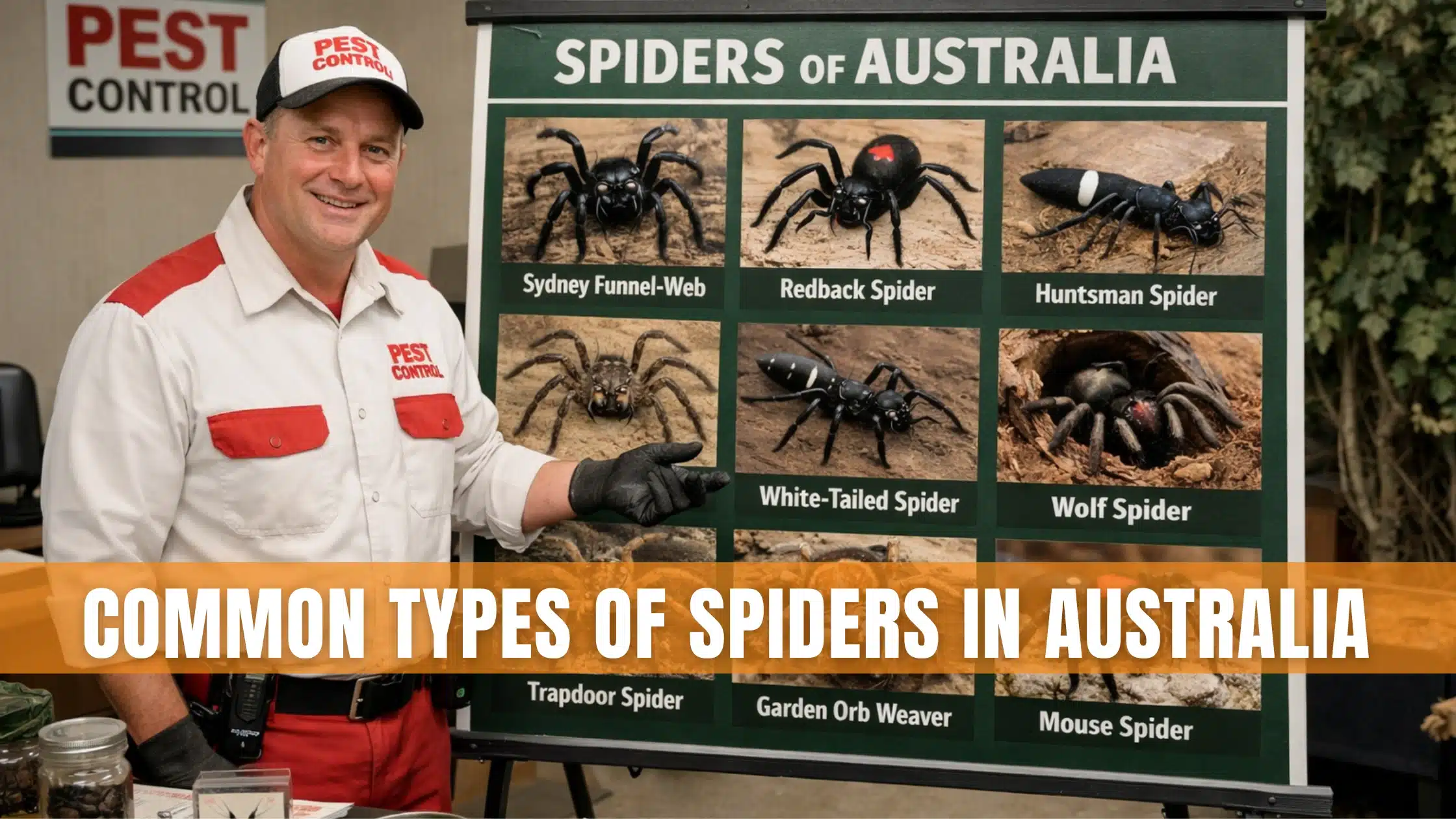
From coastal suburbs to remote bushland, Australia hosts an extraordinary range of spider species many exclusive to this continent. Knowing how to identify the types of spiders in Australia isn’t just fascinating; it’s a practical safety skill every household needs.
Different spiders carry different risks. Some are completely harmless neighbours, while others demand immediate caution. Recognising key traits like body shape, colouring, web style, and preferred habitat allows you to make informed decisions rather than react out of fear.
This guide walks you through Australia’s most frequently encountered spider species, covering their distinct appearances, typical behaviours, and the environments they favour. Whether you spot one inside your home, beneath outdoor furniture, or hiding in garden foliage, confident identification starts here.
Of course, identification is only the first step. If spiders are appearing frequently around your property, professional spider control services provide targeted, long-lasting protection suited to Australian homes and climates. Combining solid species knowledge with timely expert intervention is the most effective approach to keeping your living spaces safe.
Start exploring below and know exactly when to handle it yourself, and when to call a professional.
Common spiders found in Australia
Australia is one of the most spider-diverse nations on Earth. While most species are completely harmless, knowing exactly what’s sharing your space brings genuine peace of mind. Below are the most commonly encountered Australian spider species:
Venomous & High-Risk Spiders
- Funnel Web Spider
- Tree Funnel Web Spider
- Redback Spider
- Mouse Spider & Red-Headed Mouse Spider
Common Household Spiders
- Black House Spider
- Common House Spider
- Daddy Long Legs Spider
- White-Tailed Spider
Garden & Outdoor Spiders
- Garden Orb-Weaving Spider
- St Andrews Cross Spider
- Wolf Spider
- Trap Door Spider
- Huntsman Spider
Unique & Lesser-Known Species
- Tarantulas
- Harvestman Spider
- Scorpions (1,100+ species)
The good news? The vast majority of Australian spiders pose little to no threat to humans. Most simply prefer dark corners, garden shrubs, or outdoor crevices — far from human interaction.
That said, webs, frequent sightings, and unidentified species can understandably cause concern. Whether you’re facing a Huntsman on your ceiling or suspecting a Funnel Web near your home, understanding each species helps you respond smartly and without unnecessary fear.
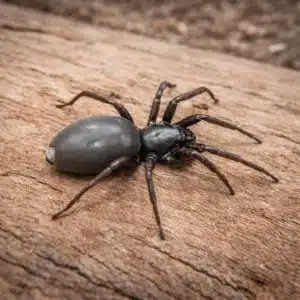
White-Tailed Spider (Lampona cylindrata) — Identification, Behaviour & Bite Facts
What Does a White-Tailed Spider Look Like?
The White-Tailed Spider is a native Australian species instantly recognisable by its sleek, cylindrical body. Adults typically grow between 1–2 cm in length, displaying a dark brown to black colouring with one defining feature , a distinctive creamy-white spot at the tail of the abdomen. This marking is precisely what gives the species its common name.
Hunting Behaviour & Diet
Unlike web-building spiders, the White-Tailed Spider is an active, roaming predator. It hunts primarily after dark, pursuing other spiders and arachnids rather than insects. It immobilises prey by injecting venom, an efficient strategy that makes it a natural controller of other spider populations around your home.
Are White-Tailed Spider Bites Dangerous?
This is one of Australia’s most misunderstood species. While a White-Tailed Spider bite can produce localised redness, mild swelling, or temporary discomfort, scientific research does not support the long-held belief that their venom causes necrotic arachnidism (flesh destruction). Most bites resolve without serious medical treatment.
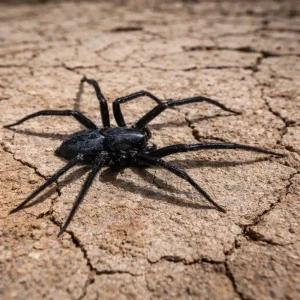
Black House Spider (Badumna insignis) — Identification, Habitat, Lifecycle & Bite Risk
How to Identify a Black House Spider
The Black House Spider is one of Australia’s most frequently encountered domestic species. True to its name, it has a predominantly dark, almost jet-black appearance with a noticeably bulbous abdomen and long, slender legs. Females reach approximately 1.5 cm in body length, while males are slightly smaller. Despite their intimidating appearance, understanding this species helps separate fact from fear.
Where Do Black House Spiders Live?
This adaptable species thrives across a broad range of environments , from garden shrubs and timber fences to sheds, garages, and indoor corners. Inside homes, Black House Spiders favour cool, dry, undisturbed spaces such as wall cavities, window frames, and ceiling eaves. Their irregular, funnel-shaped webs are a telltale sign of their presence.
Black House Spider Lifecycle
The Black House Spider has a relatively brief lifespan of around 18 months. Following mating, females produce a distinctive silk egg sac housing up to 300 eggs, secured directly onto their web. Once hatched, spiderlings disperse using a remarkable technique called ballooning ,releasing fine silk threads that catch air currents, carrying them to entirely new locations. This explains why infestations can spread quickly across a property.
Are Black House Spider Bites Dangerous?
The Black House Spider carries a moderate risk rating. While their venom is not considered life-threatening, bites can trigger localised pain, swelling, redness, and in some cases, nausea or dizziness. Anyone bitten should seek prompt medical attention to prevent complications and ensure appropriate care.
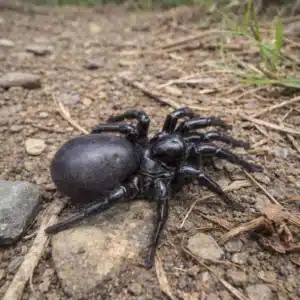
Funnel Web Spider — Identification, Danger Rating & What To Do If Bitten
Identifying the Funnel Web Spider
The Funnel Web Spider is one of Australia’s most recognised and feared species — and for good reason. This large, powerfully built spider displays a distinctive dark brown to black colouring, prominent curved fangs, and visible spinnerets at the rear of its abdomen. Females grow up to 3.5 cm, while males average between 1.5–2 cm.
Habitat & Behaviour
Funnel Webs favour cool, moist, sheltered environments including bushland, garden beds, rock crevices, and underground burrows. Unlike many Australian spiders, this species is notably aggressive when threatened , rearing up and striking with little hesitation.
How Dangerous Is the Funnel Web Spider?
Extremely. Rated 15 out of 20 on the danger scale, the Funnel Web Spider ranks among the world’s most venomous spiders. Its venom contains a powerful neurotoxin that rapidly attacks the human nervous system, potentially triggering severe pain, excessive sweating, elevated heart rate, and life-threatening complications if treatment is delayed.
Garden Orb-Weaving Spider — Identification, Habitat & Bite Facts
How to Identify a Garden Orb-Weaving Spider
The Garden Orb-Weaving Spider is one of Australia’s most visually striking backyard residents. Its most defining feature is a large, rounded abdomen decorated with bold patterns in vivid shades of yellow, orange, and black. Their considerable size and vibrant colouring make them one of the easier Australian spider species to identify at a glance.
Where Do Garden Orb Weavers Live?
True to their name, Garden Orb-Weaving Spiders favour lush outdoor environments — thriving in gardens, open meadows, and bushland edges where prey is abundant. They construct impressively large, circular webs positioned horizontally above ground level, engineered precisely to intercept flying insects. During daylight hours, these spiders retreat to a sheltered position nearby, returning to their webs after dark to feed.
Are Garden Orb-Weaving Spiders Dangerous?
Despite their bold appearance, Garden Orb Weavers are entirely non-aggressive toward humans. They will only bite as a last resort when directly handled or cornered. Even then, their bite produces nothing more than mild, short-lived discomfort broadly comparable to a minor insect sting ,and requires no medical treatment in healthy adults.
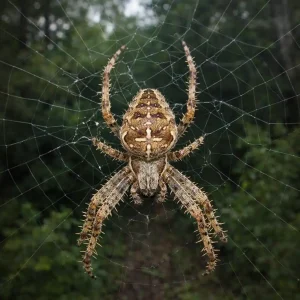
Huntsman Spider — Identification, Behaviour, Habitat & Facts
How to Identify a Huntsman Spider
Few Australian spiders command attention quite like the Huntsman. Characterised by a broad, flattened body and an impressive leg span reaching 10–15 cm, this is one of the largest spider species on the planet. Colouring ranges across brown, grey, and black tones, natural camouflage that allows Huntsmans to blend seamlessly into bark, walls, and timber surfaces. Their eyes are arranged in two distinct rows, providing an exceptionally wide field of vision that makes them highly alert predators.
Hunting Behaviour & Diet
What sets the Huntsman Spider apart from most Australian species is its hunting strategy. Rather than constructing webs to snare prey, Huntsmans rely entirely on speed, stealth, and agility. They actively stalk and ambush insects across virtually any surface — walls, ceilings, floors, and outdoor terrain alike. This free-roaming approach makes them surprisingly effective natural pest controllers inside and around the home.
Habitat & Nesting Preferences
Huntsman Spiders are remarkably adaptable, occupying a diverse range of environments across Australia’s warm climate zones. Outdoors, they shelter beneath loose bark, rock ledges, and dense foliage. Indoors, they gravitate toward dark, undisturbed spaces — wall cavities, behind furniture, and inside garages or sheds. Their flat body profile allows them to squeeze into surprisingly narrow gaps, making them frequent uninvited houseguests.
Huntsman Spider Lifecycle
Huntsmans undergo a structured lifecycle beginning with egg-laying, followed by hatching into spiderlings, and progressing through multiple moults before reaching full maturity. Females are notably protective mothers, actively guarding their egg sacs rather than abandoning them — a relatively uncommon trait among Australian spider species.
Are Huntsman Spiders Dangerous?
Despite their intimidating size, Huntsman Spiders pose minimal risk to humans. They are not aggressive by nature and will typically retreat rather than confront. While a defensive bite can produce localised swelling and temporary discomfort, their venom is not considered medically dangerous to healthy adults. Their startling appearance causes far more distress than their bite ever would.
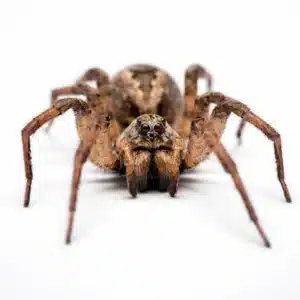
Mouse Spider — Identification, Habitat, Venom & Bite Risk
Identifying the Mouse Spider
The Mouse Spider earns its name from its distinctively stocky, mouse-like build, a compact, robust body paired with noticeably short legs. Adults range between 1–3 cm in length, with females consistently larger than their male counterparts. Their solid, heavy appearance makes them one of Australia’s more recognisable burrowing spider species.
Habitat & Distribution
Mouse Spiders are widely distributed across Australia, with established populations throughout New South Wales, Queensland, South Australia, and Victoria. They favour moist, sandy soils near coastal dunes and riverbanks, constructing deep, silk-lined burrows as permanent shelters. During mating season, males abandon their burrows and roam actively in search of females increasing the likelihood of human encounters.
Diet & Hunting Behaviour
As opportunistic ground predators, Mouse Spiders prey on insects including beetles, crickets, and ants. They immobilise prey by injecting venom directly, an efficient hunting method that also makes their bite potentially hazardous to humans.
How Dangerous Is the Mouse Spider?
Significantly. Mouse Spider venom closely resembles that of the Sydney Funnel Web, one of the world’s most toxic spider venoms. A bite can trigger intense localised pain, pronounced swelling, excessive sweating, and nausea. Without prompt treatment, symptoms can escalate to life-threatening levels.
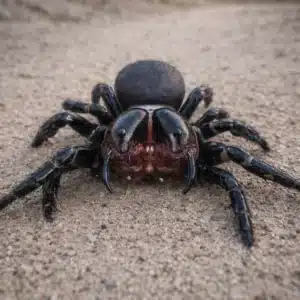
Redback Spider (Latrodectus hasseltii) — Identification, Habitat & Venom Facts
Identifying the Redback Spider
The Redback Spider is one of Australia’s most instantly recognisable venomous species. Females display a vivid red or orange hourglass-shaped marking along their abdomen , a natural warning signal to predators and a key identification feature for humans. Males are considerably smaller and lack this distinctive marking.
Where Do Redback Spiders Hide?
Redbacks actively seek dark, sheltered environments close to human activity. Common hiding spots include garages, garden sheds, outdoor furniture, empty containers, and the underside of eaves. Their preference for residential environments makes accidental encounters surprisingly common.
Diet & Venom
Redback Spiders are fierce carnivorous predators despite their small size. Their diet spans beetles, flies, and cockroaches, extending occasionally to skinks and small frogs. Their highly potent venom immobilises prey rapidly and poses genuine medical risk to humans if a bite goes untreated.
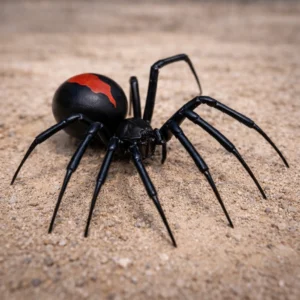
St Andrew's Cross Spider (Argiope keyserlingi) — Identification, Behaviour & Facts
Identifying the St Andrew’s Cross Spider
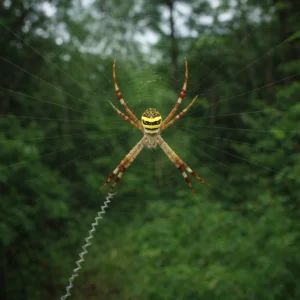
The St Andrew’s Cross Spider is one of Australia’s most visually distinctive backyard species. Females grow to approximately 2 cm in body length, showcasing a striking abdomen banded with alternating yellow, black, and white markings. Males are considerably smaller and far less conspicuous.
The Iconic Web Design
This species earns its name from the remarkable cross-shaped silk pattern woven directly into its angled orb web , four diagonal lines intersecting at the centre, mirroring the cross of St Andrew. Beyond appearance, this web structure serves a practical purpose , its silk reflects ultraviolet light, actively attracting flying insects and significantly improving hunting efficiency.
Habitat & Danger Rating
St Andrew’s Cross Spiders thrive across gardens, grasslands, and open woodland environments throughout Australia. Despite their bold appearance, they present minimal risk to humans or pets. Bites are rare and produce only brief, mild discomfort requiring no medical intervention.
Trapdoor Spider — Identification, Behaviour, Habitat & Facts
Identifying the Trapdoor Spider
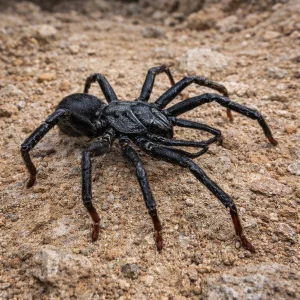
The Trapdoor Spider is one of Australia’s most ingeniously built arachnids. Measuring between 1–3 cm in body length, its most extraordinary feature is a precisely constructed hinged burrow entrance, a camouflaged cork-like door that conceals the spider entirely from both predators and passing prey.
Habitat & Burrowing Behaviour
Trapdoor Spiders favour warm, dry environments including grasslands, open forests, and desert-fringe zones. They excavate burrows directly into soil, positioning them strategically near rocks or vegetation for additional structural support and concealment. Unlike roaming hunters, this species spends the overwhelming majority of its life underground.
Ambush Hunting Strategy
The Trapdoor Spider is a masterful ambush predator. Remaining motionless inside its sealed burrow, it detects ground vibrations from approaching prey then strikes with remarkable speed, seizing victims in powerful fangs before retreating instantly. Beetles, ants, and termites form the core of its diet.
Lifespan & Reproduction
Remarkably long-lived, certain Trapdoor Spider species survive up to 20 years. Courtship involves elaborate rituals including leg drumming, silk signalling, and direct tactile communication between potential mates.
Cupboard Spider (Brown House Spider) — Identification, Behaviour & Control
Identifying the Cupboard Spider
The Cupboard Spider, commonly referred to as the Brown House Spider, is a frequent and unwelcome resident in Australian homes. Recognised by its uniform brown colouring and compact body, this small yet prolific species establishes itself quietly in domestic environments throughout the year.
Behaviour & Web Building
Strictly nocturnal, Cupboard Spiders remain concealed during daylight hours, emerging after dark to maintain their irregular, tangled webs. These messy web structures are typically found in dark corners, inside cupboards, behind furniture, and within wall cavities precisely the undisturbed spaces this species seeks out. While naturally non-aggressive, they will deliver a mild venomous bite if directly handled or threatened.
Lifecycle & Lifespan
Females lay eggs within a protective silk sac, guarding it attentively until spiderlings emerge. Juveniles progress through several months before reaching maturity, with adults living approximately one to two years.
Why Are They So Common Indoors?
Cupboard Spiders thrive in warm, dry conditions making heated Australian homes an ideal year-round habitat. Their preference for concealed, low-traffic areas means infestations often go unnoticed until populations become well established.
Australian Wolf Spider (Lycosa godeffroyi) — Identification, Habitat & Bite Facts
Identifying the Australian Wolf Spider
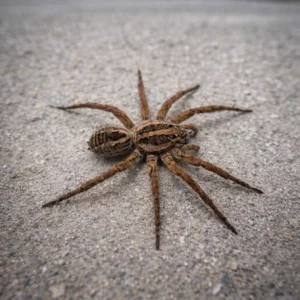
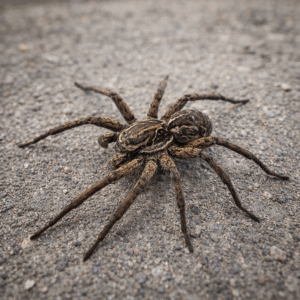
The Australian Wolf Spider is a robust, ground-dwelling species found across the entire continent. Its thick, hair-covered body reaches up to 2 cm in length, displaying earthy tones ranging from dark brown to grey often accompanied by subtle patterning across the abdomen. This natural camouflage makes them remarkably difficult to spot against soil and leaf litter.
Habitat & Hunting Behaviour
Wolf Spiders occupy an exceptionally diverse range of Australian environments, from coastal grasslands and dense forests through to arid desert regions. During daylight hours they shelter inside shallow burrows, emerging after dark as active, free-roaming hunters. Rather than relying on webs, they pursue insects, smaller spiders, and invertebrates directly making them highly efficient nocturnal predators.
Are Wolf Spider Bites Dangerous?
Wolf Spider bites are painful but not life-threatening. Symptoms typically include localised swelling, redness, and irritation that resolve naturally within several days. Medical attention is advisable if symptoms persist or worsen.
EMK’s Spider Pest Control Services
At EMK Termite & Pest Control Sydney, we deliver reliable, results-driven spider control services for both residential and commercial properties across Australia. Our fully trained technicians apply advanced treatment methods and industry-approved products to eliminate spider infestations safely and effectively regardless of species or severity.From dangerous Funnel Webs and Redbacks to common household spiders, EMK provides comprehensive protection tailored to your specific property needs.
Don’t let spiders compromise your family’s safety or business environment. Trust EMK’s experienced pest control team to safeguard your space and deliver lasting peace of mind all year round.
What Our Customers Had To Say
 Posted on Google
 Rami Anwer
Trustindex verifies that the original source of the review is Google.
We had such a great experience with the pest control service. From start to finish, everything was quick, easy and completely hassle-free. The team were professional, friendly and made the whole process so simple. We’re really happy with the results and the quality of the service we received from Eevil. I would definitely recommend EMK to anyone looking for a reliable pest control company!Posted on Google Rena NajimReally happy with the service today. Professional, friendly and did a great job. Would definitely recommend!Posted on Google
 David DavidEMK provided excellent pest control service. He was professional, punctual, and knowledgeable, explained the process clearly, and ensured it was safe for our family and pets. We saw great results straight away. Friendly, reliable, and highly recommended.Posted on Google
 Ann TranWe highly recommend EMK Termite and Pest Control Sydney. Great service, great prices, friendly and very accommodating. They are very thorough and take pride in their work. Cannot rate them high enough. 5 stars 🌟Posted on Google
 Charlton DurieI had these guys come and sort a termite issue. They got the job done. Thanks again!Posted on Google
 David MarshSuper happy with EMK for getting rid of such a horrible termite infestation! Professional and very friendly.Posted on Google
 Michael ZammitJust had EMK come out to do a rodent control treatment. The service and professionalism was superb!Verified by TrustindexTrustindex verified badge is the Universal Symbol of Trust. Only the greatest companies can get the verified badge who has a review score above 4.5, based on customer reviews over the past 12 months. Read more
About The Author

EMK Termite & Pest Control Team
EMK Termite & Pest Control Team is a licensed and experienced pest control service provider based in Sydney, Australia. Our team specialises in termite treatment, cockroach control, spider control, and general pest management for residential and commercial properties.
With years of hands-on experience, we follow Australian safety standards and use proven, eco-friendly pest control methods to deliver long-lasting results. All content published on this website is written and reviewed by trained pest control professionals to ensure accuracy, safety, and real-world expertise.