
Content Published : July 22, 2026
What Do Termite Queen Look Like?
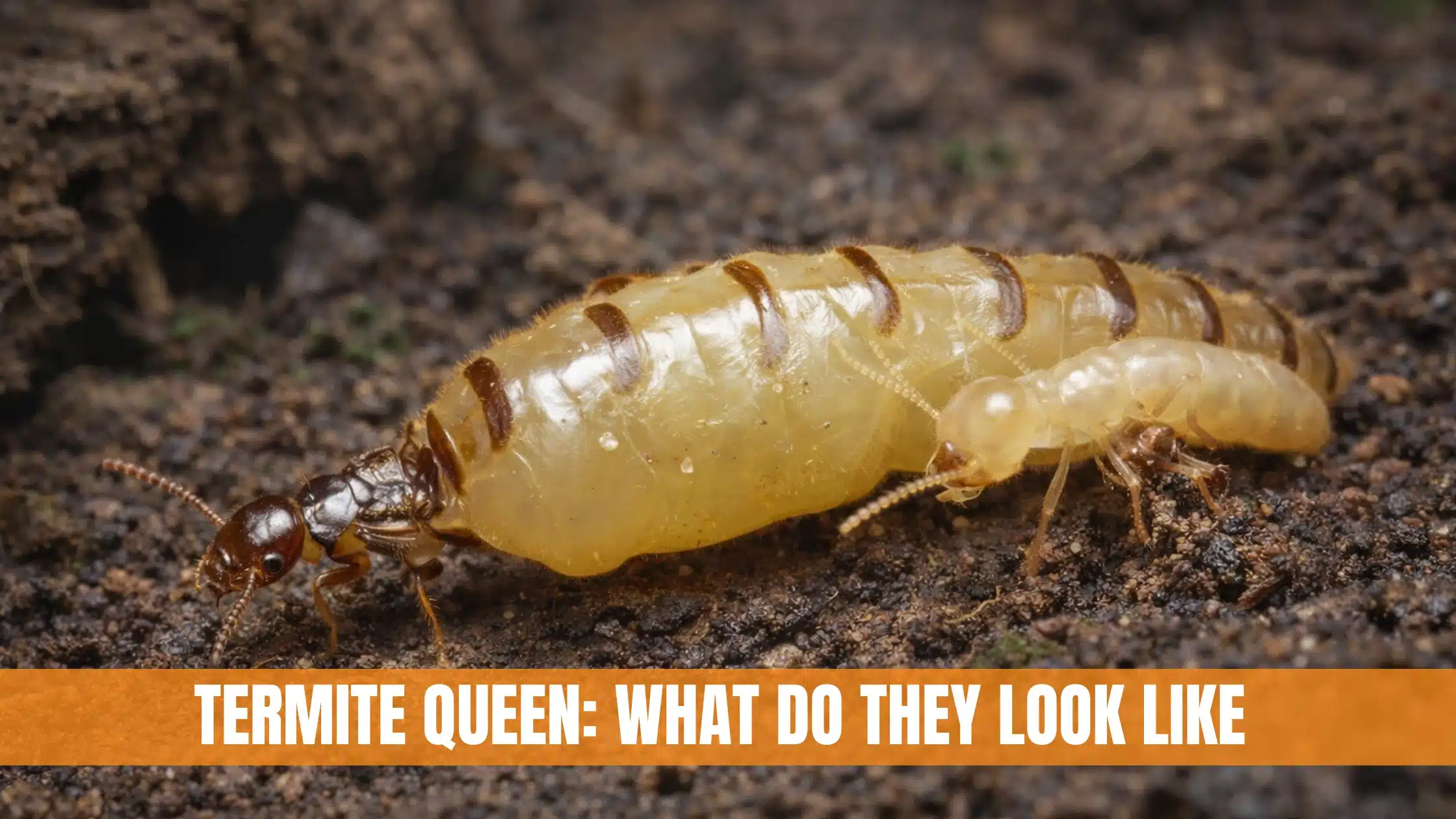
Termite queens are the largest and most important members of a termite colony, responsible for its growth and survival. Their primary role is to lay thousands of eggs throughout their lifetime, ensuring the colony continues to expand. Unlike worker or soldier termites, the queen rarely leaves her chamber and is unable to move freely due to her enlarged body. Instead, worker termites constantly feed, groom, and protect her from threats, allowing her to focus entirely on reproduction. A healthy termite queen can live for many years, making her one of the longest-living insects in the colony. As long as the queen remains active, the termite population continues to grow, increasing the risk of structural damage to your property. Understanding the lifespan and role of a termite queen can help homeowners recognise why termite infestations become so severe over time. If you notice signs such as mud tubes, damaged timber, hollow-sounding wood, or discarded wings, it may indicate an active termite colony. Scheduling a professional termite treatment and timely termite inspection can prevent costly repairs and protect your Sydney home from ongoing termite damage.
Identifying Termite Queens
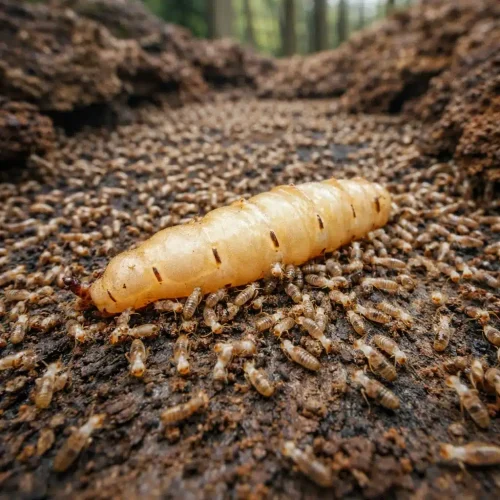
Termite queens are rarely seen because they remain hidden deep inside the colony within protected underground chambers. Unlike worker or soldier termites that travel throughout the nest, the queen stays in a secure location where she is cared for by worker termites. In large subterranean and Formosan termite colonies, there may even be several supplementary queens supporting the main queen to increase egg production. By comparison, drywood termite colonies are generally smaller and have a single queen.
Although spotting a queen termite is uncommon, there are several characteristics that distinguish her from the rest of the colony:
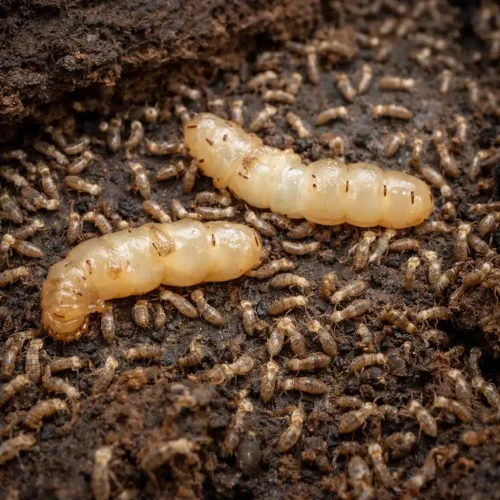
- Size: A termite queen is significantly larger than other termites. As she produces thousands of eggs, her abdomen expands dramatically, growing up to four inches long and two to three inches wide, while her head and legs remain relatively small.
- Colour: Queen termites are darker than worker termites. Subterranean termite queens are usually pale white or cream, whereas drywood termite queens are yellowish-brown.
- Behaviour: The queen spends her entire life inside the nest chamber, continuously laying eggs to ensure the colony’s survival and growth. She relies on worker termites for feeding, grooming, and protection.
Because queen termites are hidden deep within the nest, professional termite inspections are the most effective way to detect and eliminate an active infestation before it causes serious structural damage.
The Life Cycle And Reign Of The Termite Queen
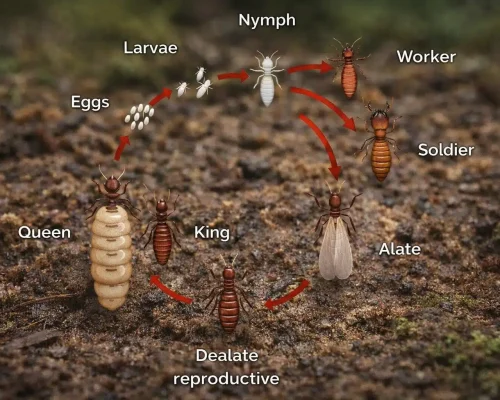
The lifecycle of a termite queen is essential to the survival and growth of the entire colony. From the moment she mates until the end of her life, her primary responsibility is to reproduce and ensure the colony continues to expand. Below are the key stages of a termite queen’s lifecycle.
- Nuptial Flight (Mating Stage): Flying termites, called alates, leave their parent colony during warm, humid weather to mate. After mating, the female sheds her wings and searches for a suitable nesting site with the king termite.
- Colony Establishment: The queen and king create a small nest underground or inside timber. The queen lays her first eggs, while the king stays with her as the first worker termites develop and begin building the colony.
- Egg-Laying Stage: As the colony expands, the queen’s abdomen enlarges, enabling her to lay thousands of eggs throughout her life, ensuring continuous colony growth.
- Larval Development: The eggs hatch into larvae, which are fed and protected by worker termites until they mature.
- Caste Development: The larvae develop into workers that maintain the nest, soldiers that defend the colony, or winged reproductives that establish new colonies.
- Mature Queen Stage: Once fully developed, the queen remains inside the nest, laying eggs while worker termites feed, groom, and protect her.
- Replacement Queen Stage: If the primary queen dies or weakens, replacement queens may develop to continue reproduction and maintain the colony.
- Ageing: A termite queen can live for 10–25 years or more. As egg production declines with age, the colony gradually weakens unless a healthy replacement queen takes over.
How Many Eggs Do Termite Queen Lays?
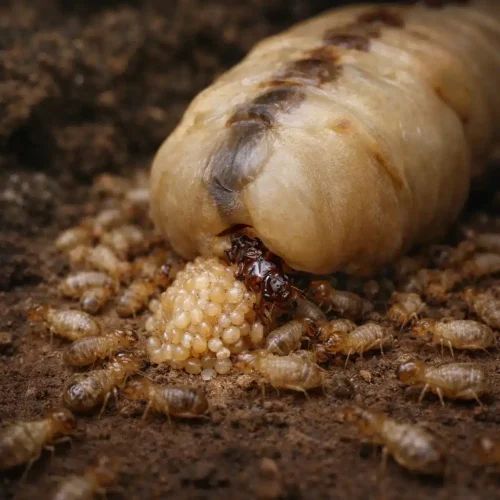
A termite queen is the reproductive heart of the colony, capable of laying an astonishing number of eggs throughout her lifetime. Once the colony is established, her primary role is to produce new termites, allowing the colony to grow rapidly. Under ideal conditions, a healthy queen can lay up to 25 eggs per minute, around 30,000 eggs per day, and more than 11 million eggs each year. This incredible egg-laying ability enables termite colonies to expand quickly and increases the risk of severe property damage if left untreated.
Even more remarkable is the queen’s lifespan. Depending on the termite species, she can live for 10 to 25 years or longer, producing an estimated 165 million eggs during her lifetime. Hidden safely within the nest, she is constantly fed and protected by worker termites while focusing solely on reproduction. As long as the queen remains alive, the colony continues to thrive, making early termite inspections and professional termite control essential to prevent extensive infestations and costly structural damage.
Egg-Laying Process of a Termite Queen
The termite queen follows a continuous egg-laying process that allows the colony to grow rapidly. Here’s how it works:
Step 1: Selecting a Nesting Chamber
The queen chooses a protected area inside the nest with ideal temperature and humidity, creating the perfect environment for egg development.
Step 2: Laying the Eggs
Using a specialised organ called an ovipositor, the queen lays hundreds to thousands of eggs each day. In warm climates, egg-laying continues year-round and often increases during the rainy season.
Step 3: Worker Termites Care for the Eggs
Worker termites collect, clean, and protect the eggs while maintaining the right conditions for successful hatching.
Step 4: Eggs Hatch into Larvae
The eggs hatch into tiny larvae, which are continuously fed and groomed by worker termites until they mature.
Step 5: Colony Growth
The larvae develop into workers, soldiers, or reproductive termites. The queen continues laying eggs throughout her life, allowing the colony to expand and increase the importance of early termite inspections and professional termite control.
How To Locate a Termite Queen?
The termite queen lives deep inside the colony in a protected royal chamber, usually located underground or within timber. Because her abdomen becomes greatly enlarged from continuous egg production, she cannot move around the nest. This makes her extremely difficult to locate without disturbing the entire colony. The queen shares this central chamber with the king termite, and together they establish the colony before worker termites take over.
Once the colony is established, worker termites assume responsibility for feeding, grooming, and protecting the queen. They also clean her eggs to remove bacteria and soil particles before transferring them to specialised nursery chambers where they hatch into larvae. Workers continually bring food to the queen, allowing her to focus solely on laying thousands of eggs throughout her lifetime. In return, the queen produces nutrient-rich secretions that help nourish the workers. This close relationship ensures the colony continues to grow and thrive, making professional termite inspections essential for detecting hidden termite queens and preventing extensive structural damage to your property.
How Termite Queen Controls The Colony
A termite colony operates through a well-organised social hierarchy, with each caste performing a specific role to ensure the colony’s survival and growth. At the top of this hierarchy is the termite queen, the primary reproductive member responsible for laying thousands of eggs throughout her lifetime. Depending on the termite species, a colony may also have supplementary queens to support reproduction.
The king termite remains with the queen for life, helping establish and maintain the colony. Alates, or winged reproductive termites, leave the nest during swarming season to mate and establish new colonies. The worker termites form the largest group, handling essential tasks such as gathering food, building tunnels, caring for the eggs, and feeding and protecting the queen. Finally, soldier termites defend the colony against predators, particularly ants and other invading insects. This highly structured system allows the queen to focus entirely on reproduction while the other castes work together to maintain and expand the colony, ensuring its long-term survival.
What Happens When the Termite Queen Dies?
The death of a termite queen can have a significant impact on the colony, but the outcome depends on the termite species and the colony’s structure. In large, well-established colonies, there are often supplementary or replacement queens that can take over when the primary queen dies. These reproductive termites continue laying eggs, allowing the colony to survive and maintain its population with little disruption.
However, the situation is very different in smaller or newly established colonies that have only one queen. Without a replacement queen, egg production stops completely, preventing the colony from producing new worker termites, soldier termites, and reproductive termites. As the existing termites age and die, the colony gradually weakens, its population declines, and it may eventually collapse.
In some termite species, a struggling colony may merge with a neighbouring colony through a process known as colony fusion, helping the remaining termites survive. Because replacement queens or colony fusion can allow termites to persist even after the original queen dies, simply eliminating the queen is not always enough. Professional termite inspections and effective termite control are essential to completely eliminate the colony and prevent ongoing structural damage to your property.
How To Get Rid Of Termite Queens
Eliminating a termite queen is crucial for long-term termite control, but it is rarely a simple task. The queen lives deep inside the colony’s protected nest, usually underground or hidden within walls, floors, or timber structures. Because she is constantly guarded by worker and soldier termites, locating and removing her without professional equipment is extremely difficult.
Effective Ways to Eliminate a Termite Queen
- Schedule a Professional Termite Inspection: Experienced technicians use specialised equipment to locate hidden termite colonies and identify the source of the infestation.
- Use Termite Baiting Systems: Worker termites carry bait back to the nest, where it spreads throughout the colony and eventually reaches the queen, eliminating the entire colony over time.
- Apply Targeted Termite Treatments: Depending on the infestation, professionals may use soil treatments, foam applications, or other approved methods to destroy termites and prevent further activity.
- Avoid Disturbing the Colony: DIY treatments often scatter termites, causing them to relocate and making the queen even harder to eliminate.
- Prevent Future Infestations: Regular inspections, reducing moisture, repairing leaks, and removing timber-to-soil contact help prevent new colonies from becoming established.
Since termite queens remain hidden deep within the nest and cannot simply be removed like a bee queen, professional termite control is the safest and most effective way to get rid of termites and eliminate the entire colony to protect your property from costly structural damage.
Conclusion
The termite queen is the heart of every termite colony, responsible for reproduction and the colony’s continued growth. Understanding her lifecycle, behaviour, egg-laying process, and role within the colony can help homeowners recognise why termite infestations spread so quickly. Since the queen remains hidden deep inside the nest, eliminating an infestation requires more than DIY solutions. Professional inspections and targeted treatments are the most effective way to remove the entire colony and protect your property from costly structural damage. EMK Termite & Pest Control Sydney provides reliable termite inspections, advanced termite treatments, and long-term protection for homes and businesses across Sydney. Contact EMK Termite & Pest Control Sydney today to book a professional termite inspection and safeguard your property from destructive termites.
What Our Customers Had To Say
 Posted on Google
 Rami Anwer
Trustindex verifies that the original source of the review is Google.
We had such a great experience with the pest control service. From start to finish, everything was quick, easy and completely hassle-free. The team were professional, friendly and made the whole process so simple. We’re really happy with the results and the quality of the service we received from Eevil. I would definitely recommend EMK to anyone looking for a reliable pest control company!Posted on Google Rena NajimReally happy with the service today. Professional, friendly and did a great job. Would definitely recommend!Posted on Google
 David DavidEMK provided excellent pest control service. He was professional, punctual, and knowledgeable, explained the process clearly, and ensured it was safe for our family and pets. We saw great results straight away. Friendly, reliable, and highly recommended.Posted on Google
 Ann TranWe highly recommend EMK Termite and Pest Control Sydney. Great service, great prices, friendly and very accommodating. They are very thorough and take pride in their work. Cannot rate them high enough. 5 stars 🌟Posted on Google
 Charlton DurieI had these guys come and sort a termite issue. They got the job done. Thanks again!Posted on Google
 David MarshSuper happy with EMK for getting rid of such a horrible termite infestation! Professional and very friendly.Posted on Google
 Michael ZammitJust had EMK come out to do a rodent control treatment. The service and professionalism was superb!Verified by TrustindexTrustindex verified badge is the Universal Symbol of Trust. Only the greatest companies can get the verified badge who has a review score above 4.5, based on customer reviews over the past 12 months. Read more
Frequently Asked Questions (FAQ) About Termite Queen
What is a termite queen?
How long does a termite queen live?
How many eggs can a termite queen lay?
Where does the termite queen live?
What happens if the termite queen dies?
Can you see a termite queen during an infestation?
How do worker termites care for the queen?
Can I eliminate a termite queen myself?
How can I prevent termite colonies from establishing around my home?
When should I contact EMK Termite & Pest Control Sydney?
About The Author

EMK Termite & Pest Control Team
EMK Termite & Pest Control Team is a licensed and experienced pest control service provider based in Sydney, Australia. Our team specialises in termite treatment, cockroach control, spider control, and general pest management for residential and commercial properties.
With years of hands-on experience, we follow Australian safety standards and use proven, eco-friendly pest control methods to deliver long-lasting results. All content published on this website is written and reviewed by trained pest control professionals to ensure accuracy, safety, and real-world expertise.