
Content Updated: June 9, 2026
Indication of Termites Every Sydney Homeowner Must Know
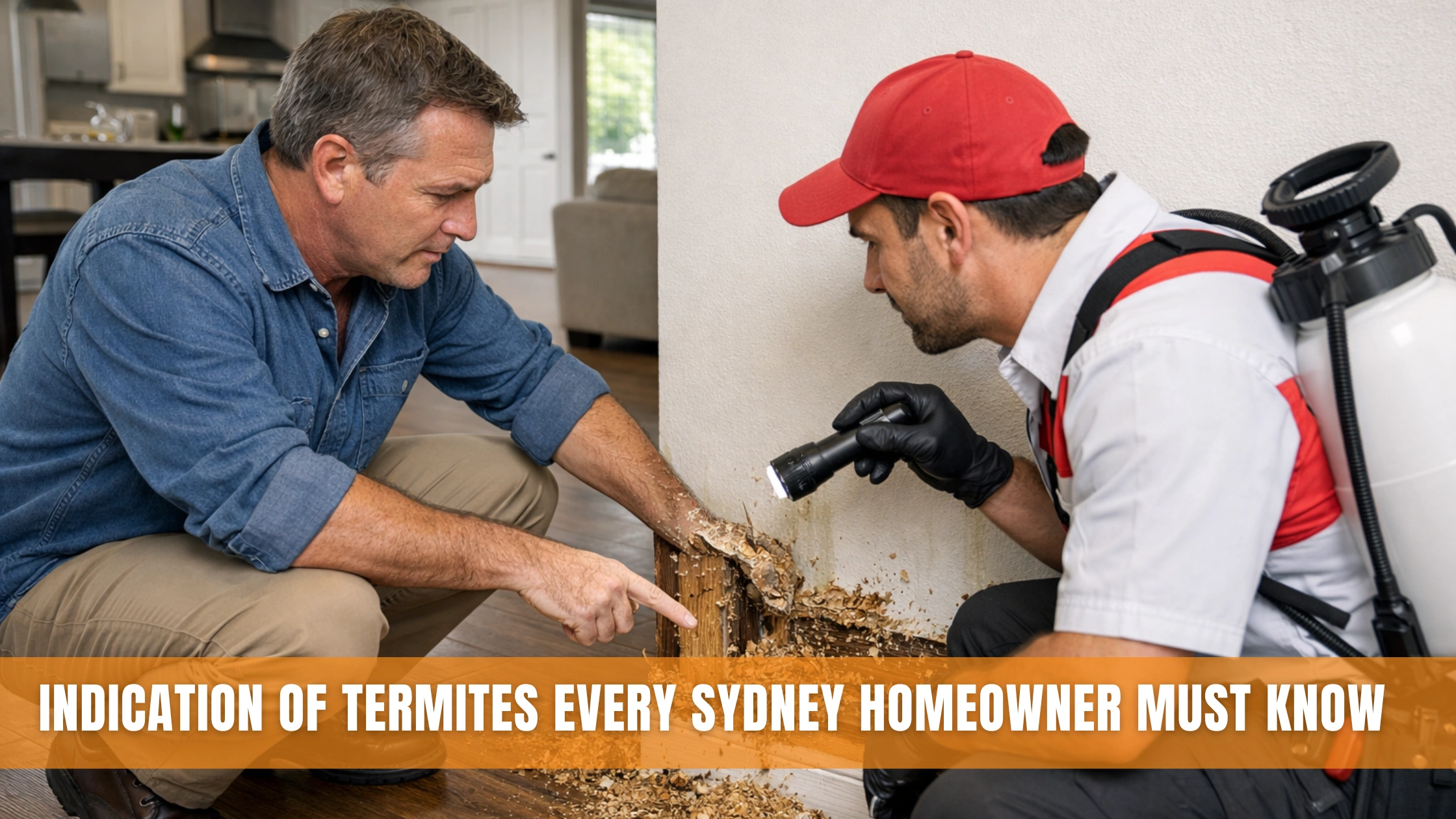
Australian termites destroy more homes each year than fires, floods, and storms combined , yet most Sydney homeowners only call a professional after serious structural damage is already done. Spotting an early indication of termites could save you tens of thousands of dollars in repairs.
If your home is in Sydney, the risk is very real. The humid, coastal climate creates ideal conditions for Coptotermes acinaciformis, the most destructive termite species in Australia. These silent invaders work 24 hours a day, inside your walls, beneath your floors, and behind your skirting boards, completely out of sight.
Many homeowners dismiss creaky floorboards or hairline cracks as normal wear and tear. By the time they discover the truth, entire structural beams have been hollowed out.
In this guide, you will discover the 9 clearest warning signs of a termite infestation, when to call for Termite Treatment Sydney, and how professional Termite Pest Control Sydney services protect your home for good without complicated jargon or scare tactics.
EMK Termite & Pest Control Sydney is a fully licensed pest management company with years of hands-on experience conducting termite inspections and treatments across the Greater Sydney region.
What is a termite infestation? How can I tell if I have termites?
A termite infestation occurs when termites invade a home, commercial building, or other structure in search of cellulose-based materials such as timber, paper, cardboard, and other wood products. While termites play an important role in nature by breaking down dead trees and plant matter, they can cause extensive structural damage when they enter properties and begin feeding on building materials.
Because termites often work hidden behind walls, under floors, and inside timber structures, early detection is essential. Understanding the common signs of termite activity can help homeowners take action before significant damage occurs.
Common Signs of a Termite Infestation
If you are wondering how to tell if you have termites, watch for these warning signs:
- Termite Swarmers: Flying termites emerging around windows, doors, or lights.
- Hollow-Sounding Timber: Wood that sounds hollow when tapped may indicate internal termite damage.
- Blistered or Damaged Floors: Bubbling, warping, or uneven flooring can be a sign of hidden termite activity.
- Mud Tubes: Pencil-sized mud tunnels on walls, foundations, or timber surfaces used by termites for protection.
- Termite Frass or Pellets: Small wood-coloured droppings often found near infested timber.
Understanding Termite Colonies
A single termite colony can contain hundreds of thousands to over one million termites. These highly organised colonies consist of queens, workers, soldiers, and reproductive termites, all working together to sustain the colony. Depending on the species, termites can live for several years, while established colonies can survive indefinitely if left untreated.
Regular termite inspections and early detection are the best ways to protect your property from costly termite damage and long-term structural issues.
What Are Early Warning Indication of a Termites Infestation?
Termites leave behind distinct signs that can help homeowners identify an infestation before serious damage occurs. Because termites often remain hidden inside walls, floors, and timber structures, early detection is essential to prevent costly repairs. Common signs of termite activity include flying termite swarmers, hollow-sounding wood, mud tubes, termite droppings (frass), blistered paint, and doors or windows that suddenly become difficult to open. Ignoring these warning signs can allow termites to cause significant structural damage over time. Regular termite inspections and professional termite protection services are the most effective ways to detect termite activity early and protect your property. Below are some indication of termites in your house:
1. Buckling or Blisters In Wood Flooring
Buckling, warped, or blistered timber flooring can be an early Indication of termite activity beneath your home. Subterranean termites often attack the timber subfloor and structural supports below the surface, causing hidden damage that may not be immediately visible. As termites consume the wood, the flooring above can become uneven, discoloured, or develop a wavy appearance. Because these pests typically target softer timber first, homeowners may not notice the infestation until significant damage has already occurred. If you observe blistered or distorted flooring, it is important to arrange a professional termite inspection to identify any hidden termite activity and prevent further structural damage.
2. Hollowed or damaged wood
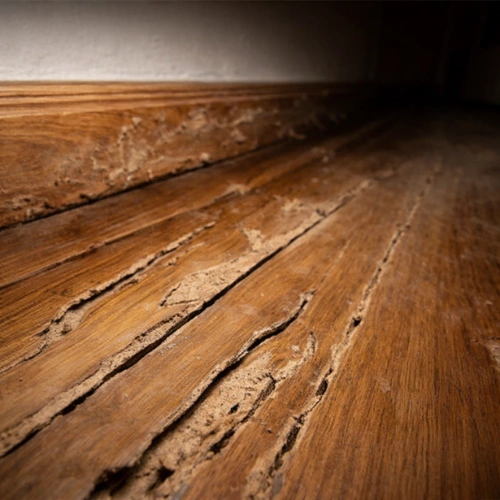
One of the most common Indication of a termite infestation is hollow-sounding timber. Gently tapping wooden structures such as walls, skirting boards, door frames, or flooring can help identify hidden termite damage. Termites often feed from the inside out, consuming the cellulose within timber while leaving the outer surface largely intact. As a result, the wood may appear normal but sound hollow when tapped. These destructive pests create long tunnels and intricate galleries inside the timber, often forming maze-like patterns or a honeycomb structure. Over time, this internal damage weakens the wood, compromises structural integrity, and can lead to costly repairs if not detected early. If you notice hollow-sounding timber, it is important to arrange a professional termite inspection as soon as possible.
3. Swarmers (flying termites)
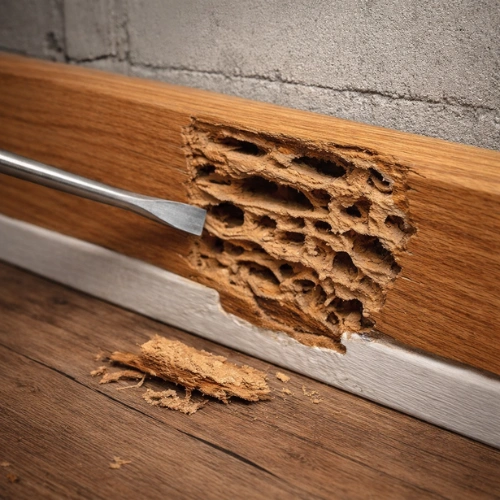
Flying termites, commonly known as termite swarmers or alates, are reproductive termites that leave an established colony to find mates and create new colonies. Swarming typically occurs during specific times of the year, particularly in warm and humid conditions, and can involve hundreds or even thousands of winged termites emerging at once.
If you notice flying termites around your home, garden, windows, doors, or outdoor lights, it may indicate that an active termite colony is located nearby. In many cases, the presence of swarmers suggests that termites have been living and developing in the area for several years. After mating, these termites shed their wings and establish new colonies, increasing the risk of future infestations. Because termite swarmers are often one of the earliest visible signs of termite activity, it is important to arrange a professional termite inspection immediately to identify the source and protect your property from potential termite damage.
4. Discarded termite wings
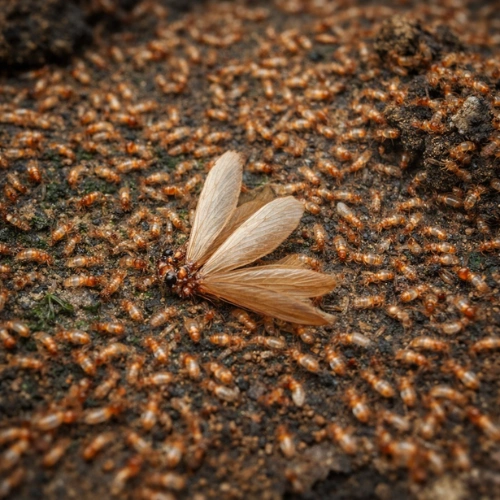
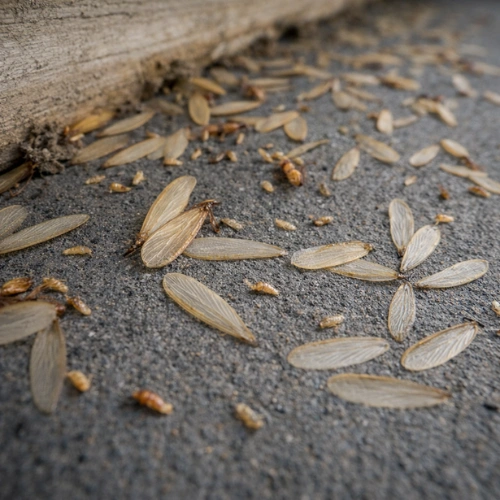
Finding discarded termite wings around your home is often a strong indication of termite activity. These wings are commonly found near windows, doors, entry points, and light sources, as flying termites are naturally attracted to light during their swarming season. After landing, reproductive termites intentionally shed their wings because they no longer need them once they begin searching for a suitable location to establish a new colony.
Homeowners may notice small piles of identical wings on window sills, door frames, patios, or around indoor lighting. While the wings themselves may seem harmless, they can signal that termites are actively attempting to establish a colony in or around your property. The presence of discarded wings should never be ignored, as it often indicates a mature termite colony nearby. If you discover termite wings around your home, scheduling a professional termite inspection is highly recommended to identify potential infestations and prevent costly termite damage.
5. Hard to open doors and windows
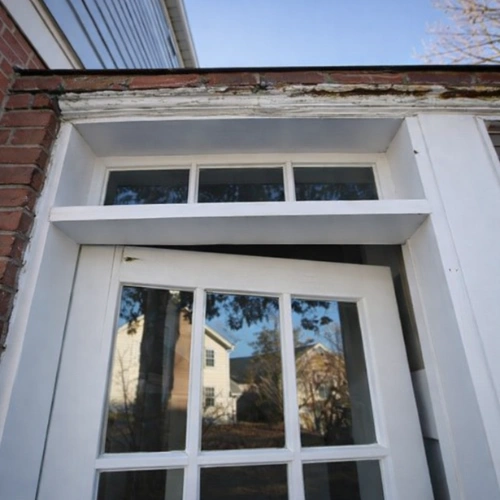
Doors and windows that suddenly become difficult to open or close may be more than just a seasonal issue,they can be an early indication of termite activity. As termites feed on timber in door frames, window frames, and surrounding structural supports, they create internal damage that can cause the wood to warp, swell, or become distorted.
This hidden termite damage may lead to doors and windows sticking, jamming, or failing to close properly. Because termites often consume timber from the inside out, the damage can remain unnoticed until these functional problems begin to appear. If you notice unexplained changes in the operation of your doors or windows, especially when combined with other termite warning signs, it is important to arrange a professional termite inspection. Early detection can help prevent further structural damage and reduce the cost of termite treatment and repairs.
6. Mud tubes (termite mud tunnels)
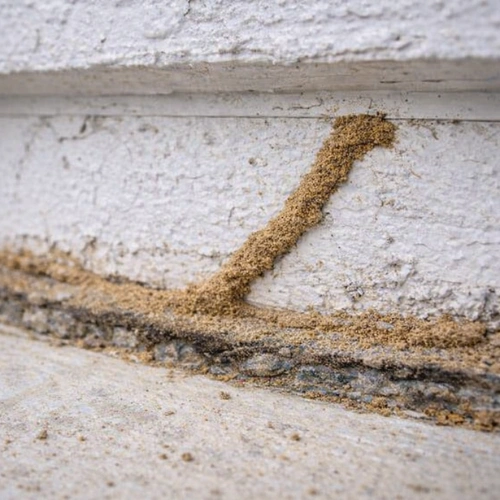
Mud tubes are one of the clearest and most recognizable Indication of a subterranean termites infestation. These pencil-sized tunnels are constructed from soil, saliva, and termite droppings, allowing termites to travel safely between their underground nest and food sources. You may find mud tubes along foundations, walls, piers, retaining walls, tree trunks, sheds, or anywhere termites have access to timber.
Subterranean termites rely on specific moisture and temperature conditions to survive. Their mud tunnels protect them from dry air, predators, and environmental changes while maintaining the humidity they need to thrive. If you discover mud tubes around your home or property, it may indicate active termite activity nearby. Because these termites can cause significant structural damage before becoming visible, a professional termite inspection should be arranged immediately to identify the infestation and prevent further damage.
7. Drywood termite droppings (frass)
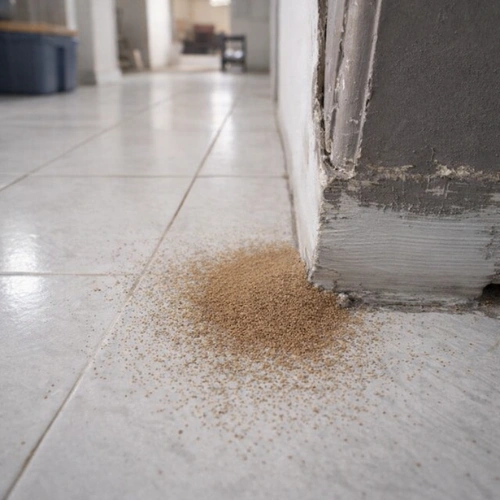
Termite droppings, also known as frass, are one of the most noticeable signs of a drywood termite infestation. Unlike subterranean termites, drywood termites live and nest entirely inside timber structures. As they tunnel through wood and create extensive galleries, they produce waste that must be removed from their nesting areas. To keep their galleries clean, drywood termites create small kick-out holes through which they push their droppings.
These tiny pellets often accumulate on floors, window sills, door frames, or beneath infested timber, forming small piles that resemble sawdust, sand, or coffee grounds. The presence of frass is a strong indication that termites are actively feeding within the wood. Because drywood termites can cause significant internal timber damage before becoming visible, finding termite droppings should prompt an immediate professional termite inspection to identify the extent of the infestation and prevent further structural damage.
8. Live termites found during remodeling
Many homeowners first discover a termite infestation while renovating, remodeling, or repairing their property. As walls, flooring, or timber structures are removed, hidden termite damage and active termite colonies may become visible. While uncovering infested timber can help identify the problem, simply removing the damaged wood will not eliminate the infestation.
Termites often remain active in other areas of the property, including the soil surrounding your home, damp or decaying timber, wall cavities, subfloors, tree stumps, landscaping timber, and firewood piles. Because termites feed on cellulose-based materials, they can survive anywhere suitable food sources are available. If termites are discovered during a renovation project, it is essential to arrange a professional termite inspection and treatment immediately. Addressing the source of the infestation ,not just the visible damage but also is the most effective way to protect your property from ongoing termite activity and future structural damage
9. Damaged drywall, bubbling under paint or wallpaper
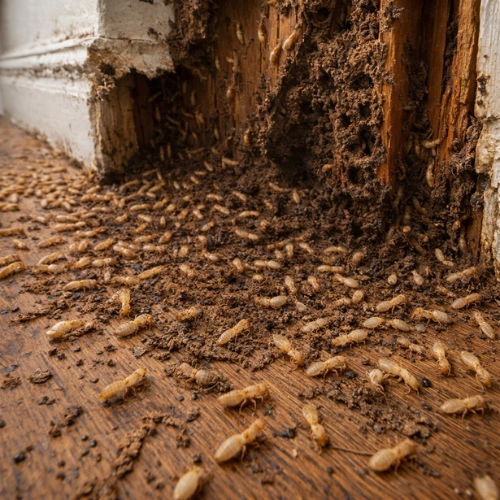
Drywall can often reveal early indication of a termite infestation because it contains paper, a material rich in cellulose that termites feed on. As termites tunnel through drywall and the timber structures behind it, they may leave subtle but noticeable evidence of their activity. Homeowners may observe tiny pin-sized holes in drywall, wallpaper, or painted surfaces where termites have chewed their way through.
In some cases, these small holes may be sealed with dirt or mud, a common characteristic of termite activity. You may also notice bubbling, peeling, or blistering paint and wallpaper that resembles water damage. This occurs when termites create tunnels beneath the surface, causing moisture buildup and structural disruption. Because these warning signs often indicate hidden termite activity inside walls, it is important to arrange a professional termite inspection as soon as possible. Early detection can help prevent extensive structural damage and reduce the cost of termite treatment and repairs.
10. Moldy scents
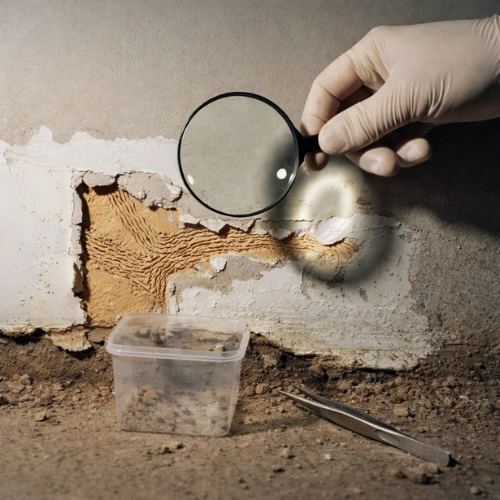
A persistent musty or mouldy smell inside your home can sometimes indicate hidden termite activity. Termites are naturally attracted to damp, moisture-rich environments and often infest timber that has been exposed to water damage, leaks, or high humidity levels. As termites feed and tunnel through moist wood, they can contribute to an unpleasant odour that resembles mould or mildew.
If you notice a strong musty smell that cannot be traced to a visible source, it may be worth investigating for potential termite activity. Because termites often remain hidden behind walls, beneath floors, or inside timber structures, unusual odours can sometimes be one of the earliest warning signs of an infestation. A professional termite inspection can help identify hidden termite colonies, assess moisture-related risks, and protect your property from costly structural damage.
These signs of termite damage should be checked carefully because some symptoms may look like normal moisture, ageing timber, or general building wear. A proper termite inspection is important before assuming the cause.
How fast can termites cause damage?
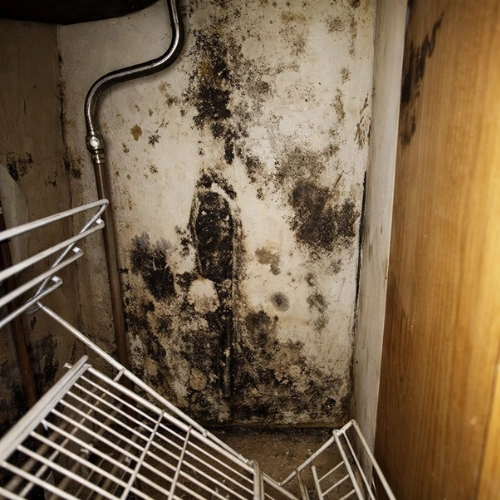
The speed at which termites cause damage depends on the size of the colony, the termite species, and the availability of food sources. A large termite colony can contain hundreds of thousands of termites, all feeding continuously on timber and other cellulose-based materials. In some cases, a colony of around 250,000 termites can consume a significant portion of a timber structure within just a few months.
One of the biggest concerns with termites is that the damage often occurs silently and out of sight. Once termites establish a colony within or around a property, they can remain undetected for years while continuously weakening timber structures, walls, flooring, and support beams. By the time visible signs appear, substantial structural damage may have already occurred.
Extensive termite damage can be expensive to repair, and the overall termite treatment cost may increase if the infestation is discovered late. Investing in regular termite inspections and early termite treatment is often far more affordable than dealing with major repairs caused by long-term termite activity. Even if no obvious signs are visible, professional inspections remain essential because termites can stay hidden while causing serious damage behind the scenes.
Professional Termite Inspection
At EMK Termite & Pest Control Sydney, our experienced termite specialists are trained to identify both visible and hidden indication of termite activity around your property. Using advanced termite detection technology, including moisture meters, thermal imaging equipment, and acoustic detection tools, we can locate termite infestations even when there are no obvious signs of damage.
Because most home insurance policies do not cover termite damage, regular professional termite inspections are one of the most effective ways to protect your property. Early detection can help minimise repair costs, reduce termite treatment costs, and prevent extensive structural damage caused by hidden termite activity.
If termite activity is detected, our team will provide a comprehensive assessment and recommend the most suitable termite treatment solution for your home or business. Contact EMK Termite & Pest Control Sydney today on 0402 343 590 to book a professional termite inspection and safeguard your property from costly termite damage.
What Our Customers Had To Say
 Posted on Google
 Rami Anwer
Trustindex verifies that the original source of the review is Google.
We had such a great experience with the pest control service. From start to finish, everything was quick, easy and completely hassle-free. The team were professional, friendly and made the whole process so simple. We’re really happy with the results and the quality of the service we received from Eevil. I would definitely recommend EMK to anyone looking for a reliable pest control company!Posted on Google Rena NajimReally happy with the service today. Professional, friendly and did a great job. Would definitely recommend!Posted on Google
 David DavidEMK provided excellent pest control service. He was professional, punctual, and knowledgeable, explained the process clearly, and ensured it was safe for our family and pets. We saw great results straight away. Friendly, reliable, and highly recommended.Posted on Google
 Ann TranWe highly recommend EMK Termite and Pest Control Sydney. Great service, great prices, friendly and very accommodating. They are very thorough and take pride in their work. Cannot rate them high enough. 5 stars 🌟Posted on Google
 Charlton DurieI had these guys come and sort a termite issue. They got the job done. Thanks again!Posted on Google
 David MarshSuper happy with EMK for getting rid of such a horrible termite infestation! Professional and very friendly.Posted on Google
 Michael ZammitJust had EMK come out to do a rodent control treatment. The service and professionalism was superb!Verified by TrustindexTrustindex verified badge is the Universal Symbol of Trust. Only the greatest companies can get the verified badge who has a review score above 4.5, based on customer reviews over the past 12 months. Read more
Frequently Asked Questions About Indication of Termites
The first signs include mud tubes on foundations or walls, hollow-sounding timber when tapped, discarded wings near windows and doorways, tiny frass pellets resembling sawdust, and doors or windows that suddenly become stiff to open.
If you notice any indication of termites — even one sign from this guide — book a licensed inspection immediately. Sydney's humid climate accelerates colony growth. Early treatment is always less costly than delayed action. Most inspections can be booked within 24–48 hours.
Australian Standard AS 3660.2 recommends annual inspections for most Sydney homes. Properties in bushland settings, those with previous infestations, or homes with existing timber defects should be inspected every six months.
Most standard Australian home insurance policies exclude termite damage, classifying it as a maintenance issue rather than a sudden event. Some specialist policies offer limited cover. Check your Product Disclosure Statement and consult your insurer directly. This is not financial or legal advice.
DIY termite products are available, but they are rarely effective against established colonies and can cause colonies to relocate rather than die. In NSW, application of registered termiticides in soil barriers must be performed by a licensed pest management technician under the Pesticides Act 1999.
About The Author

EMK Termite & Pest Control Team
EMK Termite & Pest Control Team is a licensed and experienced pest control service provider based in Sydney, Australia. Our team specialises in termite treatment, cockroach control, spider control, and general pest management for residential and commercial properties.
With years of hands-on experience, we follow Australian safety standards and use proven, eco-friendly pest control methods to deliver long-lasting results. All content published on this website is written and reviewed by trained pest control professionals to ensure accuracy, safety, and real-world expertise.